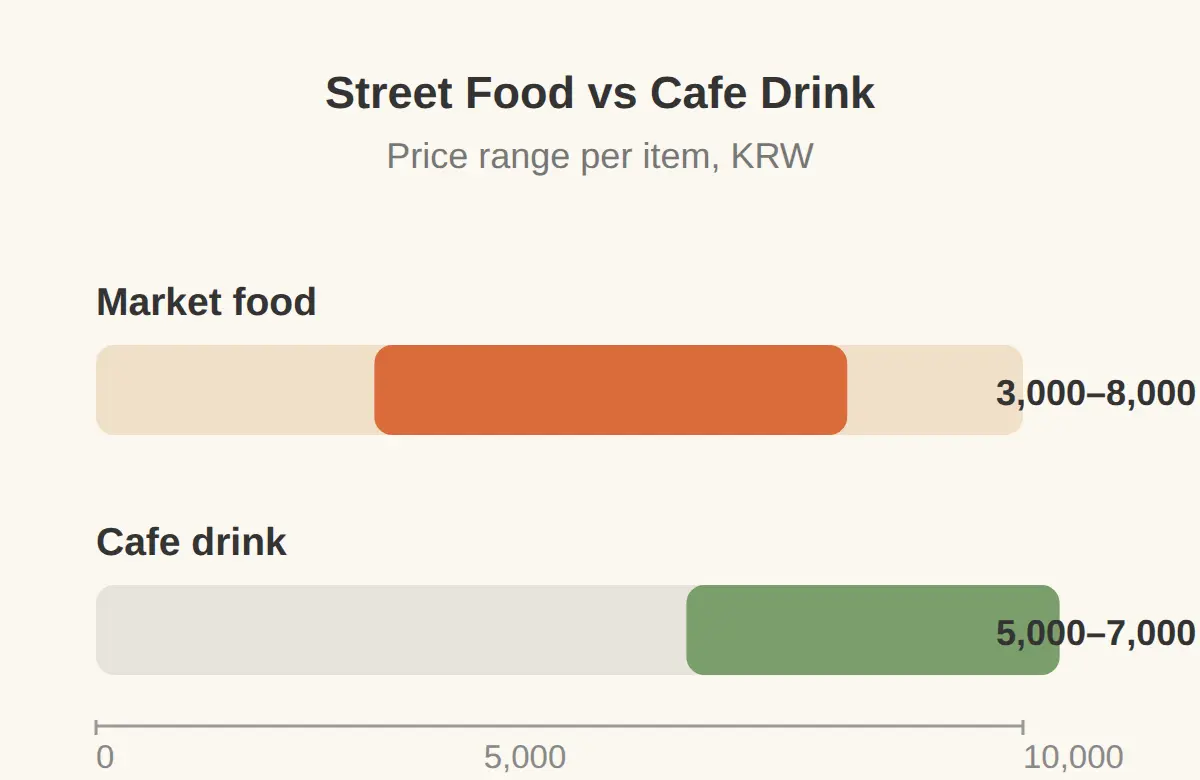
Walking into any of these hidden-gem neighborhoods costs 0 KRW, plus about 5,000-7,000 KRW for a cafe drink or 3,000-8,000 KRW for market food once you arrive.
Seven of the eight sit on a direct subway line from central Seoul, so one T-money card covers every leg.
This post then walks through each spot with its nearest station, fare, and typical on-site spend, before answering the food, crowds, language, and daily-budget questions behind the list.
Key facts — As of 2026-10-01
- Eight of the 9 neighborhoods have direct subway access; Buam-dong is the only one without it, reached by a short bus from the Gyeongbokgung area (access facts, as of 2026).
- A confirmed minimum Seoul day is 5,800 KRW: a round trip on the subway at 1,400 KRW each way plus one paid palace entry at ~3,000 KRW (budget math, 2026 fares).
The 8 Spots Most Tourists Miss — With Costs Up Front
| Seochon | Gyeongbokgung (Line 3, Exit 2), walkable; residential hanok area, free to walk |
|---|---|
| Haebangchon (HBC) | Noksapyeong Station (Line 6) plus an uphill walk; subway fare from central Seoul 1,400-2,000 KRW (T-money users 1,500-1,550 KRW); on-site cost 0 KRW for streets and cafes 5,000-7,000 KRW |
| Ikseon-dong | Jongno 3(sam)-ga (Lines 1/3/5); hanok alleys free to walk; hanok-cafe drinks are the main spend |
| Euljiro | Euljiro 3(sam)-ga (Lines 2/3); alleys free to walk; bar/alley district, best in the evening |
| Seongsu | Seongsu (Line 2); cafe district; entry free, cafe drinks on site |
| Mangwon | Mangwon (Line 6); market walk free; street food 3,000-8,000 KRW per item |
| Yeonnam | Hongik Univ. (Line 2 / AREX); Gyeongui Line Forest Park free to walk |
| Buam-dong | No subway — short bus from the Gyeongbokgung area; hillside village, entry free |
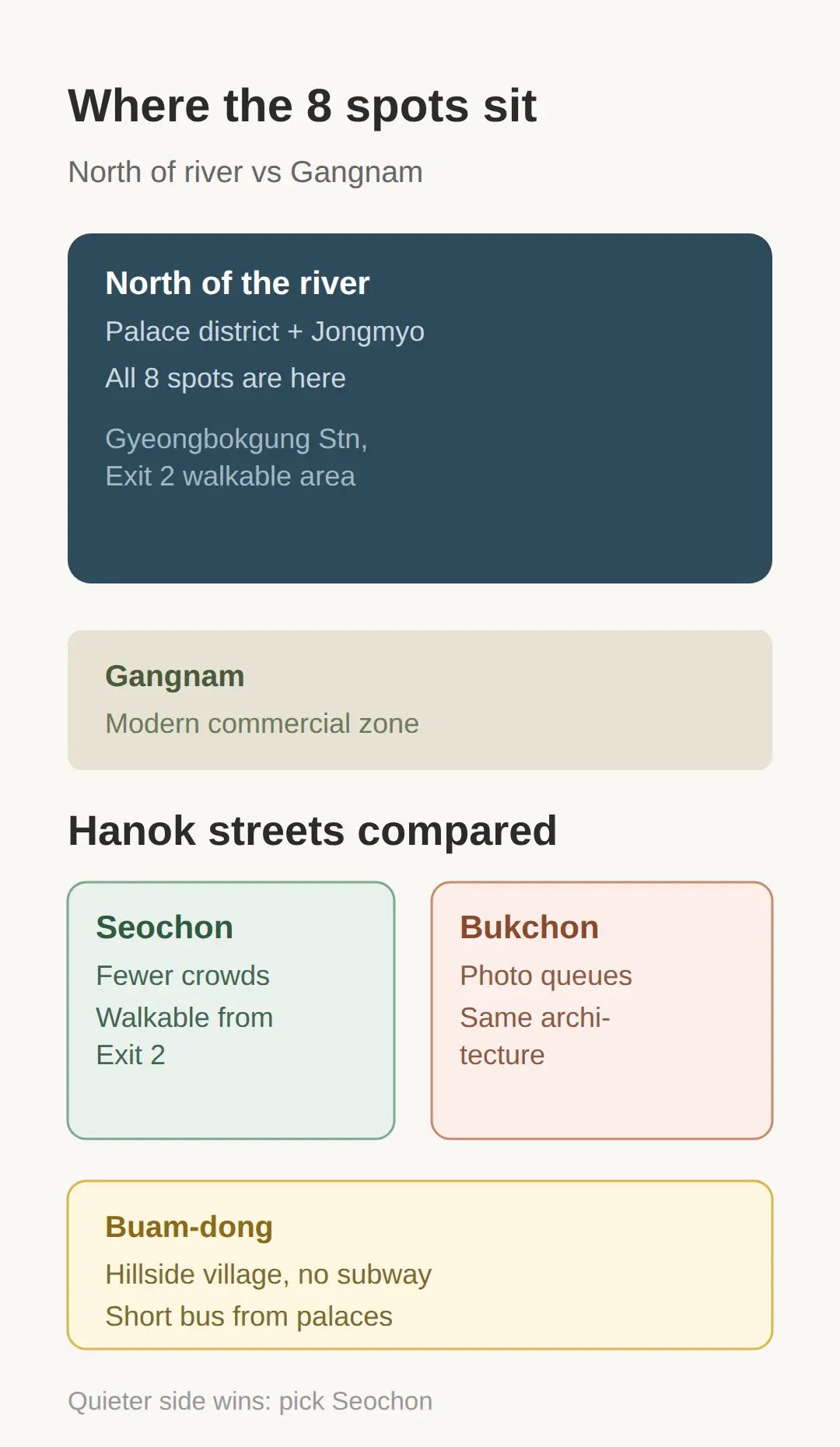
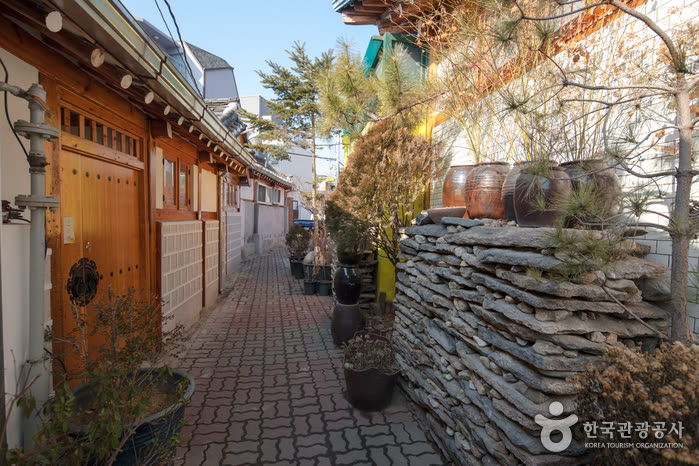
Seochon is the quieter side of the palace district: a residential hanok area with fewer crowds than Bukchon, walkable from Gyeongbokgung Station Exit 2.
The palace district itself — five palaces plus Jongmyo — sits north of the river, while Gangnam is a separate modern commercial zone, so these neighborhoods sit on the less-touristed side of that split.
Buam-dong, a hillside village with no subway, is the emptiest of the eight precisely because it takes a short bus from the Gyeongbokgung area to reach.
If you want hanok streets without the photo queues, go Seochon instead of Bukchon — same architecture, different density.
Seoul Hidden Gems Restaurants — Which of the 8 Are Food Spots
Mangwon and Euljiro are the two food-forward spots on this list.
At Mangwon Market, traditional market street food runs roughly 3,000-8,000 KRW per item, which can be 2,000-4,000 KRW cheaper than a cafe drink nearby (market food bands, per-venue prices vary).
Euljiro is a bar and alley district that works best in the evening, so it answers a dinner or night-out search rather than a lunch one.
Seongsu and Ikseon-dong are cafe districts instead — their on-site spend is a drink, not a meal.
If a full meal for under 10,000 KRW is the goal, plan the eating around Mangwon and Euljiro and treat the other six as walk-and-coffee stops.
Seoul Neighborhoods Without the Tourist Crowds
The eight neighborhoods pair well with that window: Seochon, Buam-dong, and Yeonnam’s forest park are outdoor-walk spots that look their best when the leaves turn.
If your dates are fixed to late October, book the north-of-river day first and leave the indoor cafe districts (Seongsu, Ikseon-dong) as rain-day backups.
If I were splitting 2-3 days across these neighborhoods around the foliage peak, I would put Seochon and Buam-dong on the first day, because the hanok streets and the hillside village are the views that depend on the leaves — the cafe districts keep in any weather.
Getting Around Seoul Without Korean — One Card, One Exception
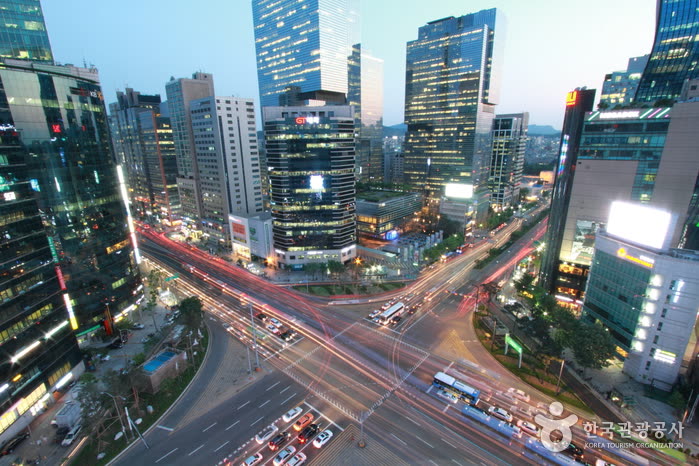
One T-money card works on subways and buses nationwide, so buying a single card at your arrival station covers all eight spots.
Buam-dong is the one exception — no subway station, so a short bus from the Gyeongbokgung area finishes the trip.
Seongsu and Ikseon-dong carry English signage as tourist zones; Buam-dong and Haebangchon have limited English signage, so save those for when a map app is doing the navigating.
Seoul Trip Cost Per Day — The Minimum Math
A confirmed minimum Seoul day is 5,800 KRW: a subway round trip plus one paid palace entry.
A fuller day with one independent cafe drink on top lands at about 11,000-13,000 KRW per day.
The hanbok rental trick changes the palace line: renting a hanbok grants free entry to paid palace sites that would otherwise cost about 3,000 KRW each, so if you were renting anyway, the palace stops stop costing anything.
If you want the cheapest possible day, combine a free-walk spot (Ikseon-dong, Euljiro, Yeonnam) with one palace and skip the cafe — 5,800 KRW is your floor.
When to Visit for Fall Colors — The Window to Book Around
Late October to early November 2026 is the peak foliage window for Seoul, and search interest for fall-trip planning peaks around October 24.
The eight neighborhoods above pair well with that window: Seochon, Buam-dong, and Yeonnam’s forest park are outdoor-walk spots that look their best when the leaves turn.
If your dates are fixed to late October, book the north-of-river day first and leave the indoor cafe districts (Seongsu, Ikseon-dong) as rain-day backups.
Related posts
📎 Seoul — everything we know
📎 📅 Upcoming Dates — Release & Event Calendar
Sources
- 1,400-1,550 KRW fare band, one card nationwide (breezekorea.com)
- Real user questions (Naver Kin / Reddit / YouTube comments) (touristsinsider.com)
- royal.khs.go.kr
What to Do Next
- Late October to early November 2026 — peak foliage window; put it in the calendar before booking.
- October 24, 2026 — the search-peak date for fall Seoul trip planning; book ahead of it.
- One T-money card covers every subway and bus leg to all eight spots; Buam-dong is the bus exception.
FAQ
Q. Which Seoul hidden gems are good for restaurants and food?
Mangwon Market and Euljiro. Market street food at Mangwon runs roughly 3,000-8,000 KRW per item, and Euljiro is best in the evening as a bar-and-alley district.
Q. What is the Seoul subway fare in 2026?
Subway rides from central Seoul run 1,400-2,000 KRW in 2026, with T-money users paying a 1,500-1,550 KRW range; check the official fare page before you travel, since figures vary by distance and card type.
Q. How much does a budget day in Seoul cost?
A confirmed minimum is 5,800 KRW: subway round trip (1,400 × 2) plus one paid palace entry at about 3,000 KRW. Adding one cafe drink brings the day to about 11,000-13,000 KRW.
Q. Can I get around Seoul without speaking Korean?
Yes for most of the list — one T-money card covers every leg, and Seongsu and Ikseon-dong have English signage. Buam-dong and Haebangchon have limited English signage, so keep a map app open there.
Plan the trip around the late October to early November 2026 foliage window, and book before the October 24 planning peak.
Cover photo: Seoul Children’s Grand Park (서울어린이대공원) by Korea Tourism Organization — KOGL Type 1 (attribution)
#Seoul #Seoulhiddengems #Seoulneighborhoods #Seoulbudgettravel #Seoulsubwayfare2026 #Seoulfood
📅Upcoming Schedule — this week 1 · D-7 Godsoi lineup removed from menus after 2026-11-09See all →Last updated 2026-10-29. Editorial policy