Tipping is never expected in Korea — restaurants and taxis keep the listed price, and staff may return a tip in confusion.
With Chuseok on September 24–26, 2026, first-time foreign visitors surge, and most etiquette mistakes happen in the same handful of places: guesthouse entrances, subway cars, and restaurant counters.
This guide lists the seven rules visitors get wrong most often, then answers the follow-up questions one by one — where shoes come off, what is allowed on the Seoul subway, how a Korean meal works, and which rules carry fines.
Contents
- South Korea travel etiquette: the 7 rules visitors get wrong most often
- Do you have to take your shoes off in guesthouses and jjimjilbangs?
- Can you eat, drink, or take calls on the Seoul subway?
- Korea dining etiquette: the table rules
- Getting staff, paying, and greeting without Korean
- Smoking, drinking, photos, and trash: the rules that carry fines
South Korea travel etiquette: the 7 rules visitors get wrong most often
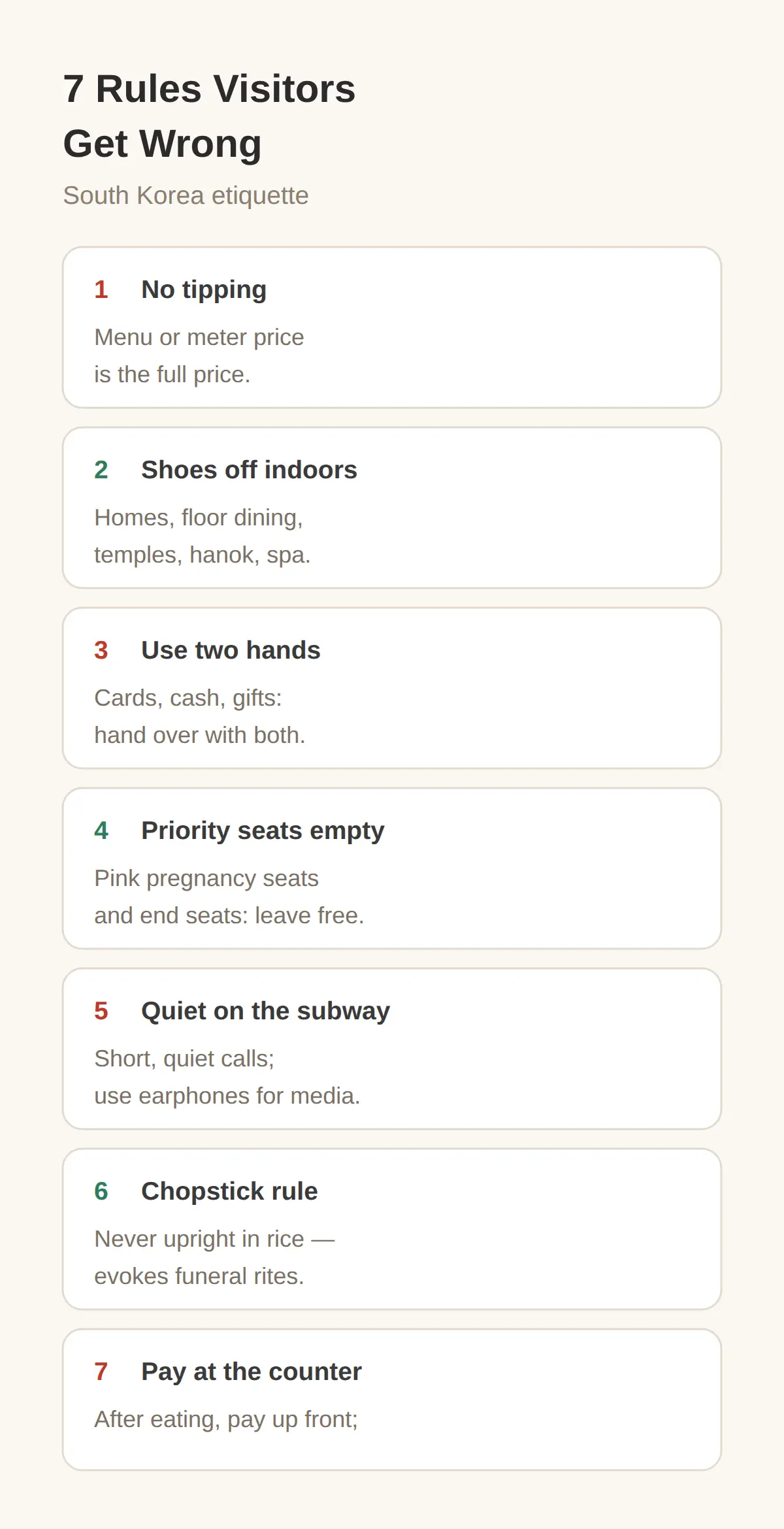
The seven rules are: no tipping, shoes off indoors, two hands for handing things over, leave pink and priority seats empty, keep subway noise down, never stick chopsticks upright in rice, and pay at the front counter.
1.
No tipping — the price on the menu or meter is the full price.
2.
Shoes off in homes, floor-seating restaurants, temple halls, hanok stays, and jjimjilbangs.
3.
Hand over cards, cash, and gifts with both hands.
4.
Leave the two pink pregnancy seats and end priority seats empty.
5.
Keep phone calls short and quiet, and use earphones for media.
6.
Never leave chopsticks stuck upright in rice — it evokes funeral rites.
7.
Pay at the counter after eating; do not sit waiting for a bill.
[figure] figures/01-seven-rules.svg | The seven etiquette rules and where each one catches visitors
| Someone hands you a card, cash, or a gift | Give and receive it with both hands, or support your right forearm with your left hand |
|---|---|
| Entering a home, floor-seating restaurant, temple hall, hanok, or jjimjilbang | Take shoes off at the entrance rack, toes facing the door, and wear clean socks |
| A crowded subway car with empty pink seats | Leave pink pregnancy seats and end priority seats empty even when standing |
| A phone call or a video on the subway | Calls short and quiet or text; media only through earphones; no eating or drinking |
| Finished eating at a Korean restaurant | Walk to the front counter and pay there — most places never bring a bill |
| An elder pours you a drink | Receive with two hands and turn your head slightly away; never pour your own |
Do you have to take your shoes off in guesthouses and jjimjilbangs?
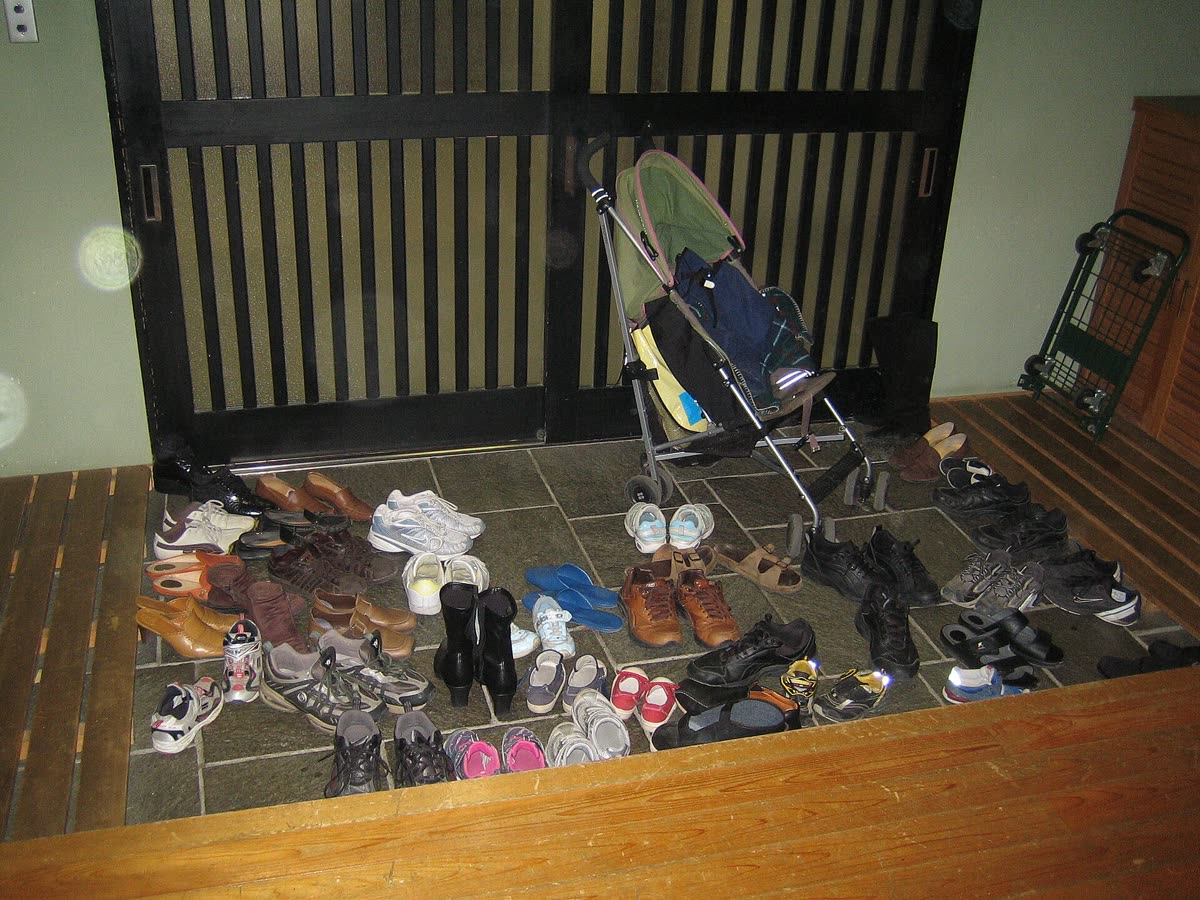
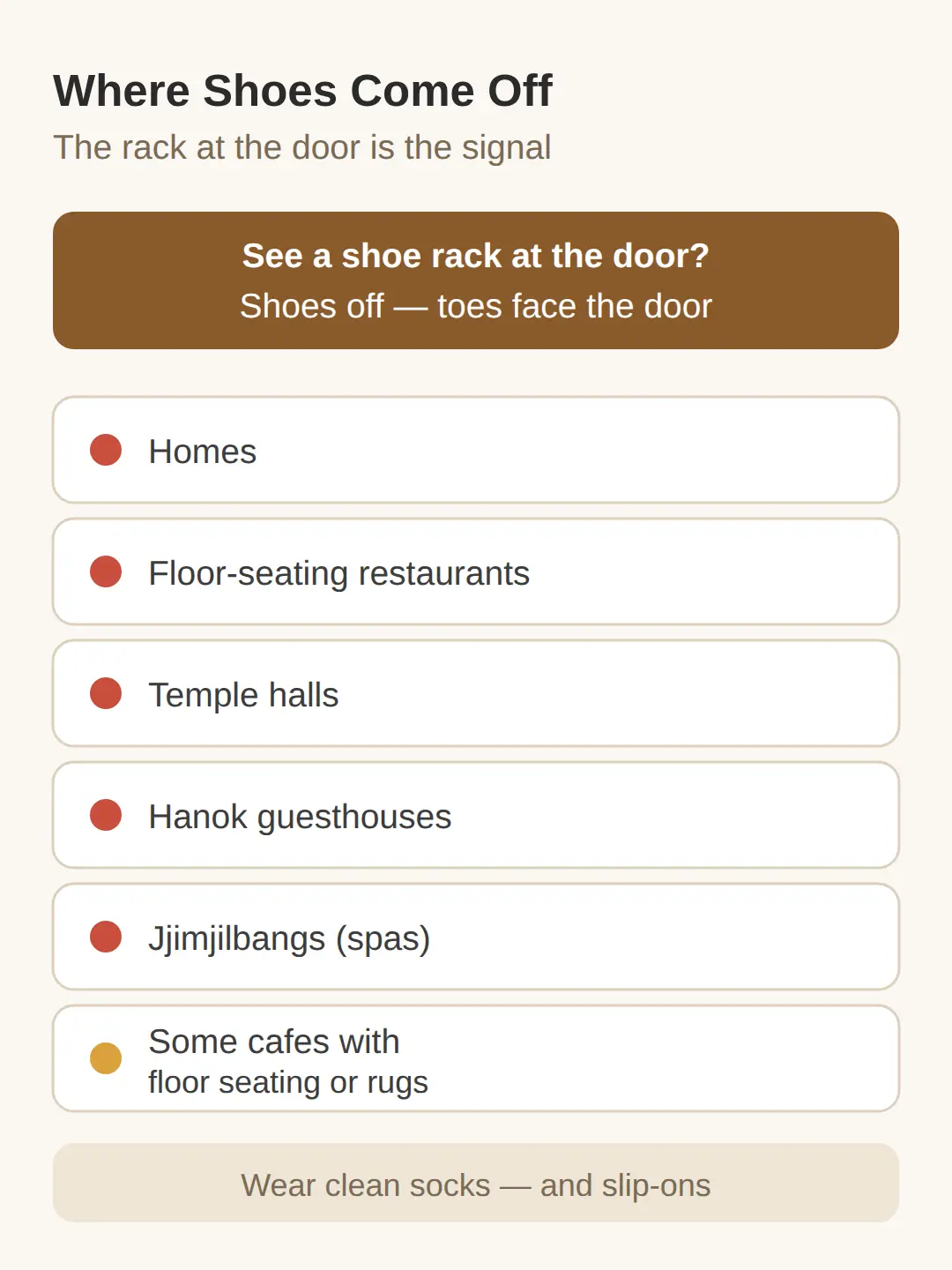
Yes — shoes come off in every home, floor-seating restaurant, temple hall (beopdang), hanok guesthouse, and jjimjilbang.
The entrance shoe rack is the signal: if there is a rack at the door, shoes come off, shoes go neatly with the toes facing the door, and slippers are often provided.
Some cafes with floor seating or rugs follow the same rule, so the rack is worth a glance even at a cafe.
Clean socks are part of the deal, because floor seating puts your socks on display.
Slip-on shoes are the practical answer — homes, floor-seating restaurants, temples, and jjimjilbangs all catch you without warning, and laces slow every one of those moments down.
[figure] figures/02-shoes-off.svg | Places where shoes come off, from homes to jjimjilbangs
👉 Korea Restaurant Etiquette Guide: No Tipping, Counter Payment, and 3 Mistakes Visitors Make
Can you eat, drink, or take calls on the Seoul subway?
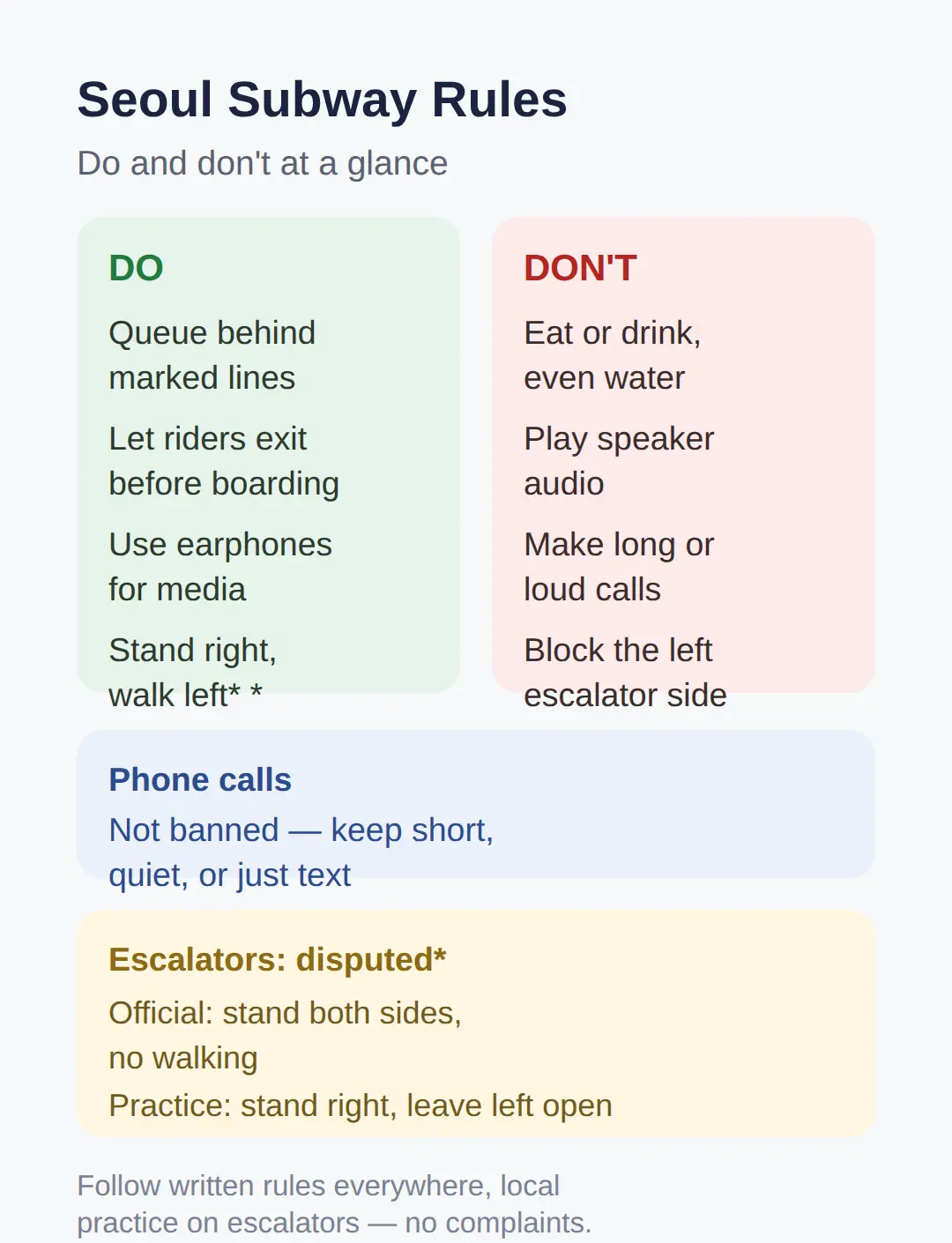
No eating or drinking on the Seoul subway, including water — eat before boarding or outside.
Videos and music must go through earphones, with no speaker audio on subways or buses.
Calls are not legally banned, just discouraged: keep them short and quiet, or text instead.
On the platform, queue along the marked lines and let passengers off completely before boarding — the same queuing applies at bus stops.
Escalators are the one disputed spot: the official rule is stand on both sides with no walking, but in practice people stand on the right and leave the left open, and blocking the left draws glares.
If you follow the local practice on escalators and the written rules everywhere else, nothing on the subway will draw a complaint.
Korea dining etiquette: the table rules
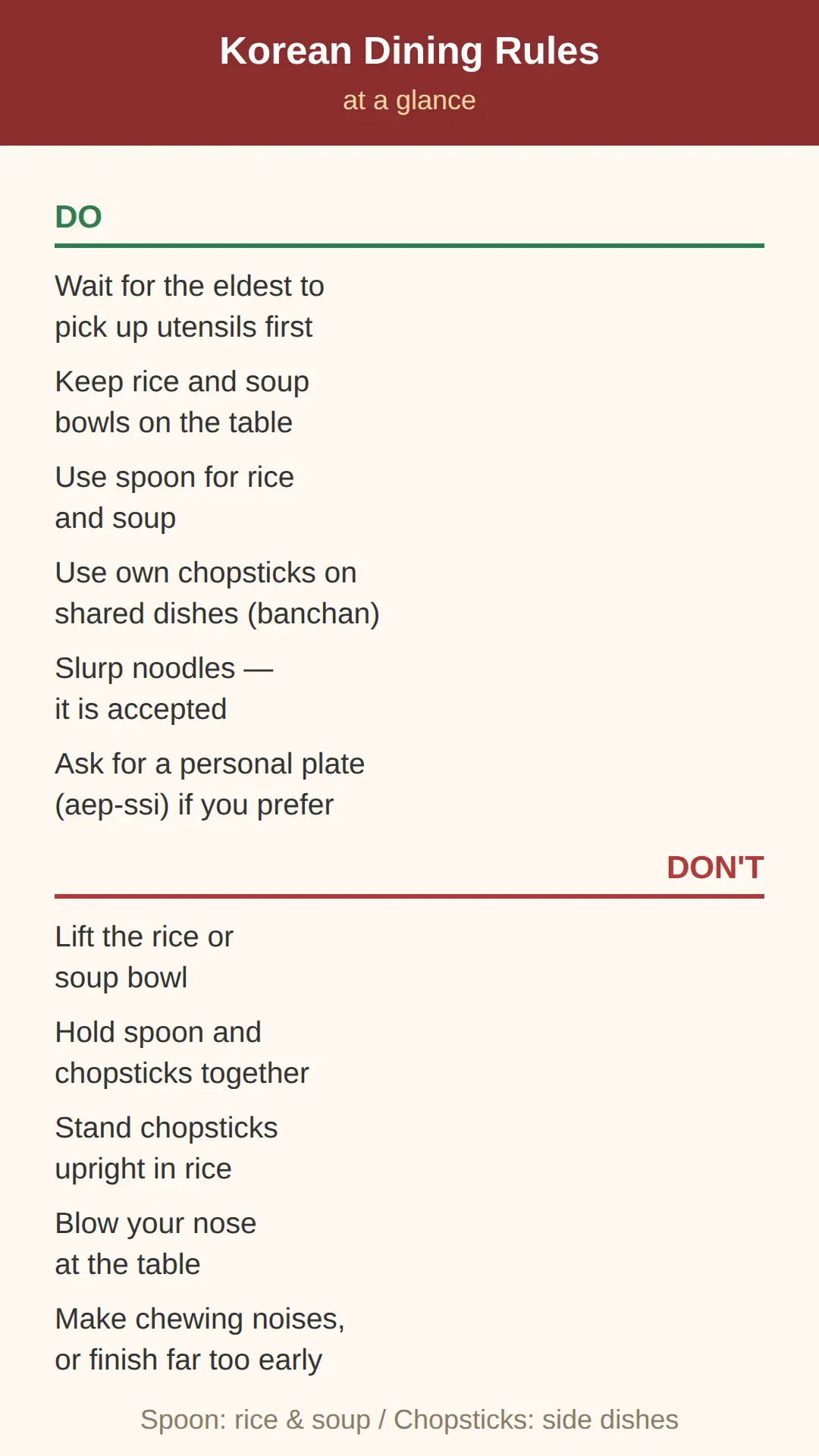
The meal starts when the eldest person at the table picks up a spoon or chopsticks, and guests wait for that moment.
Do not lift the rice or soup bowl off the table, unlike in Japan or China — rice and soup are eaten with a spoon while it stays on the table.
Spoon is for rice and soup, chopsticks are for side dishes, and holding both utensils in one hand is out.
Chopsticks never stand upright in a bowl of rice because it evokes funeral rites, and blowing your nose at the table is considered very rude — if spicy food makes your nose run, the restroom is the place.
Communal side dishes (banchan) are shared, and using your own chopsticks on them is normal — if hygiene is a concern, ask for a personal plate (aep-ssi).
Chewing noises are impolite, but slurping noodles or ramyeon is naturally accepted, and finishing much earlier than the group is discouraged.
[figure] figures/03-dining.svg | Korean dining rules at a glance: bowl stays down, spoon for rice, two hands for drinks
Getting staff, paying, and greeting without Korean
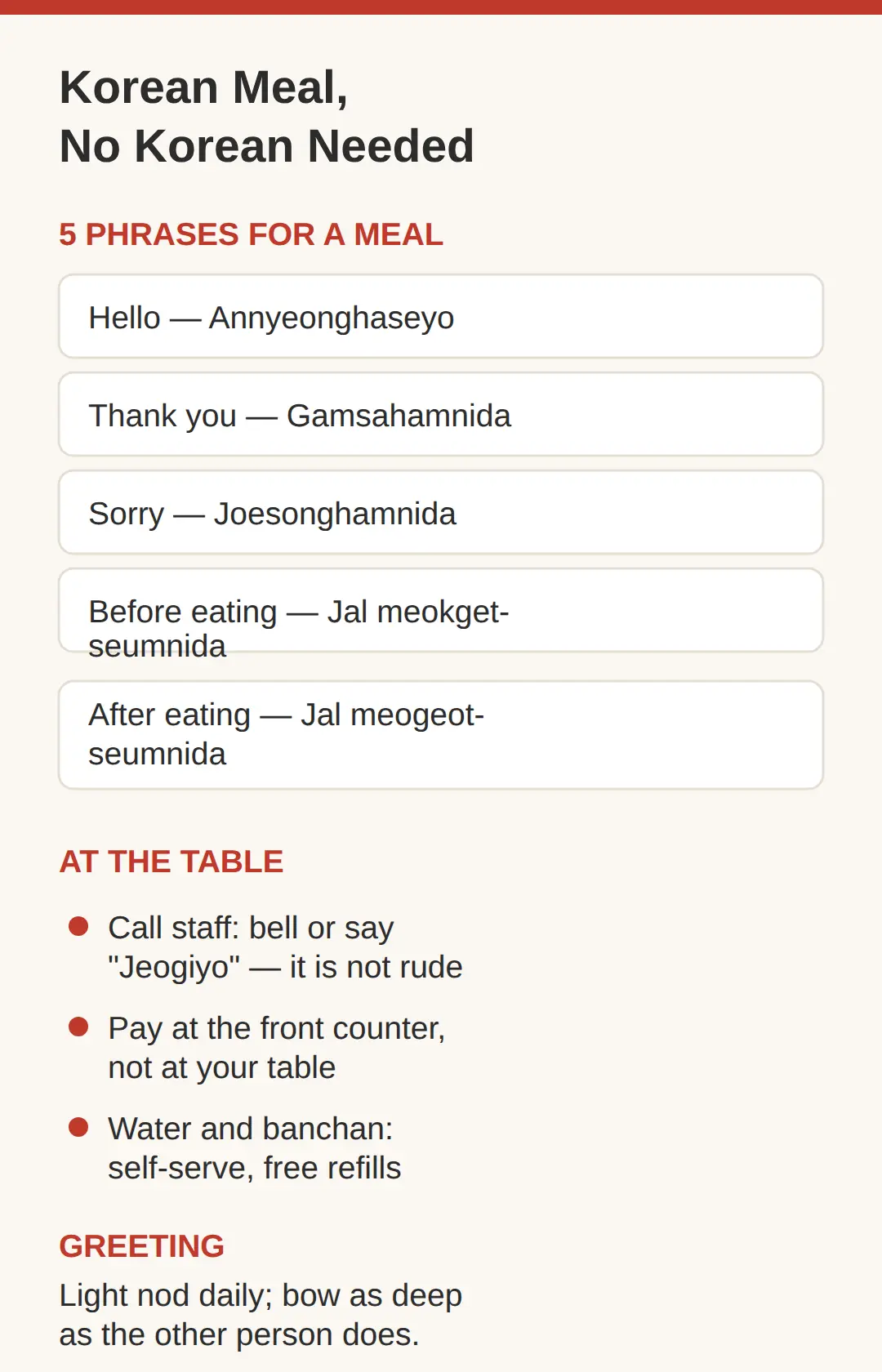
Staff are called with the table bell most Korean restaurants have, or by saying ‘Jeogiyo’ — calling out to get attention is not considered rude.
Payment happens at the front counter: most restaurants never bring a bill to the table, so do not sit waiting for one, and water and banchan are self-serve or free refills.
The five phrases that cover a meal are Annyeonghaseyo (hello), Gamsahamnida (thank you), Joesonghamnida (sorry), Jal meokgetseumnida (before eating), and Jal meogeotseumnida (after eating).
A light nod is the everyday greeting, and travelers do not need to memorize bow angles — bowing roughly as deeply as the other person is sufficient.
A 15–30 degree upper-body bow is reserved for first meetings, elders, and business settings, where the senior person extends a hand first.
In a shop, staff greet first and a light nod back when entering and leaving matches what locals do.
👉 Jeju travel 2026: why autumn beats monsoon for your 14-day Korea trip
Smoking, drinking, photos, and trash: the rules that carry fines
Smoking anywhere indoors — restaurants, cafes, bars, PC bangs — is illegal, and outdoor no-smoking zones carry fines of roughly 50,000–100,000 KRW depending on the district.
Seoul’s no-smoking zones include subway entrances within 10 meters, bus stops, and major parks, and e-cigarettes follow the same rules.
Public drinking is legal — convenience store tables and Han River chimaek are the classic scenes — but some parks are designated alcohol-control zones where loud, rowdy drinking can be fined.
Photographing identifiable people needs consent first, museums and galleries often ban photos, and photography near military or security facilities is strictly forbidden.
Street trash cans are very scarce, so trash gets carried until a bin turns up, and smoking is only allowed in designated smoking areas.
A 100,000 KRW smoking fine is twenty times the optional 5,000 KRW porter tip, which puts the two numbers travelers carry around in proportion.
If it were my trip, the first thing I’d check is my sock supply and slip-on shoes, because a hole in my sock at a shoe-rack entrance or a tied shoe at a temple hall is the easiest way to feel out of place.
[figure] figures/04-fines.svg | Fines and tips compared: smoking 50,000–100,000 KRW vs optional 5,000 KRW porter tip
Related posts
📎 Seoul — everything we know
📎 Korea golden routes: 5 airport hubs, and when foreign travelers can actually use them
📎 Chuseok 2026 Korea travel: free parking, what closes
📎 📅 다가오는 일정 — 발매·개봉·발표 캘린더
Sources
- No dated 2026 sources beyond comeonkorea (June 2026) (comeonkorea.com)
- Bow types, doorway elders, chopstick resting, cafe floor sea (letseoul.com)
- Only a mention in breezekorea 2026 guide; specifics unverifi (breezekorea.com)
Quick summary
- No tipping at restaurants or taxis — the listed price is all; only hotel porters and private drivers take an optional ~5,000 KRW.
- The entrance shoe rack is the signal for shoes off — wear slip-on shoes and check your socks.
- Pink and end priority seats stay empty even in a packed car.
- No eating or drinking on the subway, earphones for all media, short quiet calls only.
- Bowl stays on the table, chopsticks never upright in rice, and pay at the front counter.
FAQ
Q. Which rules do foreign visitors get wrong most often in Korea?
The most common seven: tipping, shoes on indoors, one-handed handovers, sitting in pink or priority seats, loud phone calls on the subway, chopsticks stuck in rice, and waiting at the table for a bill that never comes.
Q. Do you have to take your shoes off in Korean guesthouses and jjimjilbangs?
Yes. Hanok guesthouses and jjimjilbangs both require shoes off at the door, and jjimjilbangs provide slippers — the entrance shoe rack is the signal at every shoes-off venue, including some cafes with floor seating.
Q. Can you eat, drink, or take calls on the Seoul subway?
Eating and drinking are off-limits, including water. Calls are not legally banned but are kept short and quiet, and videos and music must go through earphones.
Q. Is tipping expected anywhere in Korea?
Not at restaurants or taxis — staff may refuse or return a tip. Tipping is optional but acceptable, around 5,000 KRW, for hotel porters and private tour guides or drivers after good service.
Q. What is the fine for smoking in a no-smoking zone in Seoul?
Roughly 50,000–100,000 KRW depending on the district, in zones that include subway entrances within 10 meters, bus stops, and major parks. E-cigarettes follow the same rules.
The Chuseok holiday runs September 24–26, 2026, when shoes-off venues like hanok stays and temples are at their busiest — mark those dates and pack slip-on shoes.
Cover photo: File:Danghye.jpg by Taman Renyah — CC BY 3.0
#southkoreatraveletiquette #koreatravelrules #koreadiningetiquette #seoulsubwayrules #koreatipping #takeshoesoff #koreatraveltips #jjimjilbangetiquette #koreafirstvisit
📅Upcoming Dates — 이번 주 16 · D-day 'The Scandal' global Netflix release전체 보기 →