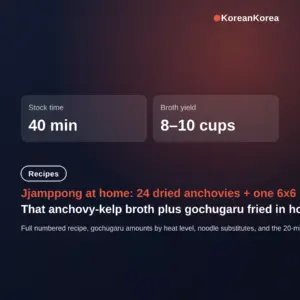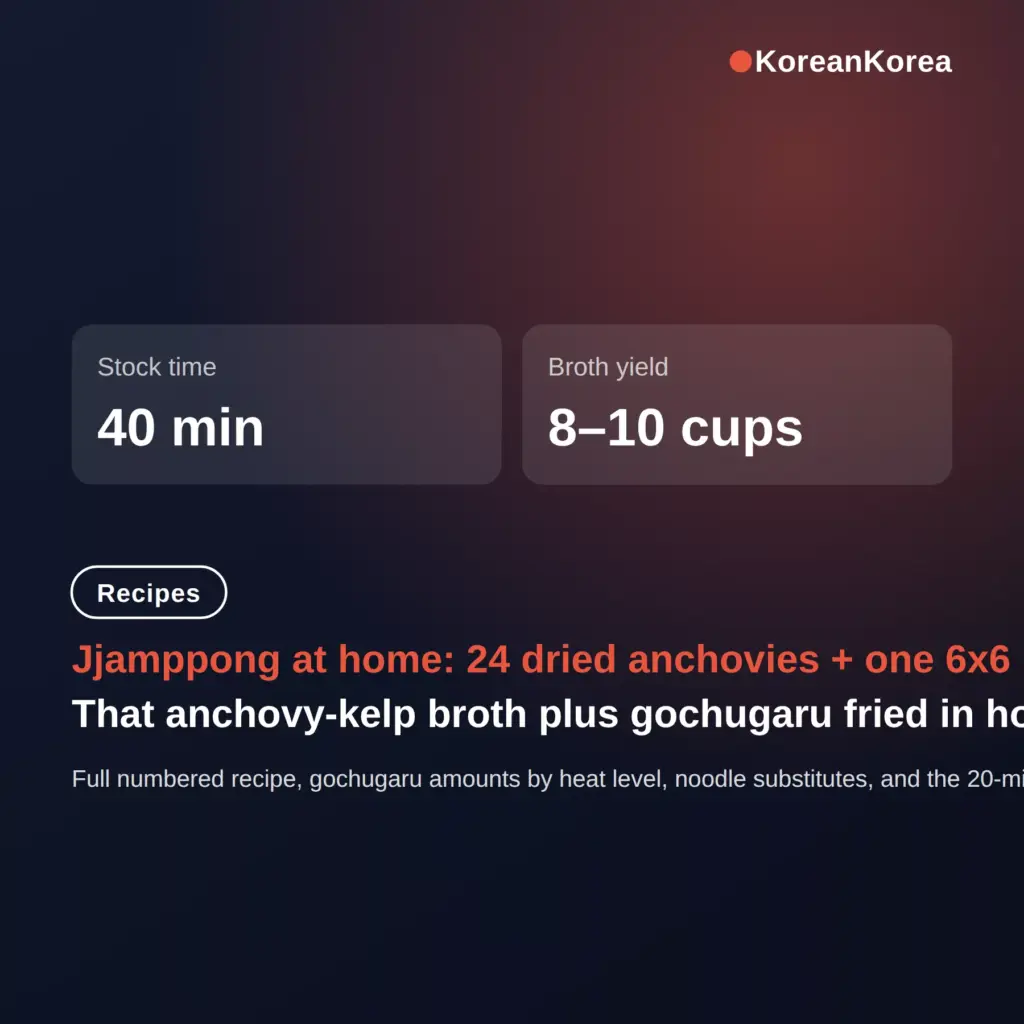
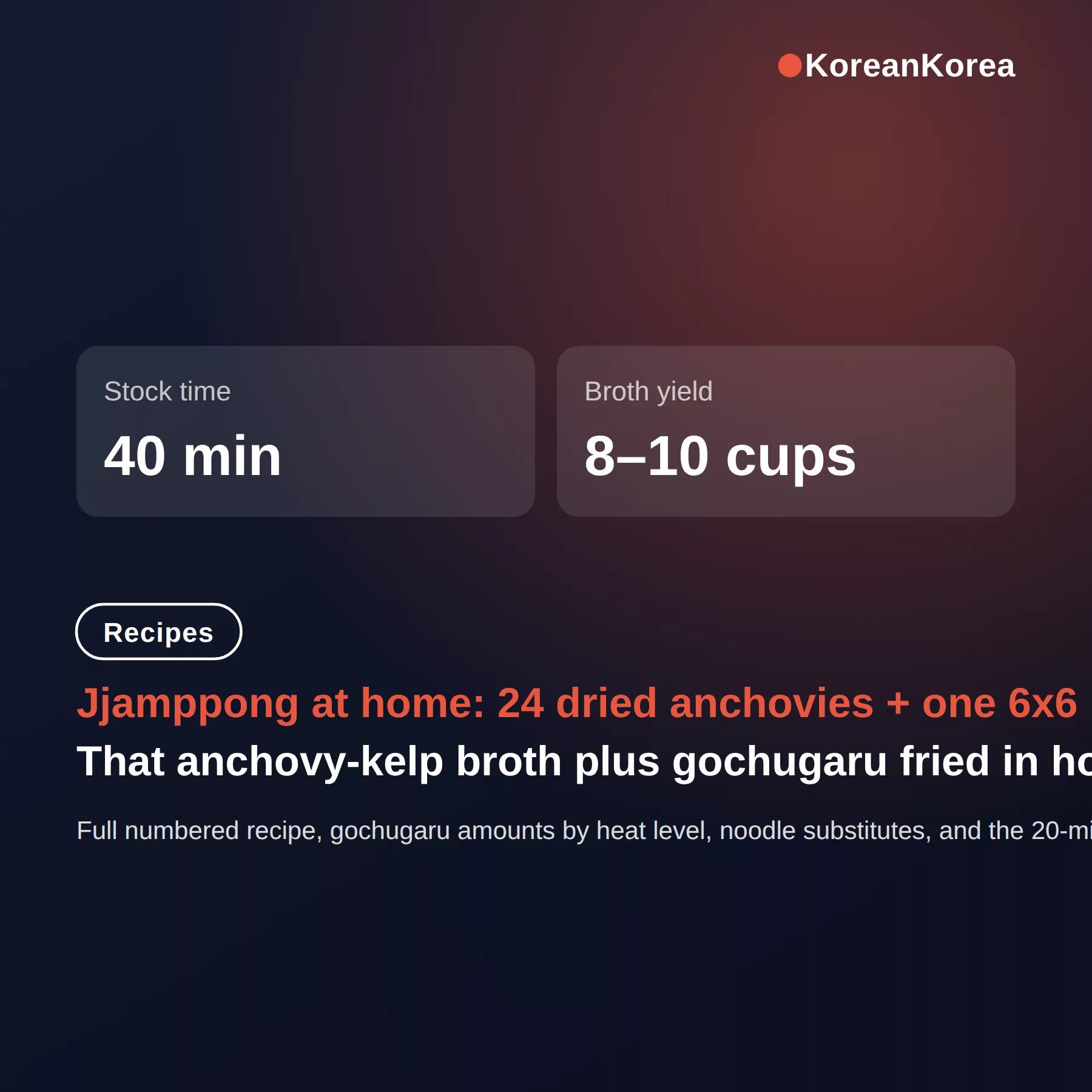
Simmer 1 oz (about 24) dried anchovies and one 6×6 inch piece of kelp in 12 cups water — 20 minutes medium-high, 20 minutes low — and strain to 8–10 cups.
Contents
- Jjamppong recipe, starting with the anchovy-kelp broth
- Why fry gochugaru instead of using chili oil
- From broth to bowl: the full recipe steps
- Spice level and substitutions for readers abroad
- The 20-minute shortcut broth — and when it is worth it
- What jjamppong is, when it got spicy, and what to order instead
Jjamppong recipe, starting with the anchovy-kelp broth
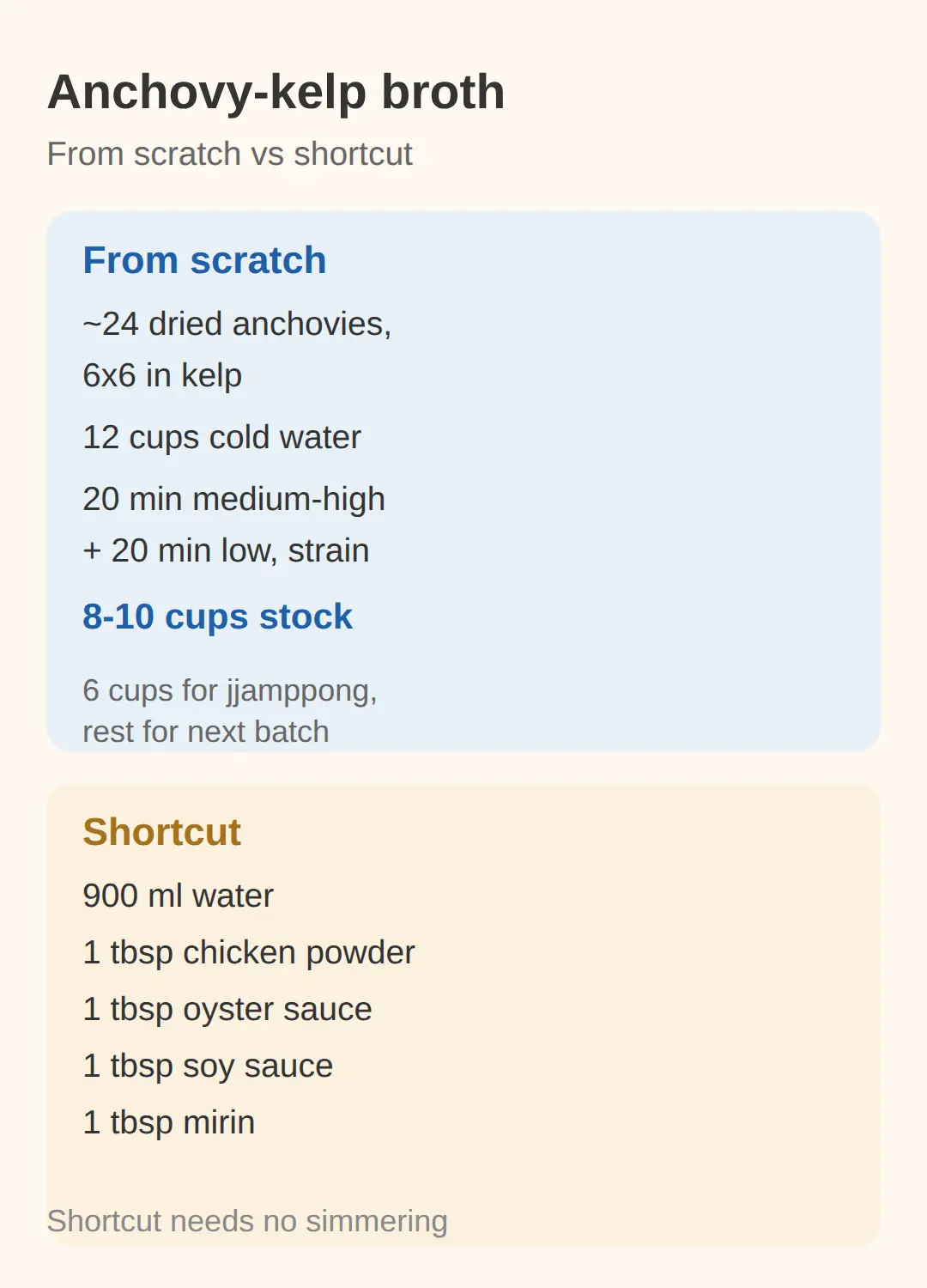
Maangchi’s home recipe starts with 1 oz (about 24) headless, gutted dried anchovies and one 6×6 inch piece of dried kelp simmered in 12 cups water — 20 minutes medium-high, 20 minutes low — strained to 8-10 cups of stock.
Anchovy and kelp stock is the key to the recipe’s savory depth, a method the recipe author credits to a Korean grocery store owner.
- Remove the heads and guts from about 24 large dried anchovies.
- Wipe one 6×6 inch piece of dried kelp with a damp cloth.
- Add both to a pot with 12 cups of cold water.
- Simmer 20 minutes over medium-high heat.
- Lower the heat and simmer 20 more minutes.
- Strain — you should get 8-10 cups of stock.
Of that strained stock, 6 cups go into the jjamppong.
If a full pot of broth feels heavy, a pre-made anchovy-dashima pouch does the same job with less fuss.
Before anything else, check whether your nearest Asian market stocks dried anchovies, kelp, gochugaru, and fresh wheat noodles — if those four are on the shelf, a from-scratch version is possible.
| Broth base | Chicken or pork bone stock, made in-house |
|---|---|
| Red oil | Korean chili oil, built into the stock base |
| Stock base packet | Sold commercially — usually unavailable outside Korea |
| Home replacement for the base | Dried anchovies + kelp (or a pre-made anchovy-dashima pouch) |
| Home replacement for the chili oil | Gochugaru fried in hot oil, about 1 minute |
| Fry gochugaru in hot oil | About 1 minute, until smoky — not burnt |
Why fry gochugaru instead of using chili oil
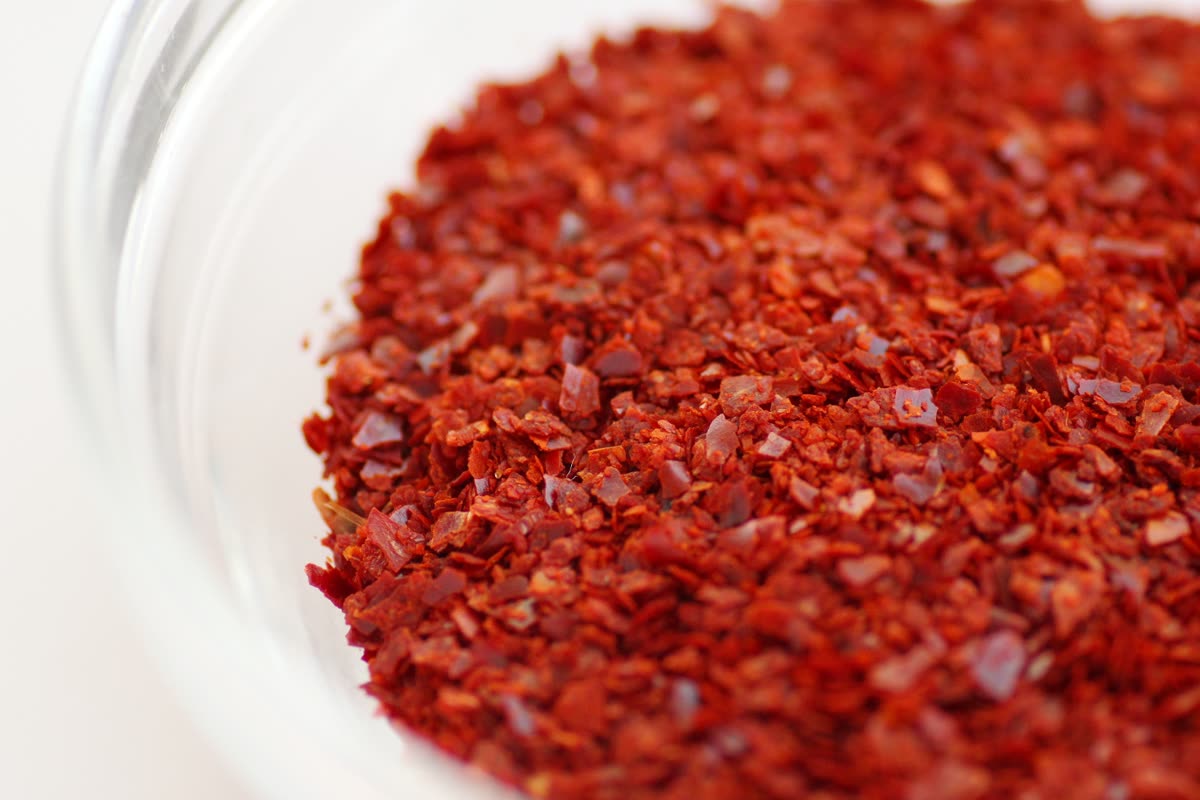
Frying 3 tbsp of gochugaru in hot oil for about 1 minute replaces Korean chili oil — the red heat comes from the oil itself, so no commercial chili oil or stock base is needed.
Recipes specify a large wok over high heat; push the aromatics and meat to one side, clear a spot of hot oil, and add 3 tbsp of the total 5 tbsp gochugaru there.
Fry it about 1 minute until it turns smoky, but not long enough to burn — burned flakes ruin the whole red oil base.
Frying the flakes this way releases the color and aroma that make the broth crimson and smoky, and restaurant jjamppong is judged largely on this red oil base.
If the oil starts smoking heavily before the minute is up, pull the wok off the heat for a few seconds and continue — the goal is smoky, not scorched.
👉 Samgyetang Recipe: Fight Summer Heat With a Boiling Soup, Not Ice
From broth to bowl: the full recipe steps
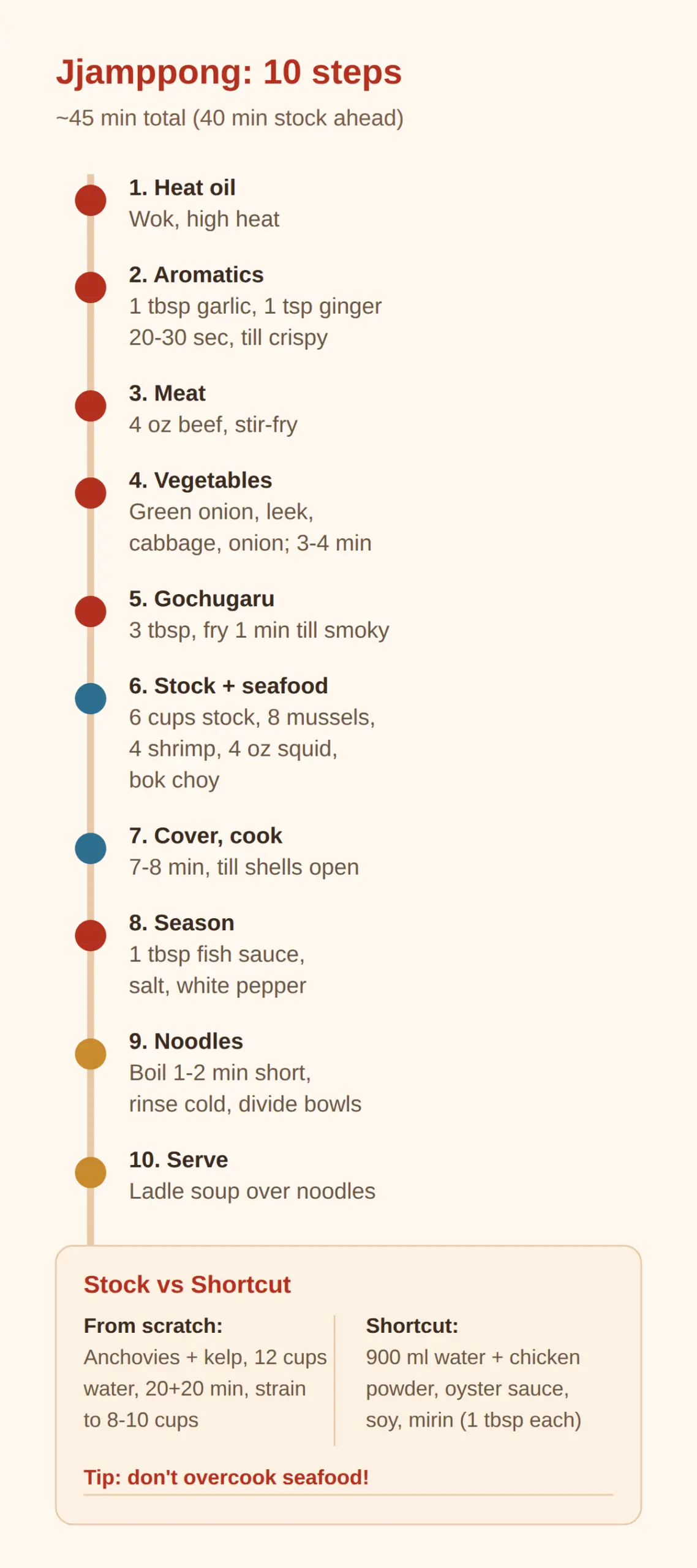
The order is aromatics, meat, vegetables, stock plus seafood, seasoning, then noodles — with the anchovy-kelp stock alone taking 40 minutes to simmer and strain.
| Step | What to do |
|---|---|
| 1 | Heat vegetable oil in a large wok over high heat. |
| 2 | Fry 1 tbsp minced garlic and 1 tsp minced ginger about 20-30 seconds, until the garlic starts to turn crispy. |
| 3 | Add 4 oz thinly sliced beef (or pork or chicken) and stir-fry. |
| 4 | Add green onion, leek, cabbage, and onion; stir-fry 3-4 minutes until wilted. |
| 5 | Clear a spot and fry 3 tbsp gochugaru in the hot oil about 1 minute until smoky. |
| 6 | Pour in 6 cups of the strained stock, add 8 mussels, 4 large shrimp, 4 oz squid rings, optional clams, and bok choy. |
| 7 | Cover and cook 7-8 minutes, until mussels and clams open and shrimp and squid are cooked through. |
| 8 | Season with 1 tbsp fish sauce, kosher salt, and white pepper. |
| 9 | Boil the noodles 1-2 minutes short of the package time, rinse under cold running water, and divide into bowls. |
| 10 | Ladle the hot soup, seafood, and vegetables over the noodles and serve immediately. |
The table covers the whole run from wok to bowl, with the 40-minute stock made ahead of step 1.
Do not overcook the seafood — shrimp and squid turn tough and dry, and cooking at home is exactly where you control that.
Mussels and clams need a scrub, debearding, and a few hours in salted water before they go in.
Spice level and substitutions for readers abroad
The two home recipes differ by 2 tbsp of gochugaru — 5 tbsp (Maangchi, serves 2) or 3 tbsp (Chrisse En Place) — so the amount is adjustable, and neither is the fixed answer.
| Ingredient | Amount | Notes |
|---|---|---|
| Gochugaru (hot) | 5 tbsp | Maangchi’s version; 2.5 tbsp per person |
| Gochugaru (mild-medium) | 3 tbsp | Chrisse En Place’s version; an easy place to start |
| Seasoning (Maangchi-style) | 1 tbsp fish sauce, salt, white pepper | Added at the end |
| Seasoning (alternative) | 1.5 tbsp soy sauce, 1 tsp ginger, mirin, salt, white pepper | In place of the fish-sauce finish |
| Noodles | 1 lb fresh or frozen jjajangmyeon-type | Boil 2-5 minutes until chewy, rinse in cold water |
Do not swap gochugaru for regular chili powder — gochugaru is smoky and relatively mild, which is why recipes can call 2-5 tbsp without the dish becoming inedibly hot.
When jjajangmyeon noodles are unavailable, Chinese wheat noodles, kalguksu noodles, or udon all work.
If you want less heat, start at 3 tbsp and taste the broth before adding more — more flakes means a spicier soup.
The 20-minute shortcut broth — and when it is worth it
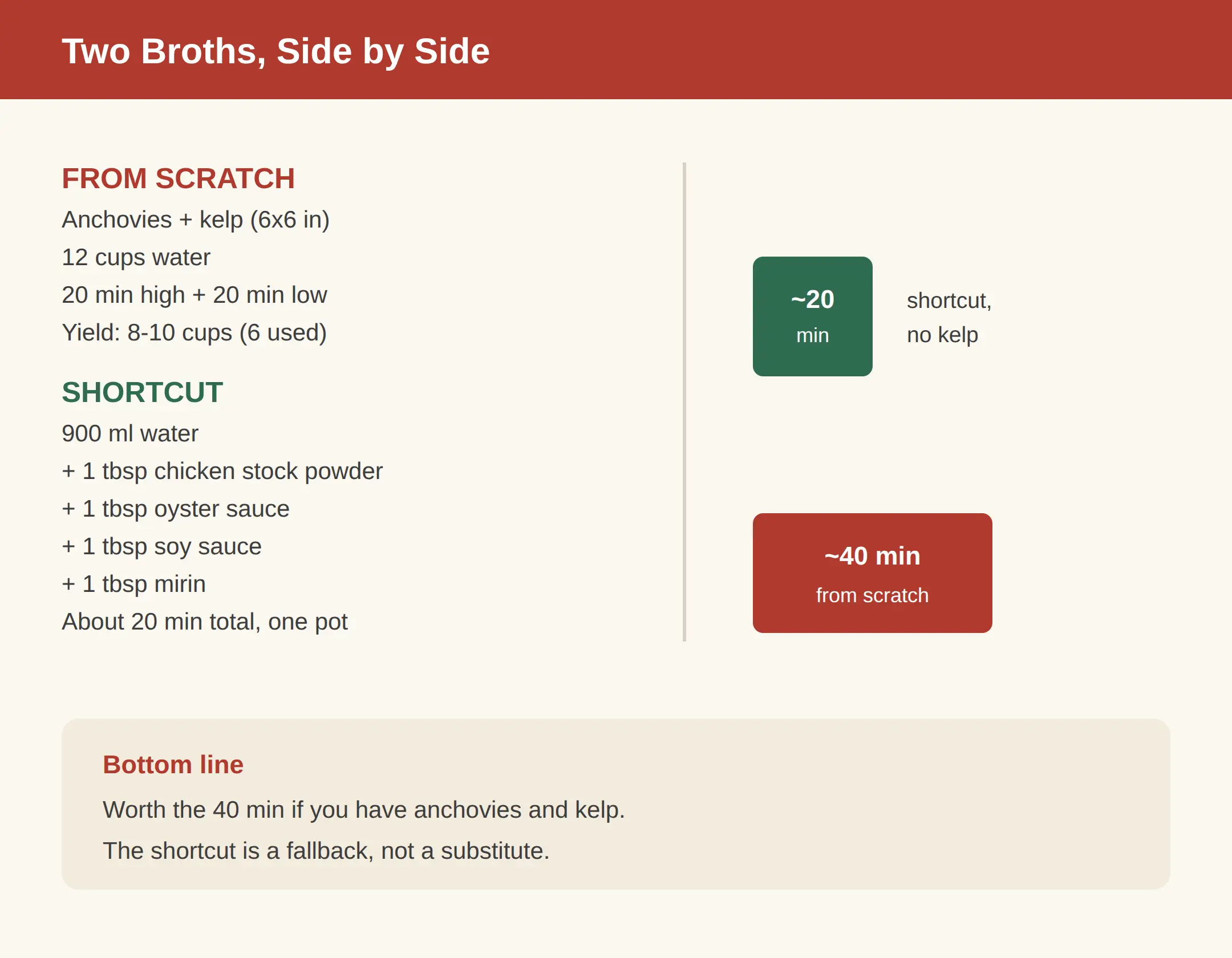
A shortcut broth exists: 900 ml water, 1 tbsp chicken stock powder, 1 tbsp oyster sauce, 1 tbsp soy sauce, and 1 tbsp mirin — a 20-minute bowl from a single source recipe.
| Method | Liquid | Additions | Time | Yield |
|---|---|---|---|---|
| From scratch | 12 cups water | ~24 dried anchovies + one 6×6 in kelp piece | 20 min medium-high + 20 min low | 8-10 cups, 6 go into the pot |
| Shortcut | 900 ml water | 1 tbsp each: chicken stock powder, oyster sauce, soy sauce, mirin | About 20 min total | Enough for one pot |
The from-scratch stock is the answer to the restaurant-base problem, and the shortcut is a fallback — not a substitute for learning the real broth.
Some recipes also soak dried shiitake mushrooms and add the soaking liquid to the stock for extra savory depth, or combine hot chicken stock with that liquid instead of anchovy-kelp stock.
If the anchovy-kelp ingredients are within reach, the 40-minute stock is the version worth the wait; when you have 20 minutes and no kelp, the shortcut gets a bowl on the table.
What jjamppong is, when it got spicy, and what to order instead
Jjamppong is a Korean-Chinese spicy noodle soup — seafood, meat, and vegetables stir-fried in oil, simmered in chicken or pork bone stock, and poured over boiled noodles.
It was developed by Chinese immigrants in Incheon, adapted to Korean tastes, and it remains a staple of Korean-Chinese restaurant delivery alongside jjajangmyeon.
The original early-20th-century jjamppong broth was pale grayish and mild, not red.
Jjamppong became spicy for Korean tastes starting in the 1960s, and by the 1980s only the spicy version remained under the name jjamppong, per the food-history accounts cited here.
The dish traces back to Shandong-style chǎomǎmiàn via port-city Chinese restaurants, especially Incheon’s Chinatown, while the name itself is widely given as coming from the Japanese word chanpon — which originally meant a mix of things.
Oyster jjamppong is said to be closest to the original form, and white jjamppong is the non-red variant still on menus; a hybrid order called jjamjjamyeon splits one bowl between jjamppong broth and jjajangmyeon noodles.
At the restaurant it comes with danmuji (yellow pickled radish), kimchi, or fried mandu dumplings, and jjamppong plus jjajangmyeon is the standard delivery pair, made with the same noodles.
A milder, no-noodle path is jjamppong-bap — the same spicy broth over rice — though its proportions are not confirmed in the sources here, so treat any ratio you find as untested.
My take: I would lead with the from-scratch anchovy-kelp broth and the gochugaru fried in oil, because that pair is what actually replaces the restaurant stock base you cannot buy abroad.
If time is short, I would take the shortcut broth on a weeknight and save the 40-minute stock for when the soup is the whole meal.
Related posts
📎 bibimbap recipe: season every vegetable separately, then mix — 4 servings
📎 Bulgogi recipe: why Asian pear makes the marinade, and what to use instead
📎 📅 다가오는 일정 — 발매·개봉·발표 캘린더
Sources
- Korean Wikipedia: chao-ma-mian origin, pale original broth, (ko.wikipedia.org)
- 5 cups anchovy-dashima stock, optional pork loin, al-dente n (chrisseenplace.com)
- 900 ml shortcut broth with chicken stock + oyster sauce; bea (myfreshdash.com)
Tips and common mistakes
- Check the four anchor ingredients first — dried anchovies, kelp, gochugaru, fresh wheat noodles — because without them a from-scratch bowl is not possible.
- Fry gochugaru about 1 minute until smoky, never burned — this blooming step is what the red oil base depends on.
- Stop cooking the seafood the moment mussel and clam shells open — overcooked shrimp and squid turn tough and dry.
- Boil noodles 1-2 minutes short of package time and rinse them under cold running water, since they keep cooking in the hot soup.
- Soak mussels and clams in salted water for a few hours and debeard them before they go in the pot.
FAQ
Q. What replaces the Korean-Chinese restaurant stock base at home?
Dried anchovies and kelp. Simmer about 24 headless, gutted anchovies and one 6×6 inch kelp piece in 12 cups water — 20 minutes medium-high, 20 minutes low — then strain to 8-10 cups. A pre-made anchovy-dashima pouch works in place of the from-scratch pot.
Q. When did jjamppong become spicy?
From the 1960s, when spiciness was added to suit Korean tastes. The original early-20th-century broth was pale and mild, and by the 1980s only the spicy version remained under the name jjamppong.
Q. Why fry gochugaru instead of using chili oil?
Frying gochugaru in hot oil for about 1 minute releases the red pigment and smoky aroma — it builds the red oil base restaurants are judged on — and it means no commercial Korean chili oil or stock base is needed for a home version.
Q. How do you keep squid and shrimp from getting tough?
Add the seafood only with the stock, cover, and cook 7-8 minutes — stop as soon as mussel and clam shells open. Shrimp and squid turn tough and dry when overcooked, and timing is the one thing home cooking controls best.
Q. Is jjamppong-bap a real milder variation?
It appears in Korean recipe references as the same stir-fried seafood and spicy broth served over rice instead of noodles, but its proportions and method were not confirmed in the sources behind this post — treat any recipe you find as a starting point, not a tested ratio.
Print the broth ratio — 24 anchovies, one 6×6 in kelp, 12 cups water, 40 minutes — and keep it next to the stove.
#jjamppongrecipe #jjamppongbrothfromscratch #anchovykelpstock #gochugarusubstitute #Korean-Chinesenoodlesoup #jjamppongabroad #spicyseafoodnoodles #jjajangmyeonnoodlessubstitute #mildjjamppong #Koreanrecipesabroad
📅Upcoming Dates — 이번 주 14 · D-4 Final two episodes drop on Disney+/Hulu전체 보기 →