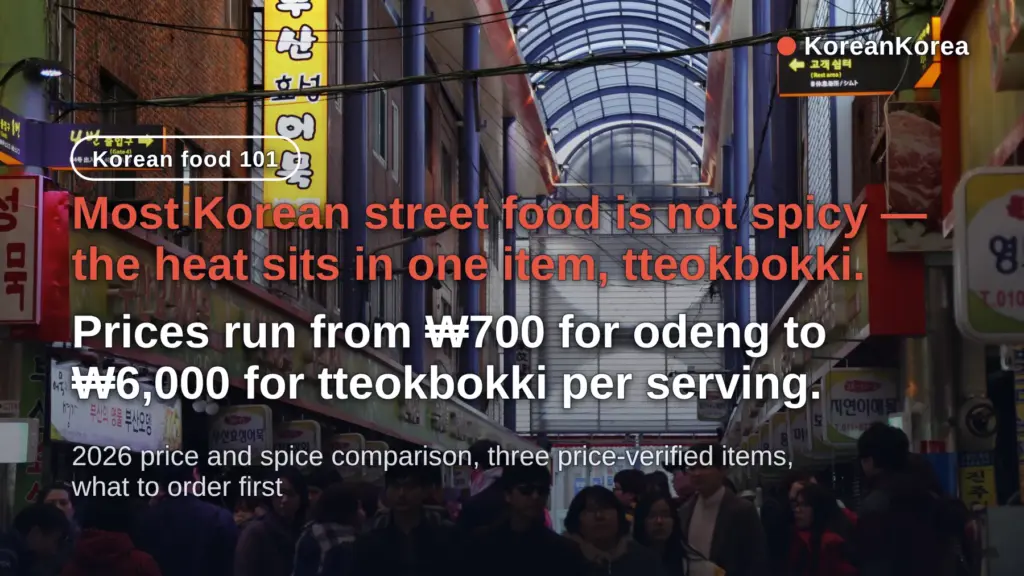
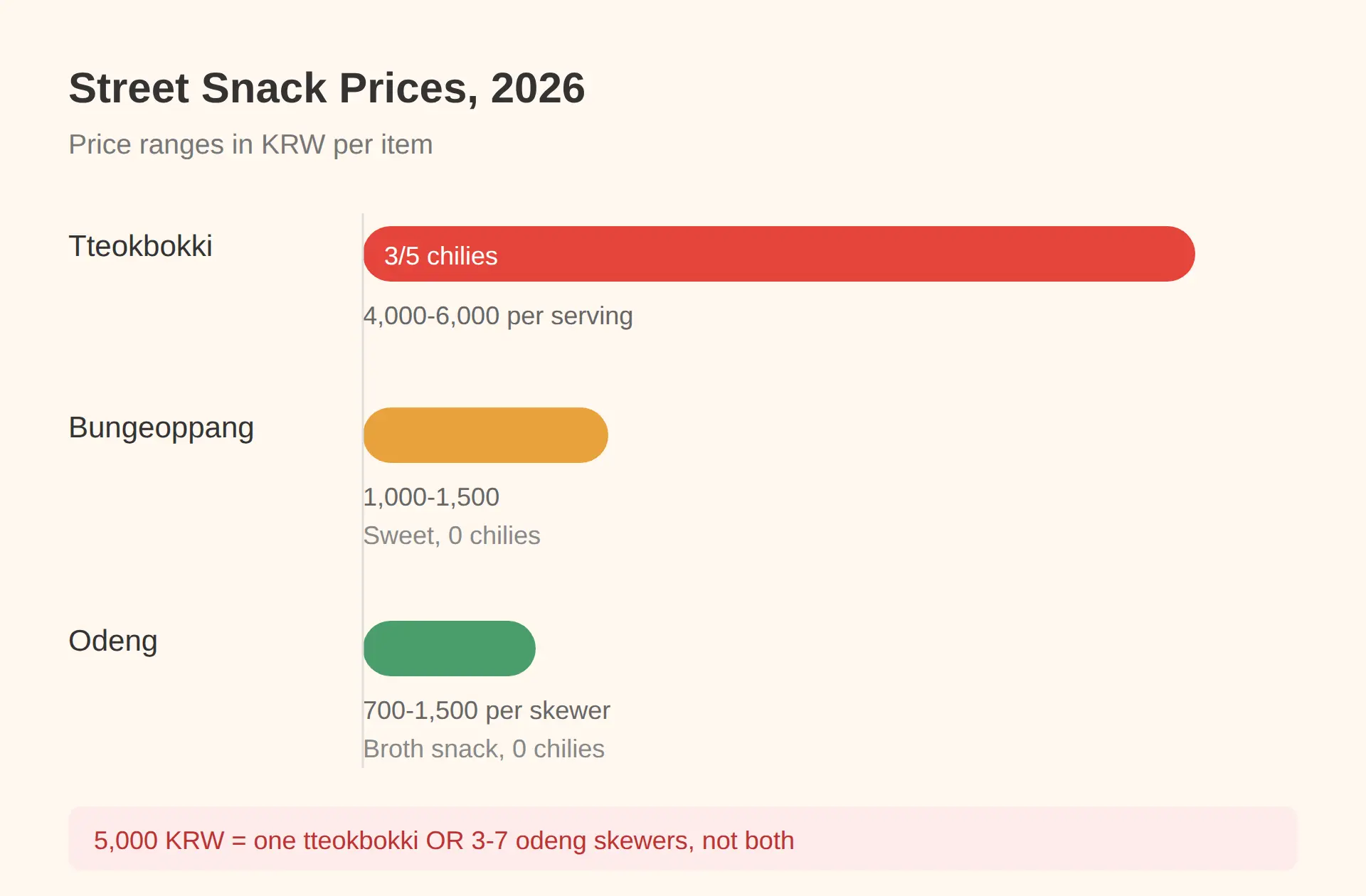
Most Korean street food is mild; the spice risk is concentrated in tteokbokki, rated 3 out of 5 chilies and priced at 4,000-6,000 KRW per serving.
That means a traveler who cannot handle heat can eat at almost any stall by picking items without a chili rating.
This post answers how spicy each item is, what the confirmed prices are, and what to order first.
Key facts — As of 2026-10-02
- Tteokbokki runs 4,000-6,000 KRW per serving and is rated 3/5 chilies — the hottest of the 11 items in the 2026 street food comparison.
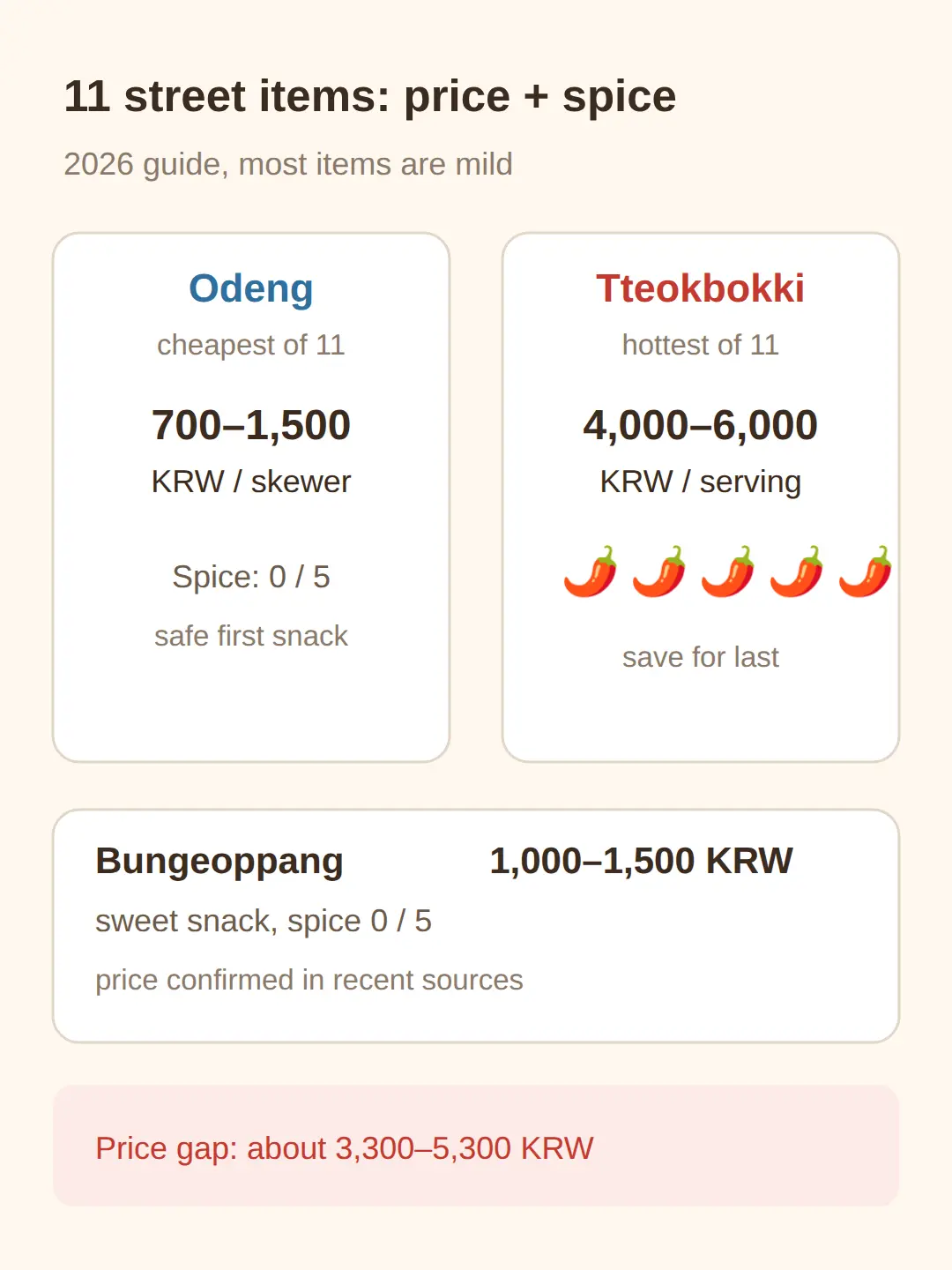
- Odeng costs 700-1,500 KRW per skewer, the cheapest item in the 2026 guide, meaning 5,000 KRW buys roughly 3-7 skewers.
- Bungeoppang sells for 1,000-1,500 KRW with no chili rating — the spice risk is concentrated in sauce-based items, per the two 2026 Korean street food guides.
Is Korean Street Food Spicy, and How Much Does It Cost?
| Odeng (fish cake skewer) | 700–1,500 per skewer — cheapest of the 11 items |
|---|---|
| Bungeoppang (sweet filled cake) | 1,000–1,500 |
| Tteokbokki (spicy rice cakes) | 4,000–6,000 per serving — 3/5 chilies, hottest of the 11 items |
Most items are mild, and tteokbokki is the one hot item — 3 out of 5 chilies, 4,000-6,000 KRW per serving.
The 2026 comparison covers 11 items, each with a price in KRW and a chili count.
Only three of those prices are confirmed in recent sources: odeng at 700-1,500 KRW per skewer, bungeoppang at 1,000-1,500 KRW, and tteokbokki at 4,000-6,000 KRW.
The gap between the cheapest item (odeng, from 700 KRW) and the priciest (tteokbokki) is about 3,300-5,300 KRW.
If you want a safe first snack, start with odeng or bungeoppang and leave tteokbokki for last — that order ramps up to the 3-chili item instead of starting there.
How Much Is Tteokbokki, Odeng and Bungeoppang in Korea?
| Item | Price (KRW) | Spice level |
|---|---|---|
| Odeng | 700-1,500 per skewer | 0 chilies |
| Bungeoppang | 1,000-1,500 | 0 chilies (sweet snack) |
| Tteokbokki | 4,000-6,000 per serving | 3/5 chilies |
5,000 KRW buys roughly one serving of tteokbokki, or about 3 to 7 odeng skewers (5,000 divided by 700-1,500).
Prices may be per piece or per serving depending on the stall, so treat these figures as guides.
If your snack budget is 5,000 KRW, one tteokbokki serving or a run of odeng skewers uses it up — you cannot comfortably get both.
Which Korean Street Food Is Not Spicy?
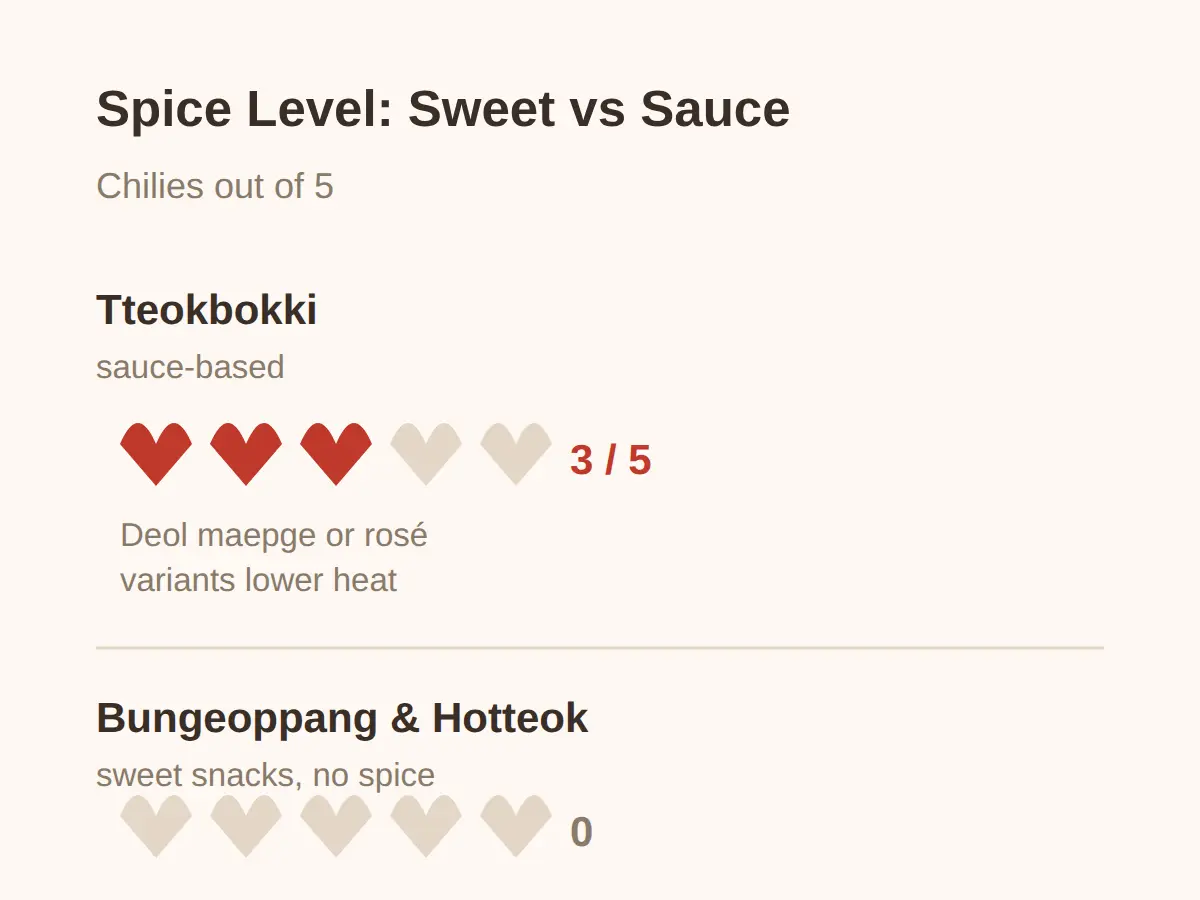
Bungeoppang and hotteok carry no chili rating — the spice risk sits in sauce-based items like tteokbokki.
Bungeoppang is a sweet filled cake and hotteok is a sweet pancake with cinnamon-sugar filling, so neither shows up on the heat scale.
Tteokbokki has exits, too: some stalls offer ‘deol maepge’ (less spicy), which reduces the heat.
Do not judge by color — red-looking items are not always the spiciest, because heat comes from the sauce.
If a dish looks red but the heat comes from a sauce you can dial down, asking for ‘deol maepge’ is the phrase that lowers it.
Can Vegetarians Eat Tteokbokki at a Street Stall?
Be careful — fish stock may be hidden in tteokbokki sauce.
This is the one confirmed dietary risk in the 2026 sources: the sauce can contain fish stock even when the dish does not look like it.
Sweet snack items such as bungeoppang avoid the issue, but a full vegetarian-safe item list is not established in the available sources, so check ingredients before ordering anything sauce-based.
If fish stock is a dealbreaker for you, sweet snacks without sauce are the safer pick at a stall.
If it were my first night at a market, I would order odeng or bungeoppang first and save tteokbokki for last — the mild skewers let me settle in, and I only reach for the 3/5 chili sauce once I know what my mouth can take.
Related posts
📎 📅 Upcoming Dates — Release & Event Calendar
Sources
- Snack budget 5,000–10,000 KRW for 2–3 items (secondary sourc (mykoreatip.com)
- Red color does not reveal heat level; fish stock hidden in t (discoverrealkorea.com)
What to Order First at a Korean Street Stall
- Check whether your stall takes card — some small stalls are cash-only.
- Look for rosé or cream tteokbokki if the classic gochujang version is too hot.
- A 5,000-10,000 KRW snack budget covers 2-3 items, so plan your order around that.
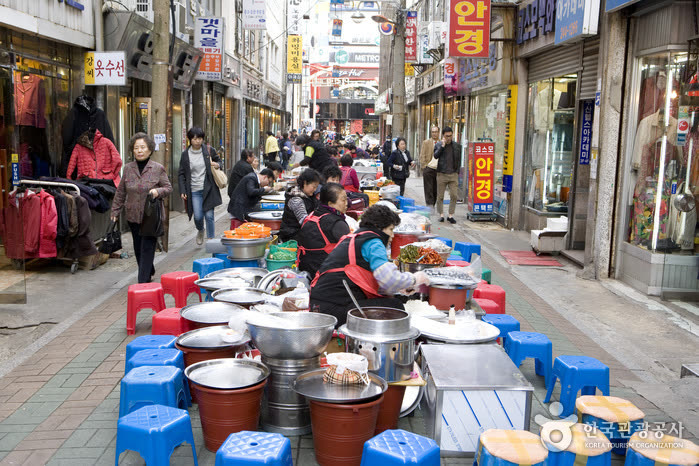
- Find the carts in market alleys (Gwangjang, Mangwon) or Myeongdong stalls rather than hunting randomly.
- Ask about ‘deol maepge’ availability before you commit to a full serving of tteokbokki.
- Try bungeoppang or hotteok first — sweet snacks carry no chili rating at all.
FAQ
Q. Is Korean street food actually spicy?
Most items are mild. In the 2026 comparison, the heat concentrates in tteokbokki, rated 3/5 chilies; bungeoppang and hotteok carry no chili rating.
Q. How much is tteokbokki in Korea?
Tteokbokki runs 4,000-6,000 KRW per serving, per the 2026 street food guide values.
Q. Which Korean street food costs under 2,000 KRW?
Odeng at 700-1,500 KRW per skewer and bungeoppang at 1,000-1,500 KRW are the confirmed items under 2,000 KRW.
Q. What does ‘deol maepge’ mean when ordering tteokbokki?
It means ‘less spicy.’ Some tteokbokki stalls offer it, and it reduces the heat of the gochujang-based sauce.
Q. Is Korean food spicier than Indian food?
One 2026 source says Korean street food heat comes from gochujang sauce and is generally milder than Indian curry heat, but no measured comparison has been verified — treat it as a rough impression, not a fact.
Check the 2026 street food guide’s full 11-item table before your market visit — three prices are confirmed here, and the rest vary by stall.
Cover photo: Indoors Market in Busan by Ryan Bodenstein — CC BY 2.0
#koreanstreetfood #tteokbokkiprice #iskoreanfoodspicy #odeng #bungeoppang #deolmaepge #koreanfood101
📅Upcoming Schedule — this week 1 · D-7 Godsoi lineup removed from menus after 2026-11-09See all →Last updated 2026-10-28. Editorial policy