Yukgaejang keeps 4-5 days in the refrigerator and up to 3 months in the freezer, and its flavor peaks in the first 24-48 hours after cooking.
For a reader cooking outside Korea, that means one two-hour pot on the weekend covers most of a week of single lunches.
This post covers the storage windows, how to portion it for the freezer, how to reheat it, and what to use instead of gosari and doraji.
Contents
- Yukgaejang recipe make ahead freezer: the storage answer first
- Does yukgaejang taste better the next day?
- How do you freeze yukgaejang so it reheats well?
- How do you reheat yukgaejang?
- What replaces gosari and doraji outside Korea?
- The 2-hour pot: what you are actually cooking
Yukgaejang recipe make ahead freezer: the storage answer first
Yukgaejang freezes well for up to 3 months and keeps 4-5 days in the refrigerator, according to the recipe publisher Umamicart.
Put another way, the freezer window stretches the fridge window many times over, so freezing is what turns one pot’s 6-8 servings into meals you can eat weeks apart.
A full pot makes 6-8 generous servings, which is exactly 6-8 single freezer portions.
The soup format is the reason it survives freezing.
There are no noodles or crispy elements to lose texture, and the sturdy vegetables hold up through a freeze-thaw cycle.
If a dish like this freezes, make the full pot rather than halving it — halving saves simmering time only in theory, because the beef needs roughly the same time regardless of quantity.
| Refrigerator, airtight container | 4-5 days |
|---|---|
| Refrigerator, reheated to a boil every other day | Up to 7 days |
| Freezer, individual or family portions | Up to 3 months |
| Flavor peak after cooking | 24-48 hours |
Does yukgaejang taste better the next day?
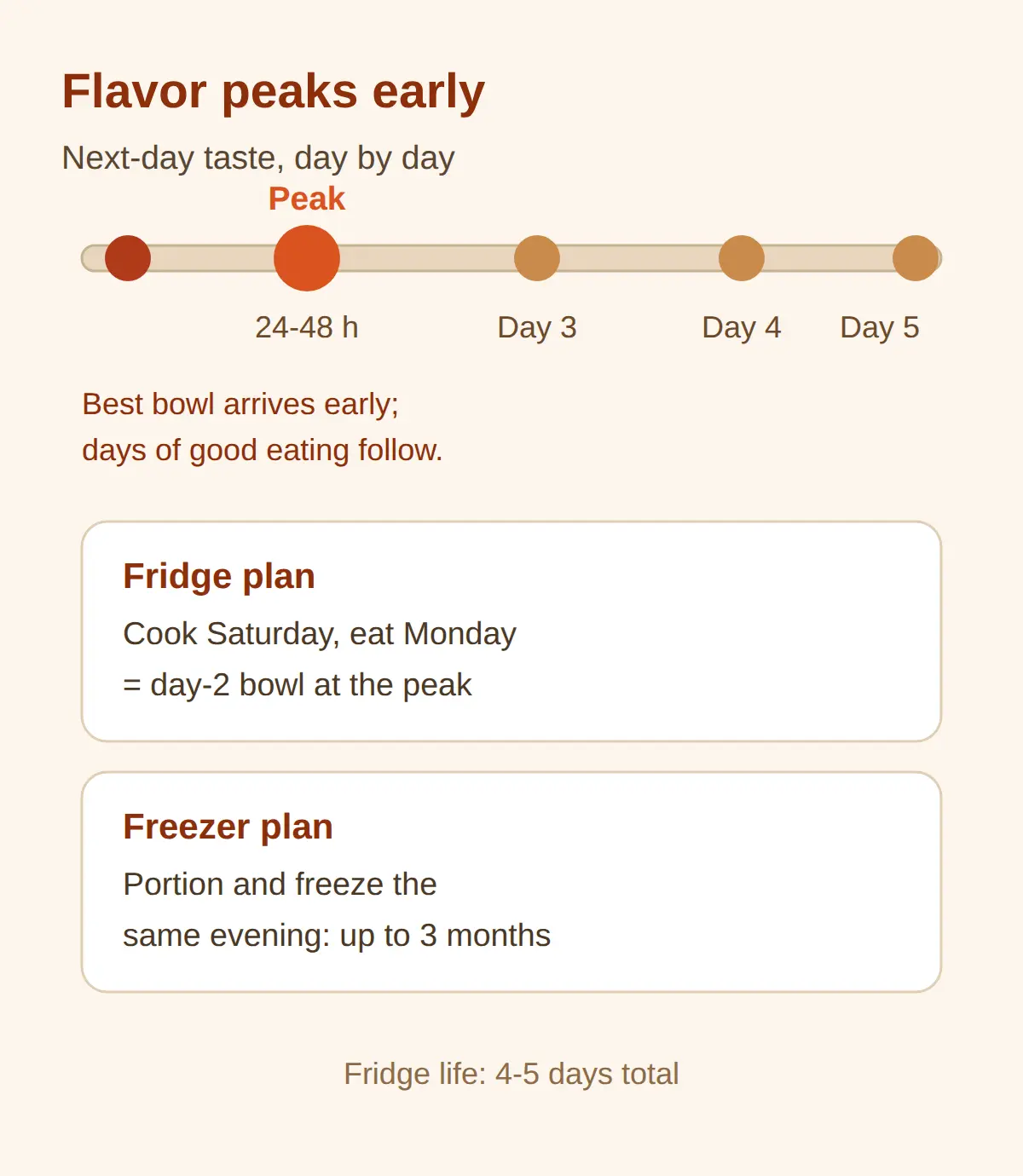
Yes — flavor generally improves over the first 24-48 hours of refrigeration, and that is the reason it is traditionally made in large batches.
The peak window lands just 5-12% into the 4-5 day fridge life, so the best bowl arrives early and you still have days of good eating after it.
Korean households have long cooked a big pot for exactly this reason.
One common account is that moms made a large pot to feed the family while they were away, which is where the make-ahead culture around this soup comes from.
If a day-2 bowl is the goal, cook on Saturday and eat the first bowl on Monday; if the freezer is the goal, portion and freeze on the same evening you cook.
How do you freeze yukgaejang so it reheats well?
Divide the cooled pot into individual portions, freeze them flat, and take out one portion per meal.
This is the method a reader of Maangchi’s yukgaejang recipe uses, and it works because the soup reheats evenly in single-serving blocks.
One two-hour cook therefore yields up to three months of single lunches.
Egg ribbons are the one soft spot.
They hold up reasonably well through freezing, but the texture is best in the first day or two, so skip the egg on the batch you plan to freeze and add a fresh drizzle when reheating.
Freeze before adding delicate garnishes, and label containers with the freeze date so the 3-month limit stays visible.
How do you reheat yukgaejang?
Reheat gently on the stovetop over medium-low heat until steaming, and add a splash of water or broth if the soup thickened in storage.
For a single portion the microwave works fine, but for larger amounts the stovetop is the better route.
The fridge life can stretch past the standard window with one habit.
Maangchi’s recipe notes the soup keeps 3-4 days normally, or up to 1 week if reheated to a boil every other day — about double the baseline window.
If a week of fridge meals sounds right for your week, reheat the whole pot every second day; if you eat one bowl at a time, freeze the rest and leave the fridge math out of it.
What replaces gosari and doraji outside Korea?
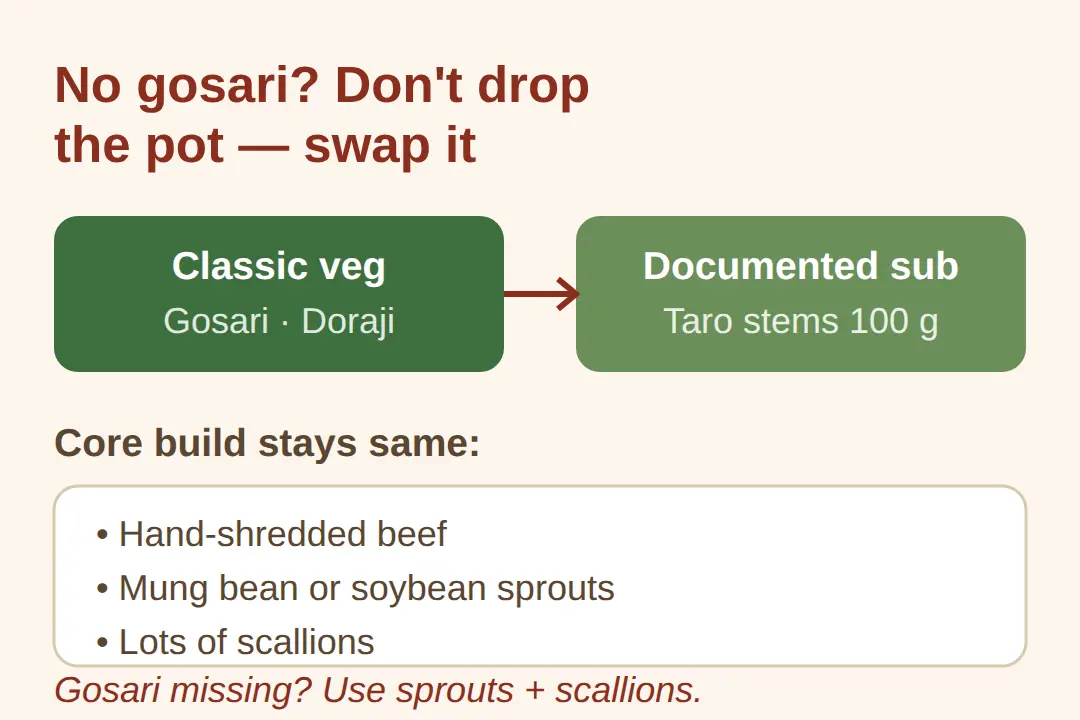
Gosari (fernbrake) and doraji (bellflower root) are the classic vegetables, and Asian grocery stores carry both dried or soaked.
Beyond those, the documented variant is taro stems, used at about 100 g alongside the fernbrake in one published version.
The core build otherwise stays the same: hand-shredded beef, mung bean or soybean sprouts, and a large amount of scallions.
Substitution advice beyond the classic list is thin in published sources, so treat store availability as the deciding factor.
Some restaurants skip gosari entirely, which is one reason cooks say the homemade version beats the restaurant bowl.
If gosari is unavailable, build the pot with the sprouts and scallions rather than dropping the soup; the texture changes, the method does not.
The 2-hour pot: what you are actually cooking
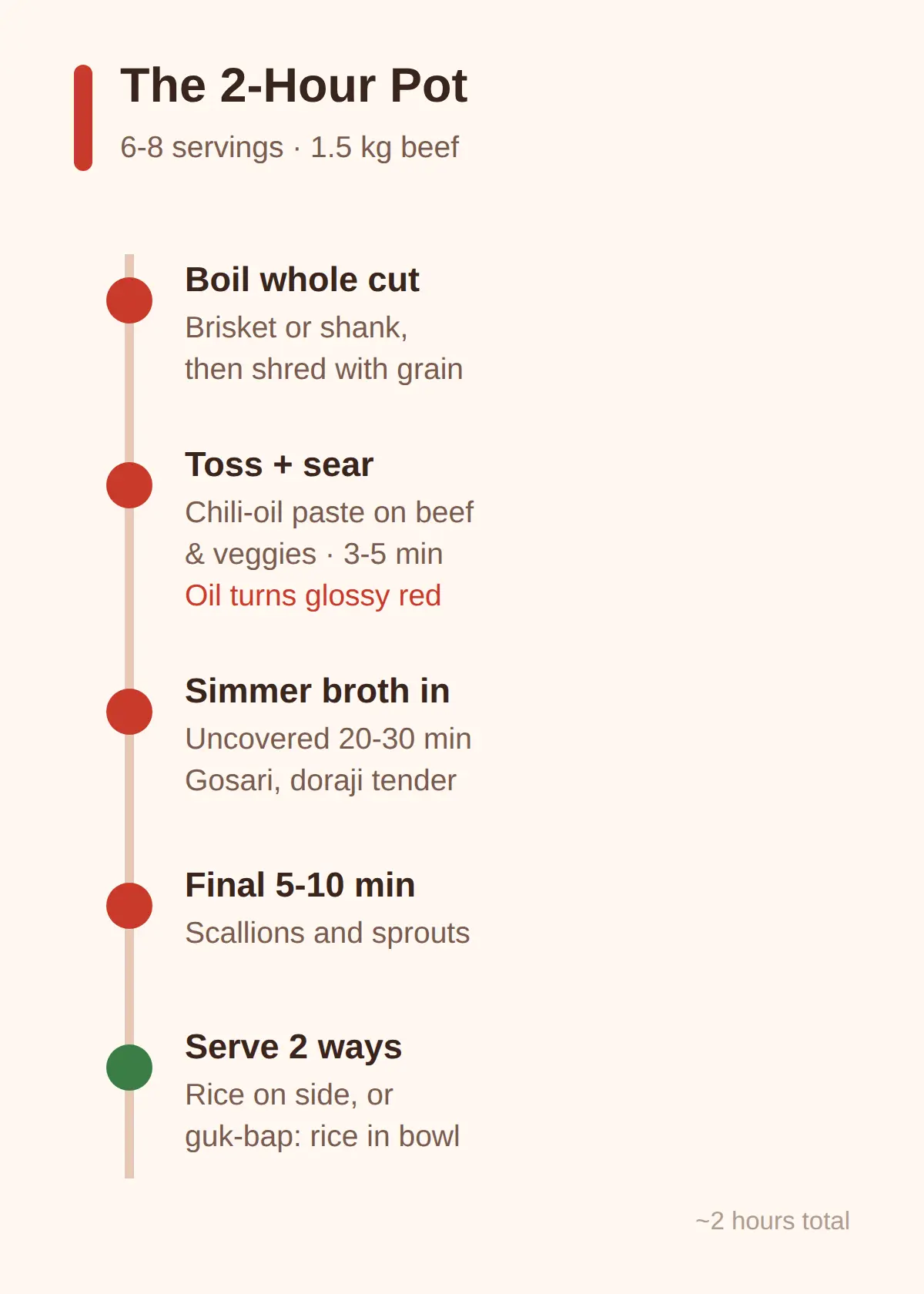
One full cook takes about 2 hours and produces the 6-8 servings referenced throughout this post.
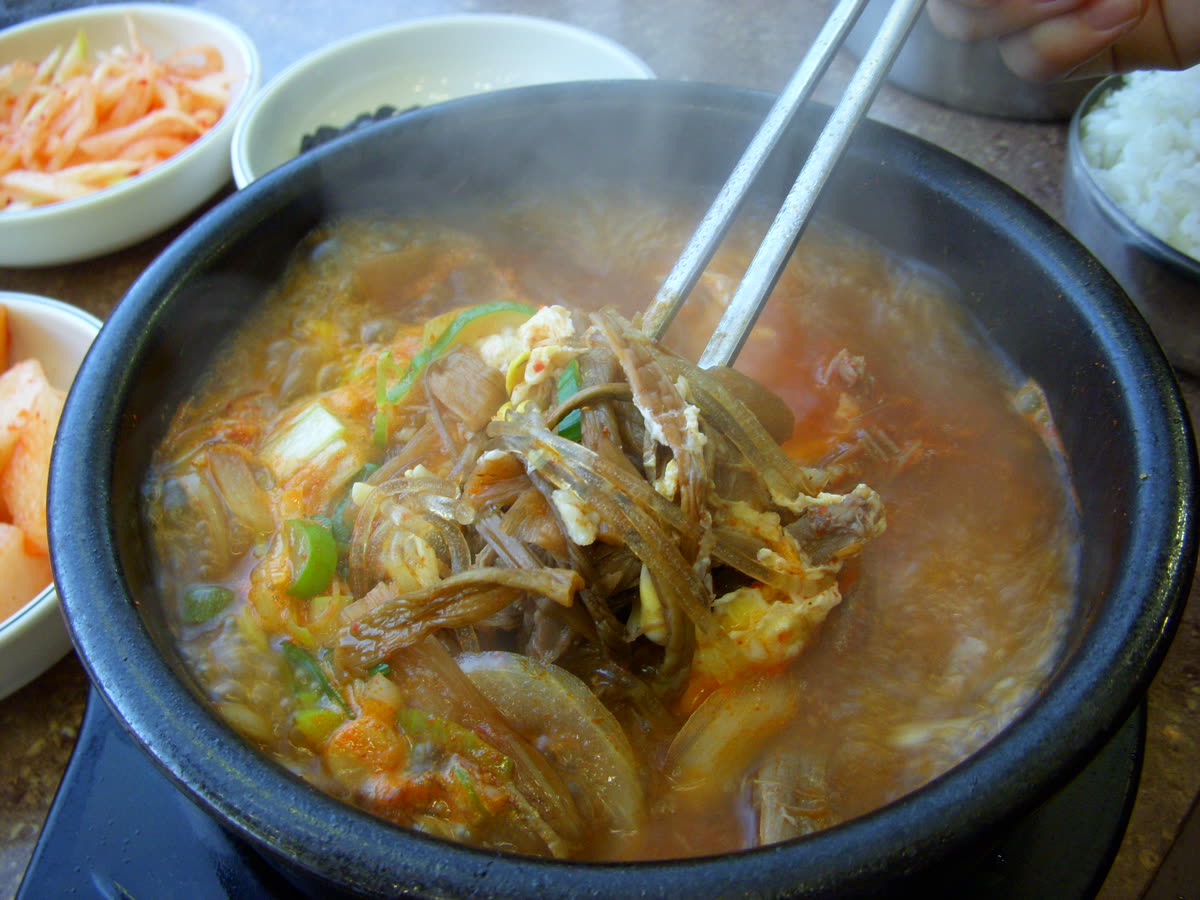
The base is brisket or shank, about 1.5 kg, boiled whole and then shredded with the grain so the meat pulls into long fibrous strands.
After the broth is seasoned, the soup simmers uncovered 20-30 minutes until the gosari and doraji are fully tender, with scallions and sprouts going in for the final 5-10 minutes.
The deep red color comes from a specific step, not from flakes floating in plain broth.
The shredded beef and vegetables are tossed with a chili-oil seasoning paste, seared 3-5 minutes until the oil turns glossy red, and only then does the broth go back in.
Serve it two ways: rice on the side as part of a table spread, or guk-bap style with rice added straight into the bowl.
👉 the full yukgaejang recipe with storage guidance on Umamicart
👉 Kstory’s traditional yukgaejang recipe with exact seasoning ratios
👉 Maangchi’s classic yukgaejang recipe for reference
Related posts
Sources
- Umamicart: fridge 4-5 days, freezer 3 months, flavor peaks 2 (umamicart.com)
- ~2 hours cook time, 4-6 servings, difficulty medium (kstory.blog)
Key numbers at a glance
- Fridge: 4-5 days in an airtight container; flavor peaks at 24-48 hours.
- Freezer: up to 3 months; portion into single servings before freezing.
- Reheat every other day to stretch fridge life to about a week.
- One 2-hour pot = 6-8 servings, or up to 3 months of single lunches.
- Add egg ribbons fresh at serving time for any portion that was frozen.
FAQ
Q. Can you freeze yukgaejang and how long does it keep?
Yes. It freezes well for up to 3 months in individual or family-sized portions, and keeps 4-5 days in the refrigerator.
Q. Does yukgaejang taste better the next day?
Its flavor generally improves over the first 24-48 hours of refrigeration, which is why it is traditionally made in large batches.
Q. How do you freeze yukgaejang so it reheats well?
Cool the pot, divide it into individual portions, freeze flat, and reheat one portion at a time on the stovetop over medium-low heat.
Q. What replaces gosari and doraji outside Korea?
Asian grocery stores carry both, dried or soaked; taro stems appear in one documented variant. Beyond that, published substitutes are not well established, so build the pot with sprouts and scallions if they are unavailable.
Q. Can you reheat yukgaejang in the microwave?
Yes, for single portions. For larger amounts, reheat on the stovetop over medium-low heat with a splash of water or broth.
Cook the pot this weekend, portion it Sunday evening, and the first day-two bowl lands early in the week — well inside the flavor peak.
Cover photo: AI-generated illustration (spicy beef soup) — AI-generated image, illustrative only
#yukgaejang #yukgaejangrecipe #koreanbeefsoup #makeaheadsoup #freezermeals #soupstorage #koreansouprecipe #mealprep
📅Upcoming Dates — 이번 주 19 · D-2 Final two episodes drop on Disney+/Hulu전체 보기 →