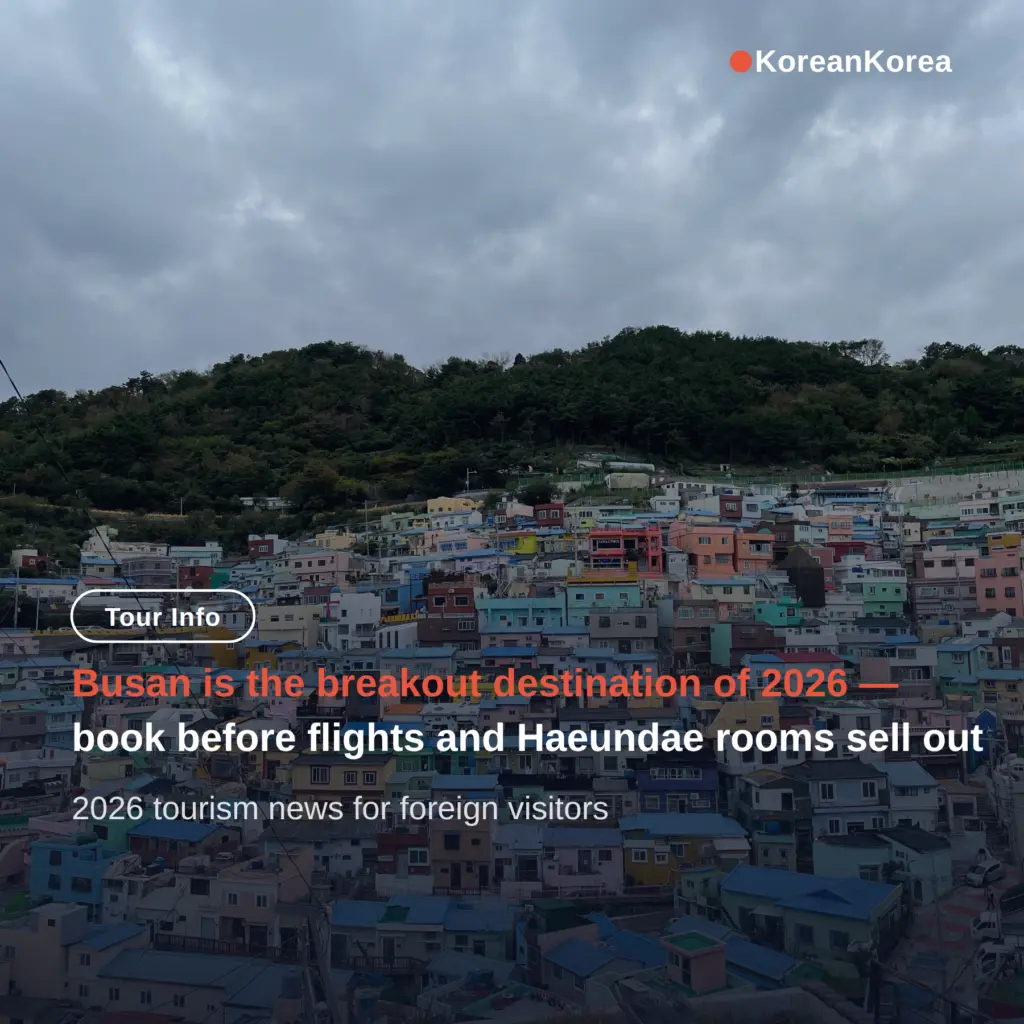
Two Korean outlets reported the same shift on September 6, 2026.
Korean Bizwire covered airlines adding seats for Taiwanese tourists, and The Korea Herald covered Busan’s plan to keep K-culture fans in town for several days.
This Busan travel guide explains what changed and how to plan a trip around it.
Contents
- Busan travel guide 2026: what "Busan sickness" means
- From day trips to longer stays
- How to plan around the 2026 surge
- Getting there and getting around
- What to book and when
Busan travel guide 2026: what "Busan sickness" means
"Busan sickness" is the name Taiwanese travelers gave their short, repeat getaways to Busan.
The trips are short enough that one visit does not feel like enough, so the same travelers keep coming back.
On September 6, 2026, Korean Bizwire reported that airlines are responding by adding capacity on routes serving these travelers.
More seats mean more competition for the same rooms and restaurants in peak season.
For a first-time visitor, that changes when to book, not where to go.
| Flights | Airlines are adding capacity as Taiwanese visitor numbers surge |
|---|---|
| Trip length | The city is promoting multi-day K-culture stays over day trips |
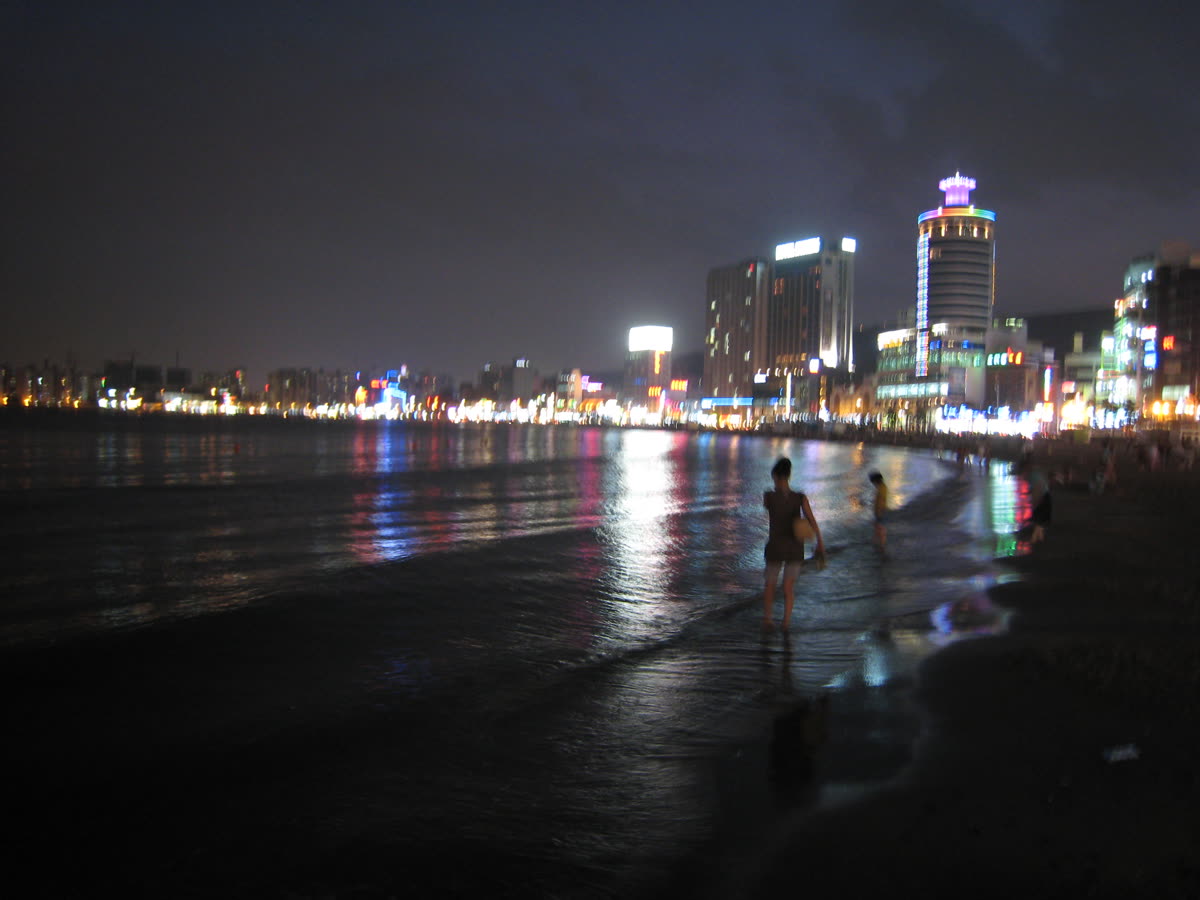
| Booking | Flights and lodging around Haeundae face earlier sellouts |
| Planning | The 2-night, 3-day course is the standard structure |
From day trips to longer stays
Busan’s official strategy, as reported by The Korea Herald, is to attract K-culture fans who stay several days instead of a few hours.
The city is betting that fans who come for K-dramas, films, and music will spend more nights in town.
What this means for an itinerary: the standard single-day loop is no longer the template the city itself plans around.
A 2-night, 3-day course is now the standard structure in current Busan guides, built around getting there, neighborhood-by-neighborhood lodging, and food.
Building a trip at that length fits both the city’s direction and how the guides are organized."},{
How to plan around the 2026 surge
The practical implication of added flights and a longer-stay push is that visitors should plan ahead: reserving earlier than in a typical year is a sensible precaution, especially for the 2-night courses that more travelers are now taking.
The booking takeaway for foreign visitors is to reserve earlier than a normal year, especially for the 2-night courses that more travelers are now taking.
Crowd pressure concentrates at the same places the new visitors are headed, so a realistic plan keeps one or two backup spots per day.
Booking transport first and lodging second works, because added airline capacity means flights are the part with the most new supply.
Getting there and getting around
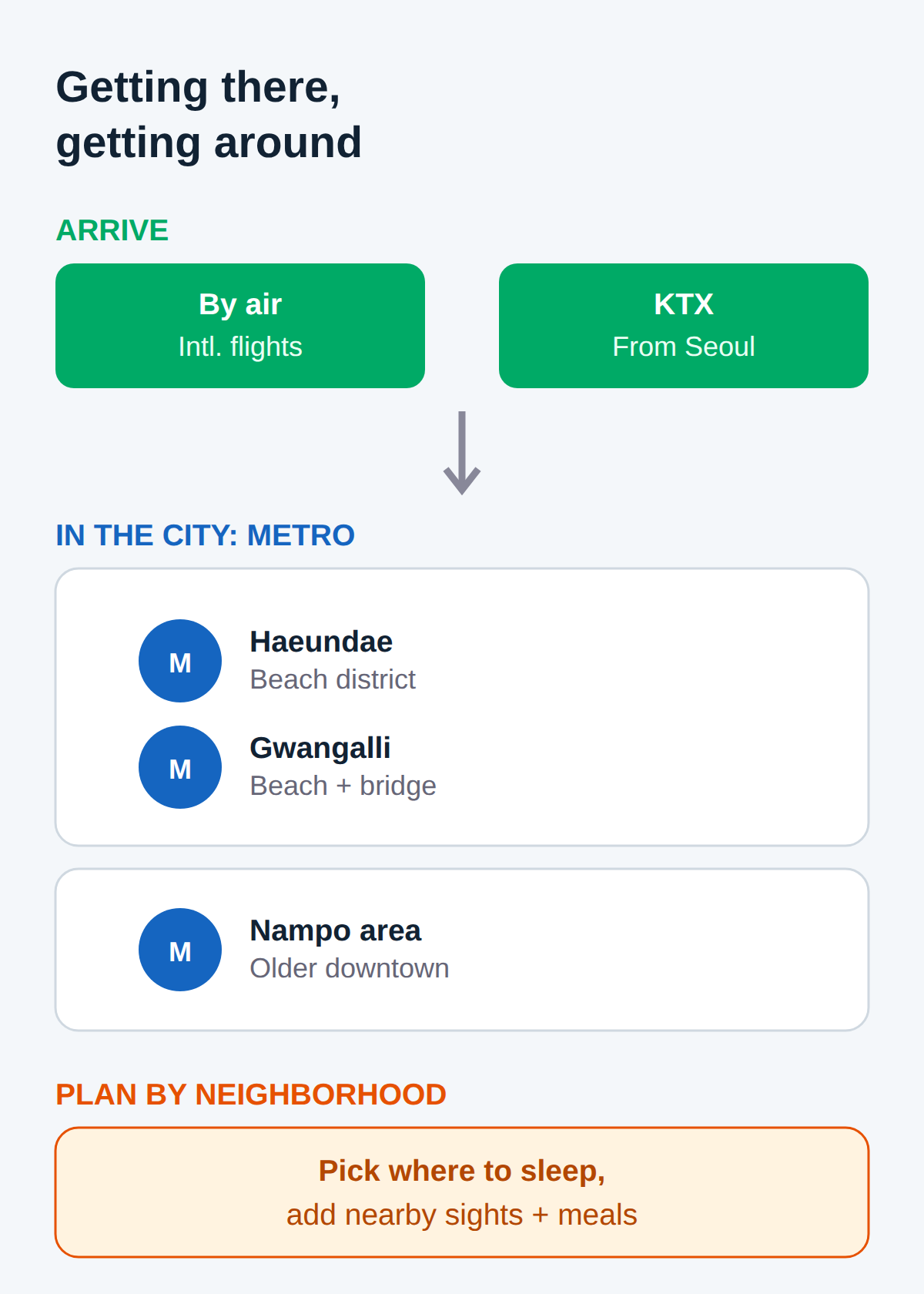
Busan sits at the southeastern tip of Korea, and most international visitors arrive by air or by KTX from Seoul.
Within the city, the metro covers the districts that matter most to visitors, including Haeundae, Gwangalli, and the older downtown around Nampo.
Current Korean-language guides organize Busan by neighborhood rather than by attraction list, which makes planning easier: pick where to sleep, then attach nearby sights and meals to each day.
That structure also limits cross-town travel, which matters more now that crowds are up.
What to book and when
The safest sequence for a first trip is flights, then lodging, then any fixed-date experiences.
As of September 6, 2026, there is no published sell-out data for Busan’s peak periods, so treat the earlier-booking advice as a precaution rather than a measured rule. | Arrange an itinerary so that at least one day works without reservations — the surge makes same-day changes harder than before.
Travelers who want a printable structure can follow the 2N-3D course pattern used in 2026 Korean-language guides: one day for arrival and downtown, one for the coast, one for departure.
👉 Busan travel guide with neighborhood-by-neighborhood lodging and 2-night-3-day courses
👉 Korea Bizwire report on Taiwanese tourists and airline response to Busan demand
👉 Korea Herald coverage of Busan’s longer-stay strategy for K-culture fans
Related posts
📎 Chuseok 2026 Korea travel: free parking, what closes
📎 Seoul fireworks festival 2026 subway: Which Stations to Use Tonight
Sources
- Korea Bizwire: airlines adding capacity for Taiwanese touris (koreabizwire.com)
- Korea Herald: Busan officially betting on longer-stay K-cult (koreaherald.com)
- 2026 Korean-language guide covering transport, neighborhood (breezekorea.com)
Practical tips for 2026
- Book flights and Haeundae-area lodging earlier than a normal year
- Plan a 2-night, 3-day course rather than a day trip
- Pick a base neighborhood and attach nearby sights to each day
- Keep one or two backup spots per day for crowded times
FAQ
Q. Which airlines are adding flights to Busan?
Korean Bizwire reported on September 6, 2026 that airlines are adding capacity for Taiwanese travelers, but the specific carriers and route frequencies have not been confirmed in the available reporting.
Q. What is Busan doing for longer-stay visitors?
The Korea Herald reported that Busan is officially targeting K-culture fans for longer stays. Specific programs such as discounts or visa measures were not detailed in the reporting.
Q. How many days do you need in Busan?
Two nights and three days is the standard course length in current Busan guides. That covers arrival day, a full coastal day, and departure.
Q. When should I book for the 2026 surge?
Earlier than in previous years, especially for flights and lodging near Haeundae. No specific sell-out timeline has been published, so the safest rule is to book as soon as dates are fixed.
Planning a trip this year? The 2026 surge means visitors to Busan should book earlier than usual and expect crowds at popular spots.
Cover photo: Busan Gamcheon Village 2022-10-09 by RonanHoogmoed — CC BY-SA 4.0
#Busantravelguide #Busan2026 #K-culturetravel #TaiwanesetouristsBusan #Busanitinerary #Haeundaelodging #2night3dayBusan #Koreatravel2026 #Busantips #foreignvisitorsKorea
📅Upcoming Dates — 이번 주 4 · D-day Changdeokgung Moonlight Tour start (Sept 10–Oct 17, 30,000 K전체 보기 →