Yes — tteokbokki is doable with just gochujang and rice cakes: 2 tbsp gochujang per 500ml water, simmered about 20 minutes, with no fish cakes needed.
Contents
- Easy tteokbokki recipe with gochujang — the 20-minute one-pan method
- Tteokbokki without fish cakes — what to add instead
- How to make tteokbokki less spicy
- Ingredients table and where to buy them abroad
- Variations: cheese tteokbokki, rabokki, vegan
- Storage and reheating
Easy tteokbokki recipe with gochujang — the 20-minute one-pan method
The home ratio is 2 tbsp gochujang, 1 tbsp soy sauce, 1-2 tbsp sugar or corn syrup and 1 tbsp minced garlic per 2 cups (500ml) water, for 500g rice cakes, cooked about 20 minutes total.
Both the Korea Tourism Organization recipe and standard home recipes use one saucepan or skillet with a lid — no blender, no separate broth pot.
The ratio breaks down into 250ml water per 1 tbsp gochujang, and the simmer itself takes 10-12 of the 20 minutes — about 55-60% of the total time.
- Pour 500ml water into the pan and stir in 2 tbsp gochujang, 1 tbsp soy sauce, 1-2 tbsp sugar and 1 tbsp minced garlic.
- Bring it to a simmer, then add 500g rice cakes straight in — packaged tteok sold abroad is pre-cooked and needs no separate boil.
- Simmer 10-12 minutes, adding harder vegetables (onion, cabbage, carrot) early and soft ones last.
- Turn off the heat, then add garnish like chopped scallion or sesame seeds.
During the last 5 minutes, stir often — the thickening gochujang sauce sticks and burns on the pot bottom otherwise.
When checking any tteokbokki recipe, the two things worth confirming first are whether the rice cakes need pre-boiling and the actual gochujang-to-water ratio — for packaged tteok abroad, the answer is usually no and 2:500.
If your rice cakes are refrigerated and hard rather than frozen, a 10-minute cold-water soak before cooking softens them evenly.
| Only gochujang, rice cakes, no fish cakes | Cook as-is — onion, scallion, cabbage and carrot replace the depth that fish-cake broth usually gives |
|---|---|
| Want it to taste closer to the street-food version | Add sausage, cheese, dumplings, eggs or tofu; a soup stock packet covers the missing broth flavor |
| Came out too spicy | Cut gochujang from 2 tbsp to 1 tbsp and add 1 tbsp extra sugar or honey, or stir in cream or milk at the end |
| Rice cakes frozen or vacuum-packed | No thawing, no pre-boil — straight into the sauce; frozen ones need 1-2 minutes longer |
| Want it vegan | Swap fish cakes for tofu or mushrooms AND use vegetable or kelp-only broth — both swaps, not one |
Tteokbokki without fish cakes — what to add instead
Onion, scallion, cabbage and carrot are the standard add-ins even without fish cakes, and onion sweetness replaces the broth depth that fish cakes usually provide.
This is not a compromise version — cabbage tteokbokki, where cabbage cooks down into the sauce, is a standard home style in Korea.
For add-ins closer to the fish-cake role, sausage, hot dogs, mozzarella or any melting cheese, dumplings, hard-boiled eggs and tofu are all common substitutes.
Sausage and hot dogs add salt and fat but none of the savory-ocean depth of fish cakes, so a small amount of soup stock or soy sauce covers what is missing.
Water plus a dashida-type soup stock packet is the accepted easy stand-in when anchovy-kelp broth is skipped, and it keeps the dish inside the 20-minute window.
If I were making the no-fish-cake version abroad, I would use water plus a soup stock packet and load in onion and cabbage early — that costs nothing extra and covers the missing broth depth inside the 20-minute window.
The practical reason this version works abroad is availability: sausage, cheese, tofu and eggs are items standard US and EU supermarkets stock, so availability, not taste, is the driver.
One substitution needs care — gochujang cannot be replaced 1:1 with sriracha or chili-garlic paste, because those lack the fermented sweet-rice base; if you must, add sugar and reduce the liquid.
👉 Samgyetang Recipe: Fight Summer Heat With a Boiling Soup, Not Ice
How to make tteokbokki less spicy
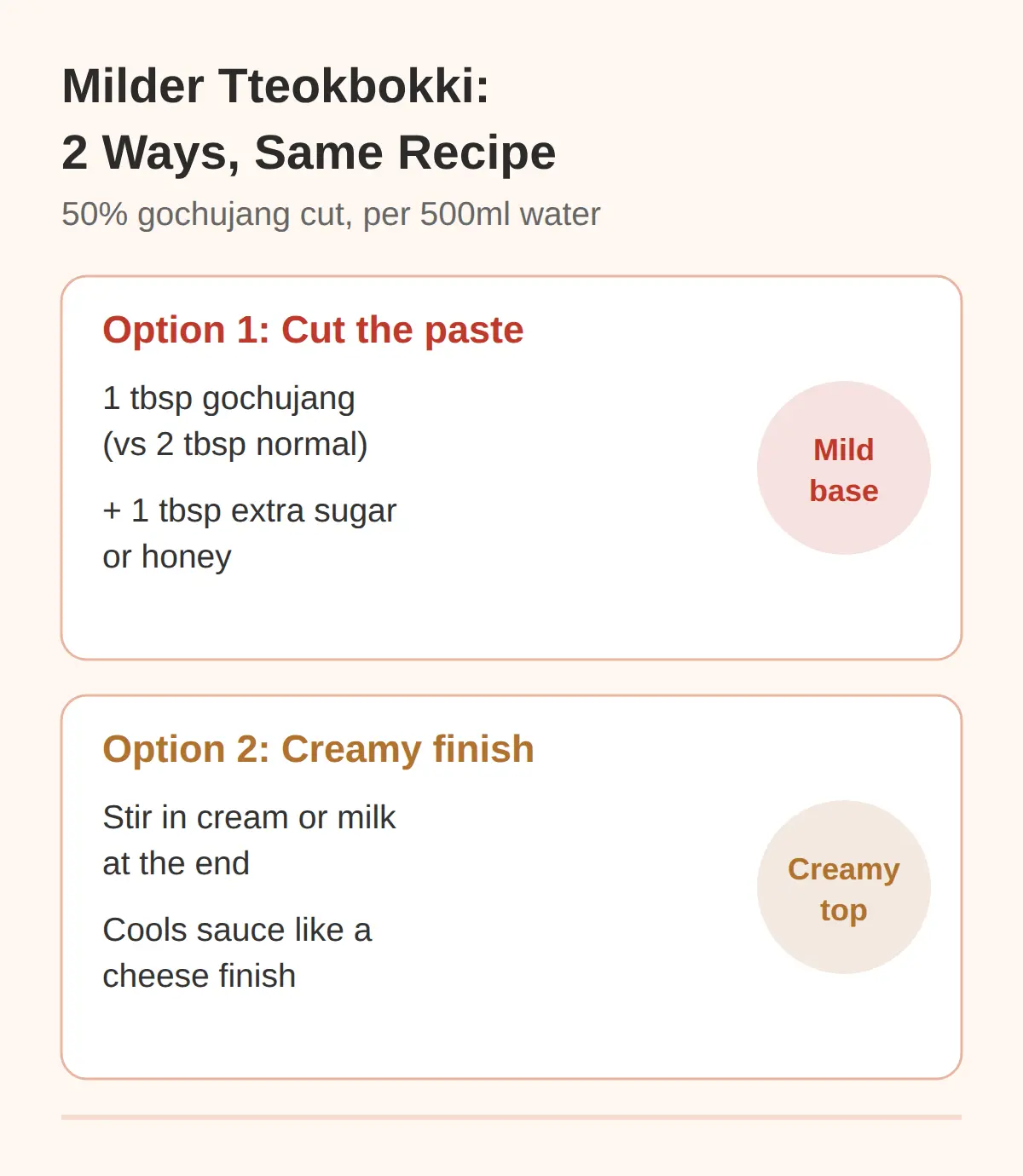
The mild version is a 50% gochujang cut — 2 tbsp down to 1 tbsp with 1 tbsp extra sweetener — not a separate recipe.
Korean tteokbokki sauce balances gochujang heat with sweetener, which is why the fix is a ratio change rather than a different dish.
Two measured options exist.
The first halves the chili and compensates with sweetness: 1 tbsp gochujang plus 1 tbsp extra sugar or honey per 500ml water.
The second softens the finished dish: stir in cream or milk at the end, which cools the sauce the same way a cheese finish does.
Choose by what you have on hand — extra sugar if the pantry is stocked, a splash of milk or cream if you want a creamy finish.
Taste the sauce before the rice cakes go in; adjusting the heat is easiest at the base stage, not after 12 minutes of simmering.
Ingredients table and where to buy them abroad
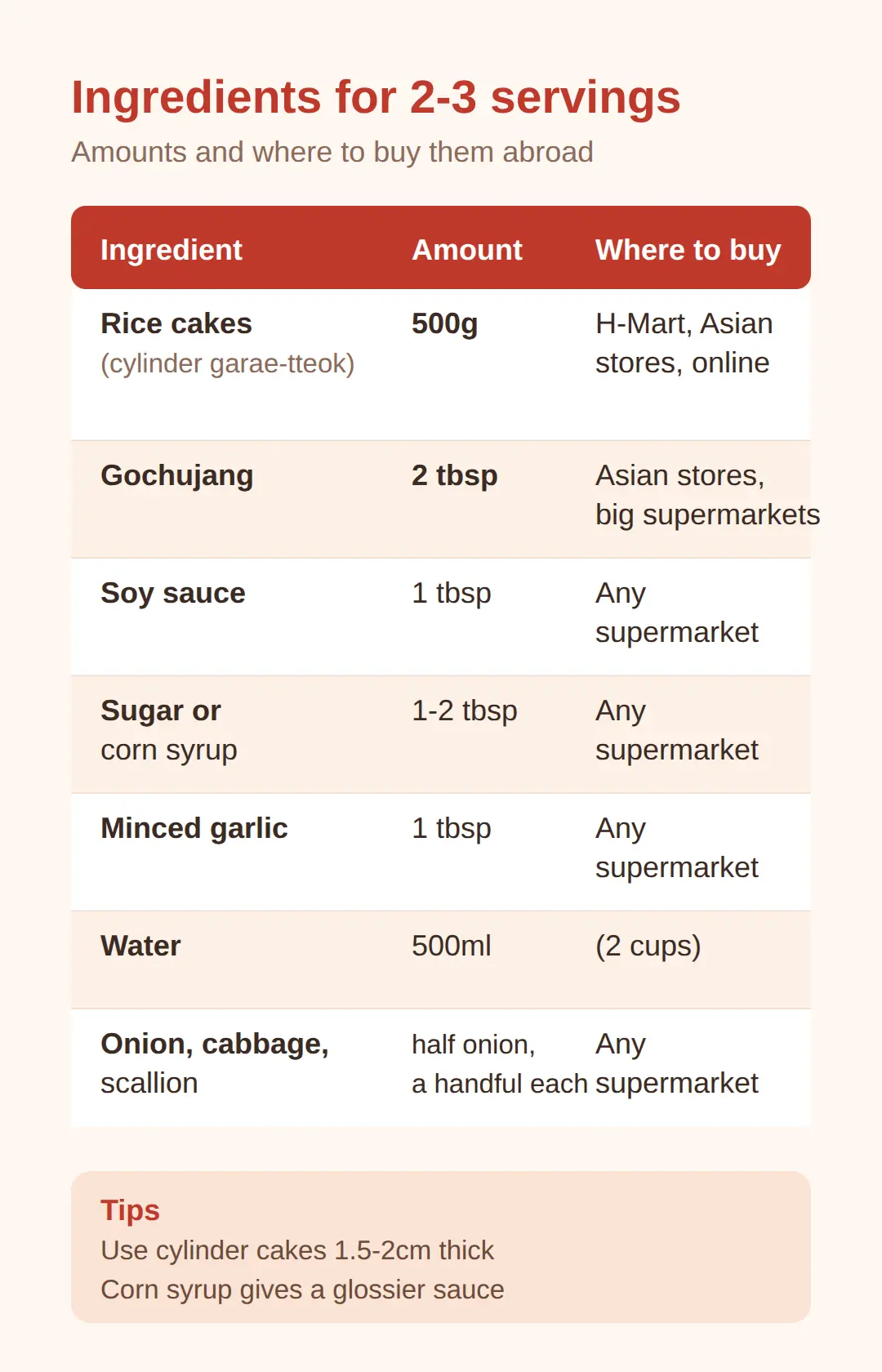
You need about 500g cylinder rice cakes, 2 tbsp gochujang, 1 tbsp soy sauce, 1-2 tbsp sugar or corn syrup, 1 tbsp minced garlic, 500ml water, plus onion, cabbage and scallion.
Korean rice cakes and gochujang are widely available at H-Mart and other Asian grocery stores, and online.
| Ingredient | Amount | Where to find it abroad |
|---|---|---|
| Rice cakes (garae-tteok) | 500g | H-Mart, Asian groceries, online — sold frozen or vacuum-packed |
| Gochujang | 2 tbsp | H-Mart, Asian groceries, online, most large supermarkets |
| Soy sauce | 1 tbsp | Any supermarket |
| Sugar or corn syrup | 1-2 tbsp | Any supermarket |
| Minced garlic | 1 tbsp | Any supermarket |
| Water | 500ml (2 cups) | — |
| Onion, cabbage, scallion | about half an onion, a handful each | Any supermarket |
Two ingredient details decide the result.
The standard cut is cylinder-shaped garae-tteok about 1.5-2cm thick — the sliced round rice cakes used for soup do not hold the sauce the same way.
Sugar is the default sweetener, but corn syrup is the traditional choice for a glossier sauce, and either works in the 2:1 gochujang-to-sweetener framework.
If a brand label on the gochujang or the rice cakes lists fish-derived stock, that matters only for the vegan version below — for everyone else, any brand at an Asian grocery will cook the same.
Variations: cheese tteokbokki, rabokki, vegan
Three variations cover most requests, and each changes the timing rather than the base recipe.
| Variation | What changes | Timing rule |
|---|---|---|
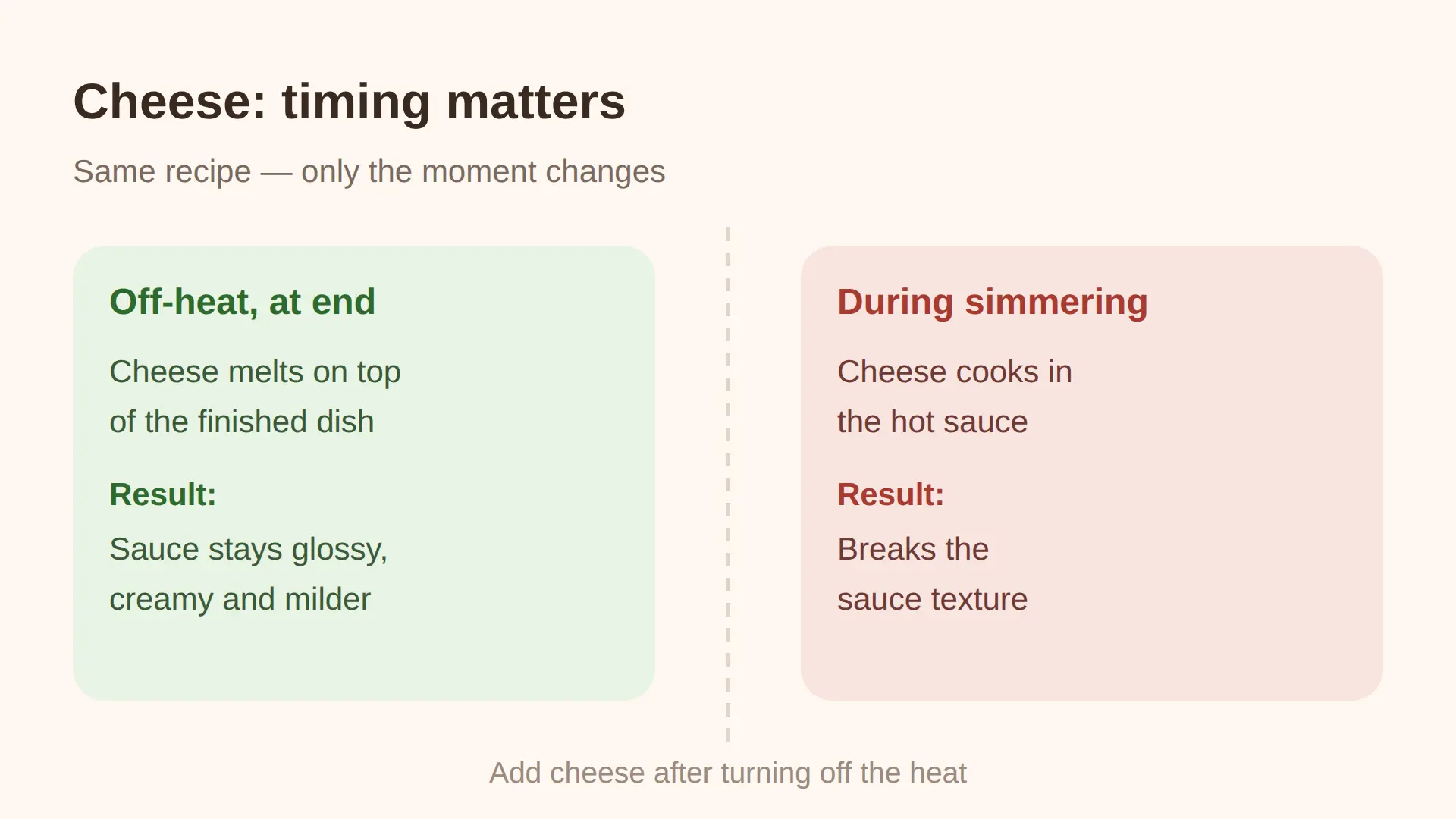
| Cheese tteokbokki | Melted cheese on top turns it creamy and milder | Add off-heat at the end — during simmering it breaks the sauce texture |
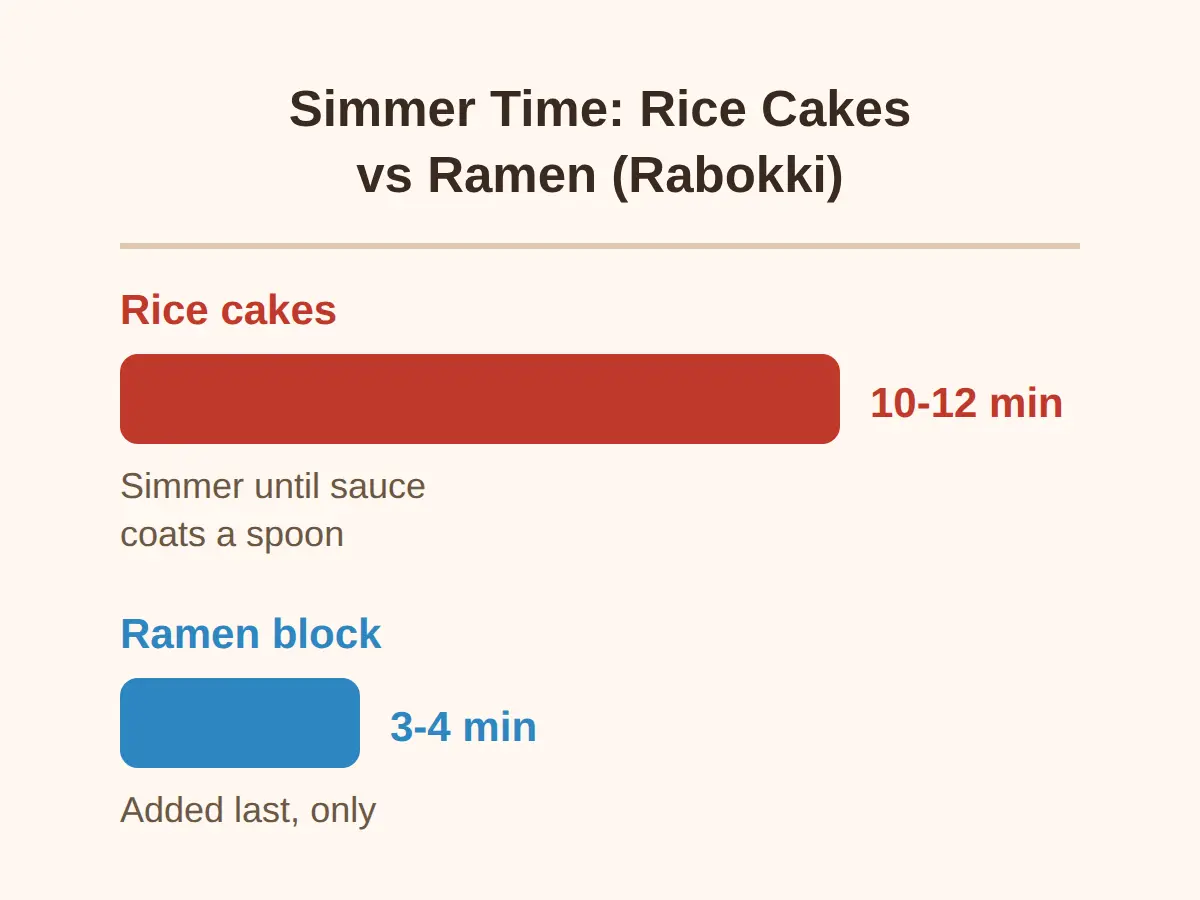
| Rabokki (ramen + tteokbokki) | One instant ramen noodle block in the same pan | Last 3-4 minutes only — noodles added at the start overcook |
| Vegan | Firm tofu or mushrooms instead of fish cakes, vegetable or kelp-only broth | Both swaps — changing only one still leaves it non-vegan |
Cheese goes on off-heat so it melts over the finished dish, and the sauce stays glossy instead of splitting.
Rabokki works because the rice cakes need 10-12 minutes while instant noodles need far less, so the noodle block goes in when the sauce is nearly done.
For the vegan version, gochujang and rice cakes are plant-based, but some gochujang brands add fish-derived stock — check the label.
If you want the milder, creamiest result, cheese tteokbokki is the closest to a guaranteed win; if you want a full meal from one pan, rabokki adds the noodles and the protein from the soup packet in the same 20 minutes.
👉 Doenjang jjigae recipe — 75g doenjang per 700g rice water, the official Korea.net ratio
Storage and reheating
Leftover tteokbokki keeps 2-3 days refrigerated, and 3 days is the safe upper bound for reheating advice.
The sauce seizes in the fridge because rice cakes harden when cold, so the texture, not safety, is the reason to reheat carefully.
The reliable method is a splash of water and a re-simmer on the stove — the water loosens the sauce and softens the rice cakes again.
A microwave alone leaves the tteok hard in the middle, so add water regardless of the appliance.
If you know from the start that half the batch is for tomorrow, pull that portion out before the final minutes of simmering — slightly underdone rice cakes re-soften better than fully cooked ones.
Opened gochujang keeps for months thanks to its salt and ferment content, but it stores better refrigerated and sealed.
Related posts
📎 Galbijjim Recipe for Chuseok: Braised Short Ribs That Slump Off the Bone — A Galbijjim Recipe for First-Timers
📎 bibimbap recipe: season every vegetable separately, then mix — 4 servings
📎 📅 다가오는 일정 — 발매·개봉·발표 캘린더
Sources
Summary
- 2 tbsp gochujang per 500ml water for 500g rice cakes — 5 minutes for the sauce base, 10-12 minutes simmering.
- No fish cakes, no problem: onion, cabbage and carrot supply the depth, and sausage, cheese, eggs, tofu or dumplings fill the fish-cake slot.
- Too spicy: 1 tbsp gochujang plus 1 tbsp extra sweetener, or cream or milk stirred in at the end.
- Frozen or vacuum-packed rice cakes go straight into the sauce — no thawing, no pre-boil.
- Leftovers: 2-3 days refrigerated; reheat with a splash of water on the stove.
FAQ
Q. Can I make tteokbokki with just gochujang and rice cakes, no fish cakes?
Yes. Simmer 500g rice cakes in 500ml water with 2 tbsp gochujang, 1 tbsp soy sauce, 1-2 tbsp sugar and 1 tbsp garlic for about 20 minutes. Onion, cabbage and carrot replace the broth depth fish cakes usually give.
Q. My tteokbokki came out too spicy — how do I fix it?
Cut gochujang from 2 tbsp to 1 tbsp and add 1 tbsp extra sugar or honey, or stir in cream or milk at the end. It is a 50% chili reduction, not a different recipe.
Q. Do I need to boil rice cakes before adding them to tteokbokki sauce?
No, not for packaged tteok sold abroad — vacuum-packed and frozen rice cakes are pre-cooked and go straight into the simmering sauce. Frozen ones just need 1-2 minutes longer.
Q. How long does leftover tteokbokki keep in the fridge?
2-3 days refrigerated. Reheat on the stove with a splash of water; a microwave alone leaves the rice cakes hard.
Q. What can I use instead of fish cakes (eomuk) in tteokbokki?
Sliced sausage or hot dogs, melting cheese, dumplings, hard-boiled eggs or tofu all work. A soup stock packet or a dash of soy sauce covers the missing broth flavor.
Stock check before you shop: gochujang and cylinder rice cakes from any Asian grocery, everything else from a regular supermarket — then the whole dish is one pan and 20 minutes.
#tteokbokki #gochujang #koreanfood #easyrecipe #nofishcakes
📅Upcoming Dates — 이번 주 16 · D-day 'The Scandal' global Netflix release전체 보기 →