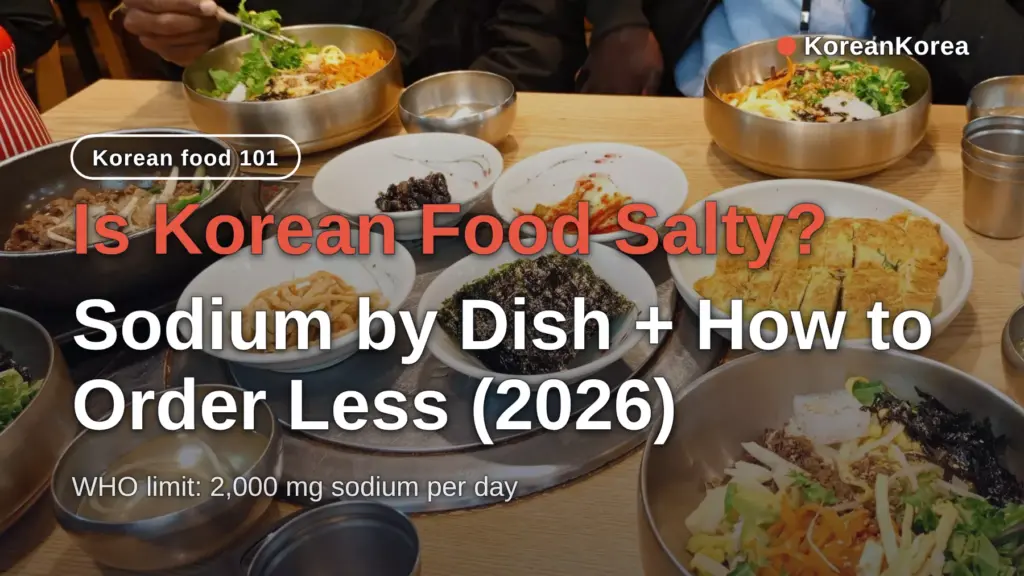
Mostly yes only if you eat the shared pickled sides and drink the stew broth — grilled meat, rice and steamed egg are low-sodium, and one ramyeon packet at about 1,600 mg sodium is 80% of the WHO 2,000 mg daily limit.
That means the saltiness you have heard about sits in specific places on the table, not in every dish.
This post shows where the sodium is by dish, how Korean food compares with a burger meal back home, the phrases that get you less salt, and the dishes to order instead.
Is Korean Food Salty? The One-Line Answer
| Kimchi (cabbage) | About 40 g per serving / Roughly 400–500 mg / Namul (seasoned vegetable side) |
|---|---|
| Kimchi jjigae / doenjang jjigae | One bowl / Roughly 1,500–2,000 mg / Gomtang-style clear broth |
| Sundubu jjigae | One bowl / Roughly 1,600–2,000 mg (reported) / Steamed egg (gyeranjjim) |
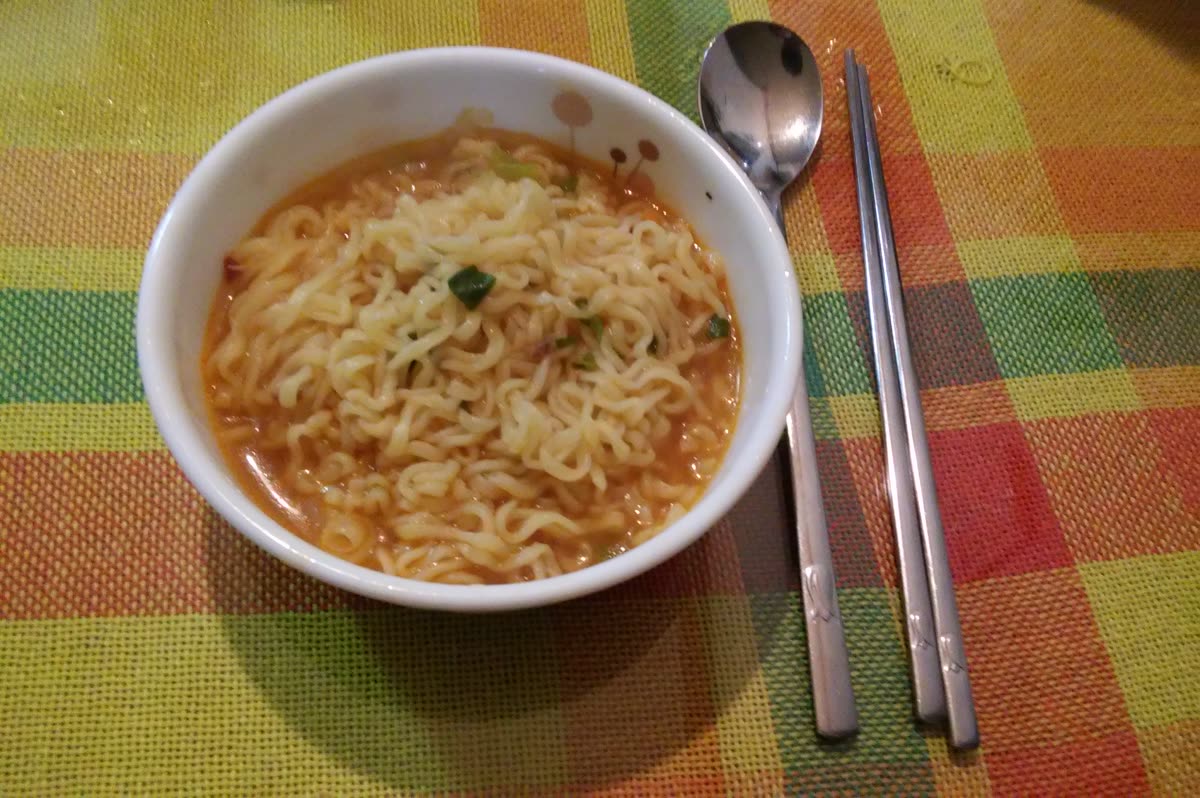
| Ramyeon (one packet) | One packet with soup / Roughly 1,600–1,900 mg / Bibimbap |
| Tteokbokki (street style) | One serving / Roughly 1,200–1,500 mg (reported) / Plain grilled meat |
| Kimbap | One roll / Roughly 700–900 mg (reported) / Vegetable gimbap, sauce skipped |
| Bulgogi (marinated) | One serving / Marinade carries the salt / Samgyeopsal, unmarinated, salt dip on the side |
It is salty in specific places: kimchi, pickled sides and stew broth carry the sodium, while grilled meat, rice and steamed dishes are low-sodium.
The benchmark for ‘salty’ is the WHO limit of 2,000 mg sodium per day, which equals 5 g of salt.
Unit confusion is part of why the reputation sounds extreme: 1 g of salt is about 400 mg of sodium, and mixing the two units makes numbers look several times bigger.
So a bowl of stew that sounds like ‘4 g of salt’ and ‘4,000 mg of salt’ is the same thing — about 1,600 mg sodium, most of a day’s limit but not more than it.
When I look at a Korean menu, the first thing I check is where the sodium sits — the broth and the pickled sides, not the meat.
Sodium Per Dish: Kimchi, Stews, Ramyeon and More
The salt carriers are concentrated in a handful of dishes, and the ranges below are guide-level approximations, not lab-tested values — each kitchen salts differently.
| Dish | Typical serving | Approx. sodium (mg) | Order-instead swap |
|---|---|---|---|
| Cabbage kimchi | ~40 g | 400–500 | Smaller taste-size portion |
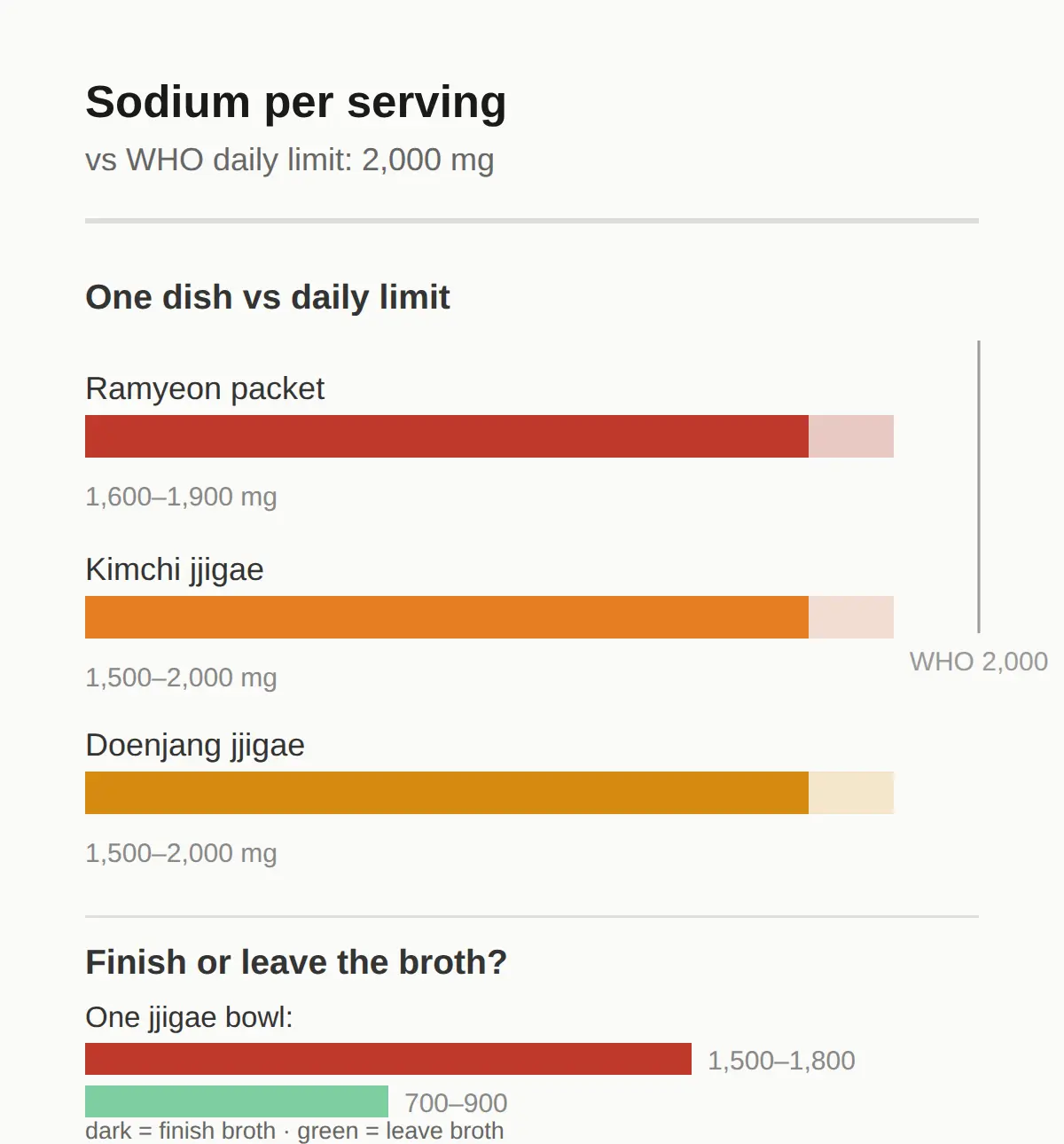
| Kimchi jjigae | 1 bowl | 1,500–2,000 | Doenjang jjigae, broth unfinished |
| Doenjang jjigae | 1 bowl | 1,500–2,000 | Eat solids, leave broth |
| Ramyeon | 1 packet | 1,600–1,900 | Leave most of the soup |
| Bulgogi | 1 serving | Moderately high (marinade) | Unmarinated samgyeopsal |
| Bibimbap | 1 bowl | Moderate | Sauce on the side |
| Tteokbokki | 1 serving | High (sauce) | Gyeranjjim on the side |
| Banchan (pickled sides) | per refill | Stacks with refills | Taste-size portions only |
What is confirmed is the anchor: the WHO daily limit of 2,000 mg sodium (5 g salt), the same 2,000 mg figure Korean nutrition labels use as the daily reference.
If you order one stew, one ramyeon or a bowl of tteokbokki as your whole meal, you are likely at or near that limit for the day.
If you share dishes at a Korean BBQ table, the same sodium spreads across several people and several dishes, so your own share lands much lower.
Is It Saltier Than American Food or Food Back Home?
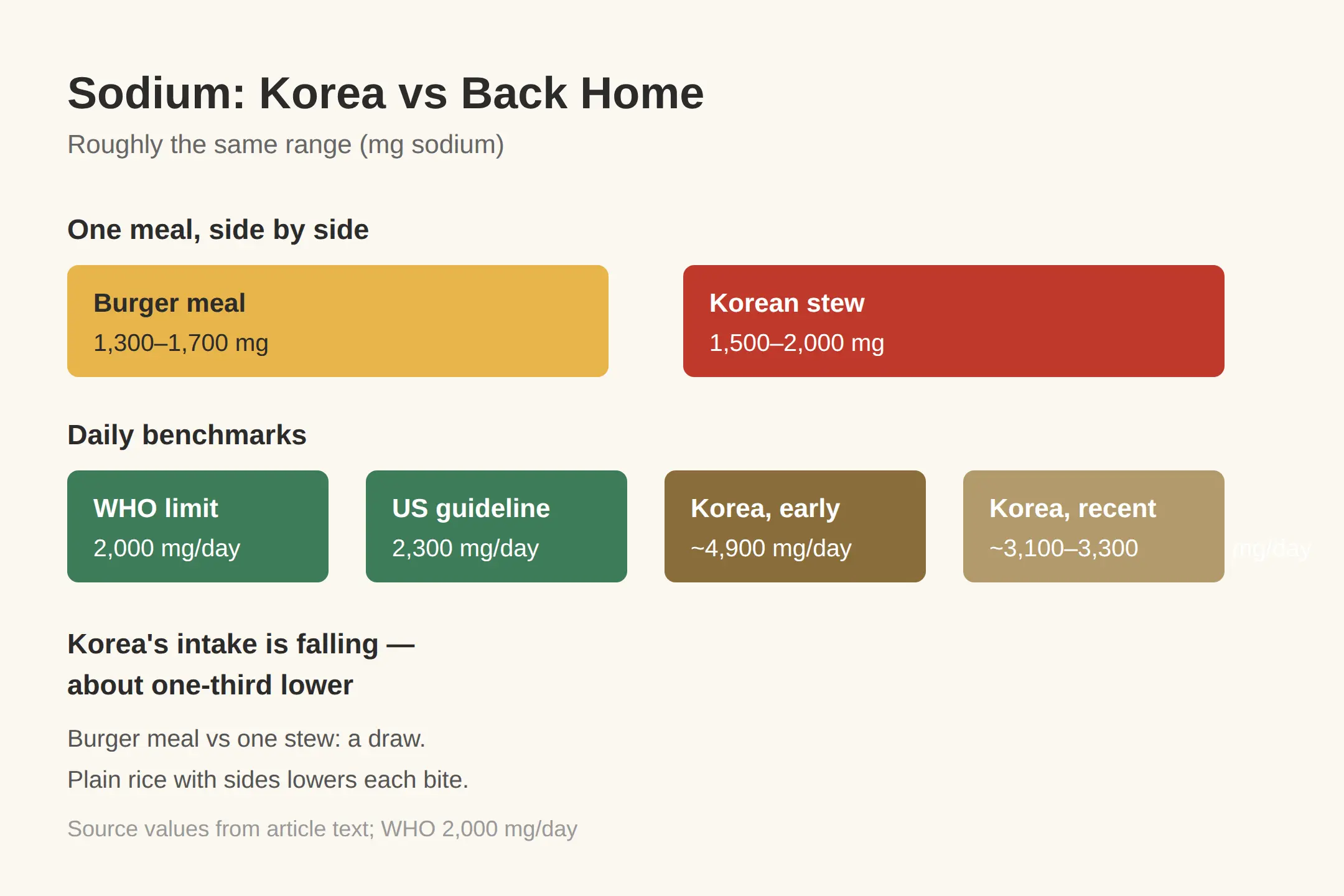
Roughly the same: a typical fast-food burger meal carries about 1,300–1,700 mg sodium, which sits in the same range as one Korean stew.
Korea’s own average intake has been falling — from around 4,900 mg a day in the early 2010s to roughly 3,100–3,300 mg in recent national survey years — still above the WHO limit, but about one-third lower.
The meal structure also works in your favor: high-sodium sides are paired with plain rice, so the rice-to-side ratio lowers the sodium of each bite compared with eating the side alone.
So ‘is it saltier than my country’s food’ has no clear yes — one burger meal versus one stew is a draw, and the difference is which dishes you pick and how much broth you drink.
If your home diet is light on soup and pickles, a week of Korean stews will feel saltier than a week of sandwiches; if you eat sauced fast food daily, it will not.
How to Order It Less Salty — Phrases and Tactics That Work
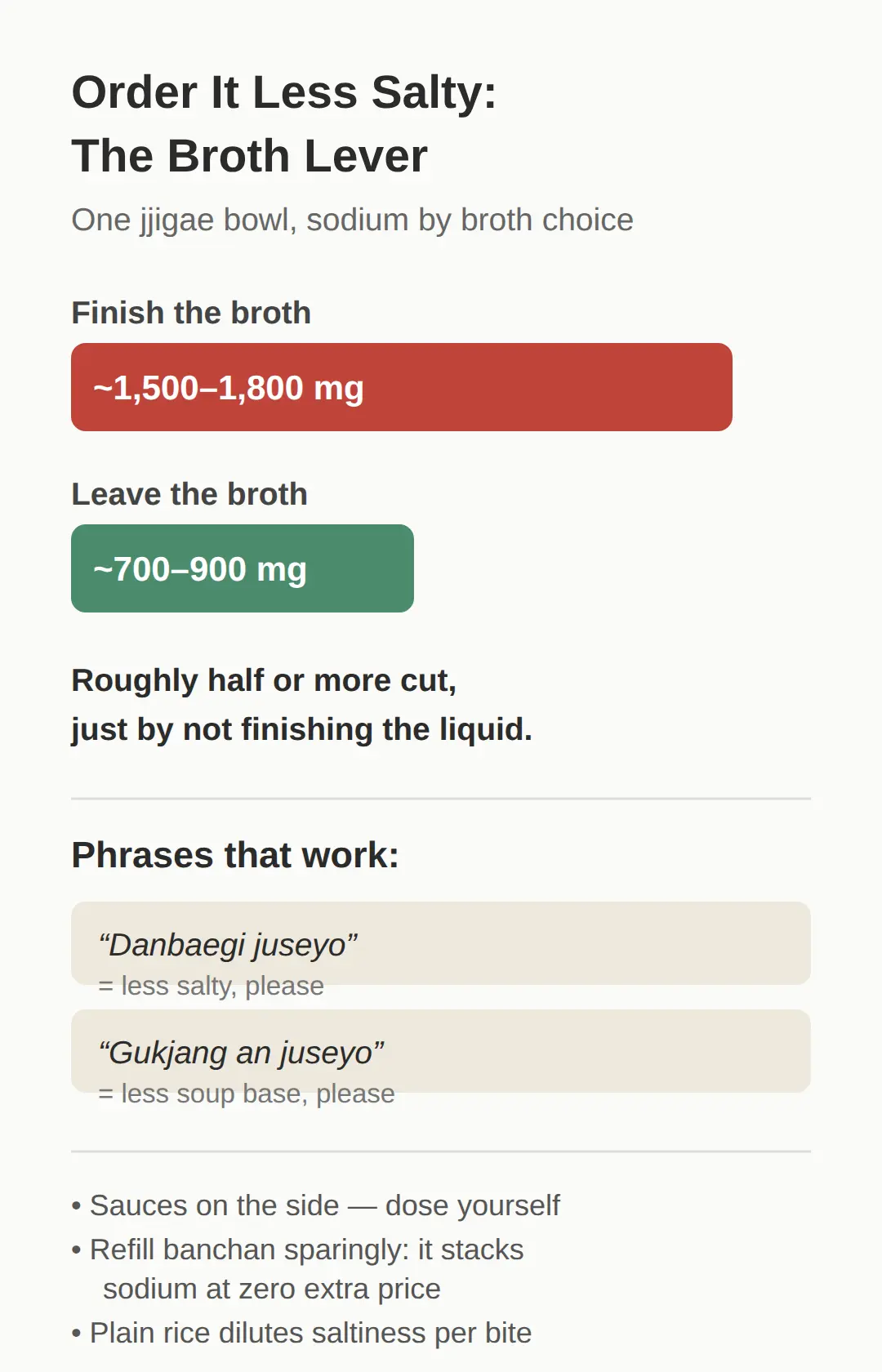
Say ‘danbaegi juseyo’ (less salty, please) or ‘gukjang an juseyo’ (less soup base, please) — these phrasings work at most Korean restaurants.
The single biggest lever is the broth: in jjigae and guk soups, most of the sodium stays in the liquid, so leaving the broth unfinished cuts the dish’s sodium by roughly half or more — a bowl reported near 1,500–1,800 mg drops to roughly 700–900 mg.
Treat the free banchan refills as taste-size portions, because unlimited kimchi and pickles stack sodium at zero extra price.
Put the sauces on the side and dose them yourself: ssamjang is generally saltier per spoonful than gochujang, and a single tablespoon of gochujang is already roughly a quarter of the 2,000 mg daily limit.
Add plain rice to a salty stew — it dilutes the saltiness per bite better than any substitution on the menu.
Low-Sodium Dishes to Order Instead
| Dish | Approx. sodium (mg) | How to order it lower |
|---|---|---|
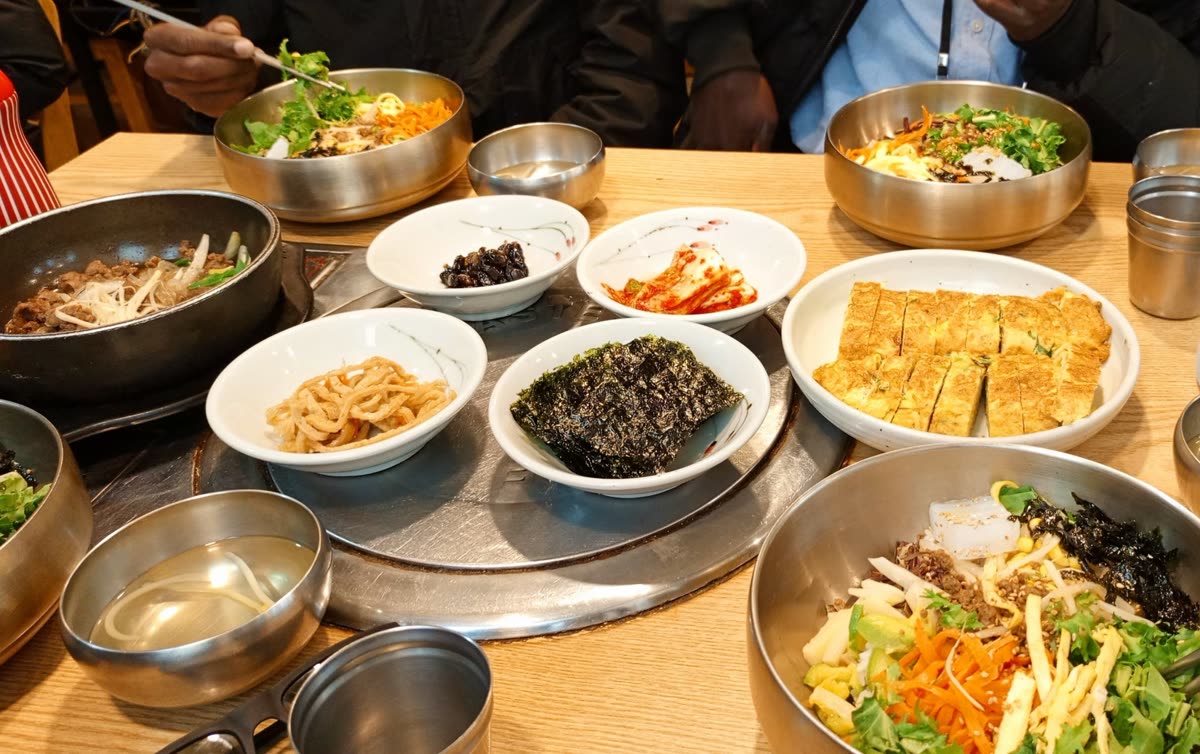
| Vegetable bibimbap, gochujang on the side | Moderate | Apply the sauce sparingly — repeatedly listed as the lightest common order |
| Steamed egg (gyeranjjim) | 400–600 | One of the mildest hot dishes to pair with a salty stew |
| Clear gomtang-style broth | Low end of the soup gradient | Skip thick jjigae; guk sits mid, clear tang lowest |
| Unmarinated samgyeopsal | Low among meat dishes | Ask for dipping salt on the side; skip bulgogi/galbi marinade |
| Mul naengmyeon (water broth) | 800–1,200 | Choose it over bibim naengmyeon sauce, roughly 1,500+ mg |
Reading Korean Labels — 나트륨, Refills and Convenience Stores
Korean nutrition labels show sodium as ‘나트륨’ in mg against a 2,000 mg daily reference, so a label line of 500 mg equals 25% of the day.
Korean rules allow a ‘저나트륨’ (low sodium) claim only when a food contains 120 mg sodium or less per 100 g, and ‘무나트륨’ (no sodium) requires 5 mg or less per 100 g.
Convenience stores such as CU, GS25 and 7-Eleven print sodium values on all triangle kimbap and dosirak labels, so picking items under 400 mg each keeps a day under the 2,000 mg limit.
Free banchan refills are standard in Korean restaurants, but they are not sodium-free — repeated kimchi servings count every time, and fermented sides (kimchi, jeotgal, pickles) carry far more sodium than fresh seasoned vegetables (namul).
If you have high blood pressure and eat Korean food every day, treat soup and kimchi as measured sides rather than unlimited items, because WHO guidance ties keeping sodium under 2,000 mg a day to lower blood pressure risk.
I would order samgyeopsal, take rice with the stew, and leave the broth — that one habit cuts more sodium than anything else you can pick.
Related posts
📎 📅 Upcoming Dates — Release & Event Calendar
Sources
- WHO: <2,000 mg sodium/day (5 g salt) — benchmark used for al (who.int)
- guide tables estimating jjigae and banchan sodium per servin (koreatravellab.com)
- mul broth ~800–1,200 mg vs bibim sauce 1,500+ mg (korealocally.com)
What to Do With This at the Table
- Check the broth and the pickled sides first — that is where the day’s sodium lives, not the grilled meat.
- Finish the solids, leave the stew broth: the one habit that halves a jjigae’s sodium.
- Before your trip, practice the less-salt and less-soup phrases so they come out naturally at the table.
- Refill kimchi once for taste, not as a side dish you keep eating all meal.
- At convenience stores, pick items whose label shows under 400 mg sodium each.
- Compare the label’s mg figure against the 2,000 mg daily reference printed on Korean packages.
FAQ
Q. Is Korean food salty compared to my country’s food?
A typical fast-food burger meal carries about 1,300–1,700 mg sodium, which sits in the same range as one Korean stew — so no, one is not clearly saltier than the other.
Q. Is Korean food really that salty or is it just kimchi?
Mostly it is just the kimchi, pickles and stew broth — grilled meat, rice and steamed dishes are low-sodium.
Q. How do I ask for less salt at a Korean restaurant?
Say ‘danbaegi juseyo’ (less salty, please) or ‘gukjang an juseyo’ (less soup base, please), and leave the broth unfinished.
Q. Is Korean food saltier than American food?
One burger meal and one Korean stew are roughly equal in sodium — the difference comes from which dishes you pick and whether you drink the broth.
Q. Is Korean food healthy or unhealthy?
It depends on the dish and the day’s total: grilled meat with rice and vegetables stays well under the WHO 2,000 mg limit, while a ramyeon packet alone reaches 80% of it.
Planning a low-sodium day in Korea? Start with the table above, then use the phrases in section 4 when you order — and see our healthy Korean food guide for how the whole cuisine balances out.
Cover photo: A top-down view of a wooden table filled with various Korean dishes. Large brass bowls contain bibimbap with fresh vegetables and rice, while smaller side dishes of kimchi, seaweed, rolled omelets, and marinated beef are arranged in the center. by Mohammed Kateregga — CC0 1.0
#koreanfood #sodium #lowsodium #kimchi #ramyeon #eatinginkorea #koreanfood101
📅Upcoming Schedule — this week 21 · D-day Global rollout / overseas restock of September launches typiSee all →