Kimbap without seaweed uses the same sesame-oil rice and fillings, wrapped in soy paper, dipped rice paper, a thin egg sheet — or nothing at all, shaped into rice balls.
The wrapper is the only element that changes; the seasoned rice stays identical.
This post gives the rolling steps for each substitute, calories and cost per sheet, and which one fits an allergy or a low-iodine diet.
Contents
- kimbap recipe without seaweed: what to use instead and how it rolls
- Paper kimbap with soy paper: how to roll it
- Rice paper kimbap: how long to soak, and how it differs
- Which wrapper fits you: calories and cost per sheet
- Egg sheet and tofu pockets: the traditional routes
- Rice, fillings, and making it ahead
kimbap recipe without seaweed: what to use instead and how it rolls
Four substitutes work: soy paper, rice paper, a thin egg sheet, or no wrapper at all.
The rice stays the same in every version — cooked short-grain rice with sesame oil and salt.
Which one to pick depends on why seaweed is off the table.
Soy paper rolls dry and gives the closest look to sliced kimbap, but it tastes neutral-to-slightly-sweet, so the sesame-oil rice carries the flavor instead of the seaweed’s savory depth.
Rice paper gives a chewy, translucent wrap that eats closer to fresh spring rolls than to kimbap.
An egg sheet adds a soft, mild wrap, and the no-wrapper version is simply seasoned rice balls with kimbap fillings mixed in.
If seaweed is off for medical reasons, the reason matters: a low-iodine diet before thyroid radioiodine therapy excludes all seaweed, and it also restricts soybeans and most soy products, so soy paper is not automatically safe in that case — rice paper or an egg sheet is the safer choice.
Readers with a soy allergy should also skip soy paper, since commercial sheets are made from soybean flour or protein, and some brands add sesame oil, so check the ingredient list either way.
| Soy paper | Rolls dry, no water or toasting; tears if overfilled |
|---|---|
| Rice paper (22cm) | Dip in warm water 2–5 seconds; sets as it dries |
| Egg sheet (jidan) | Fry one thin sheet on low heat; roll while soft |
| No wrapper | Mix fillings into the rice and hand-shape balls |
Paper kimbap with soy paper: how to roll it
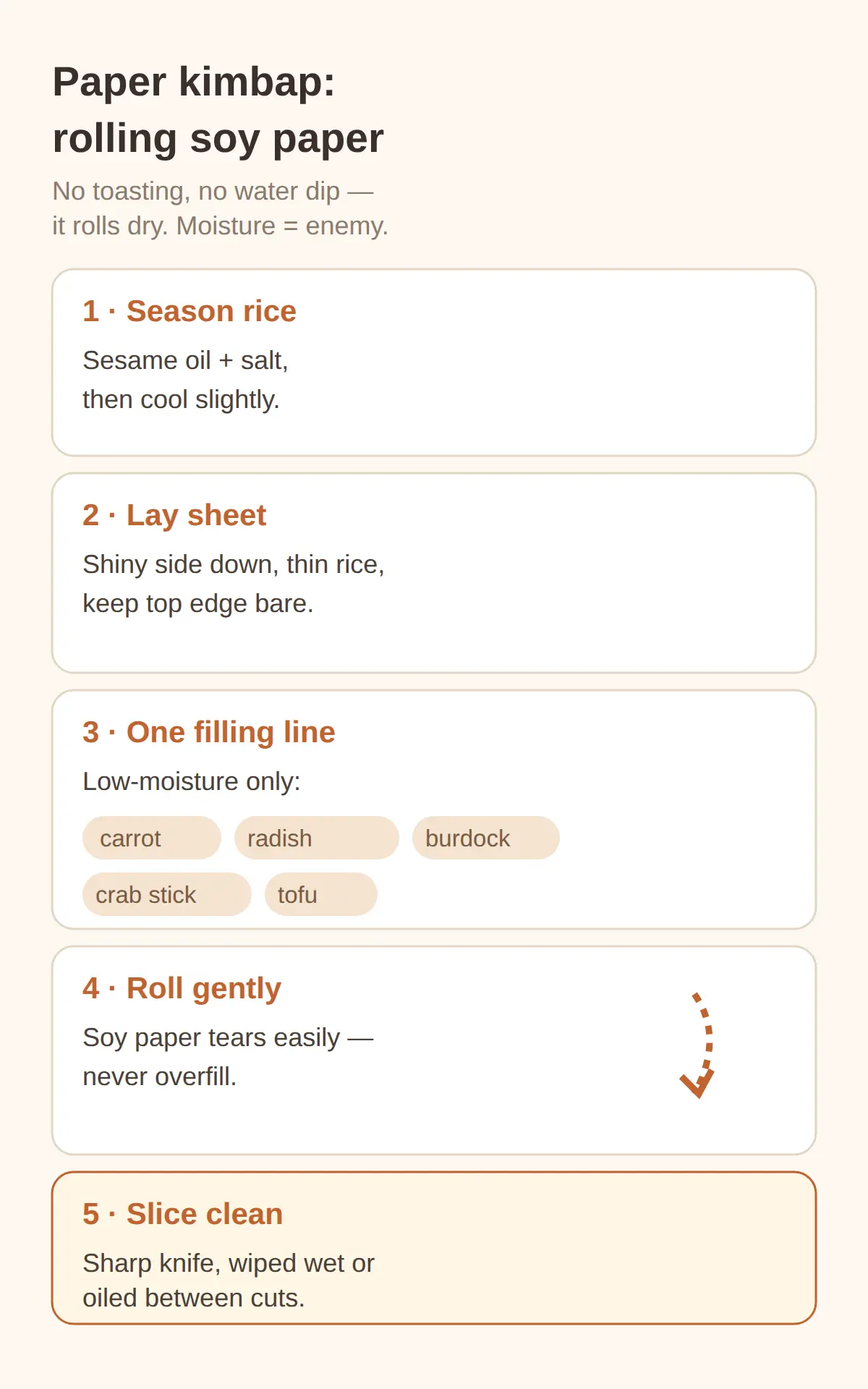
Soy paper — the sheet behind the Korean cafe ‘paper kimbap’ trend from around 2023–2024 — needs no toasting and no water dipping; it rolls dry.
- Season the rice with sesame oil and salt and let it cool slightly.
- Lay the soy paper shiny-side down and spread a thin layer of rice, leaving the top edge bare.
- Add low-moisture fillings in a single line — carrot, pickled radish, burdock, crab stick or tofu.
- Roll it up gently and evenly; soy paper tears more easily than toasted nori when overfilled.
- Slice with a sharp knife wiped wet or with sesame oil between cuts.
Because the sheet is dry, moisture is the failure point: squeeze seasoned spinach and pickles dry before they touch the rice.
Korean cafes sell this roll as a grab-and-go item, which shows the soy paper roll holds its shape commercially, not just at home.
If a clean sliced look matters most, soy paper is the substitute to try — for a lunchbox that travels, the rice-ball version in the last section holds up better.
Rice paper kimbap: how long to soak, and how it differs
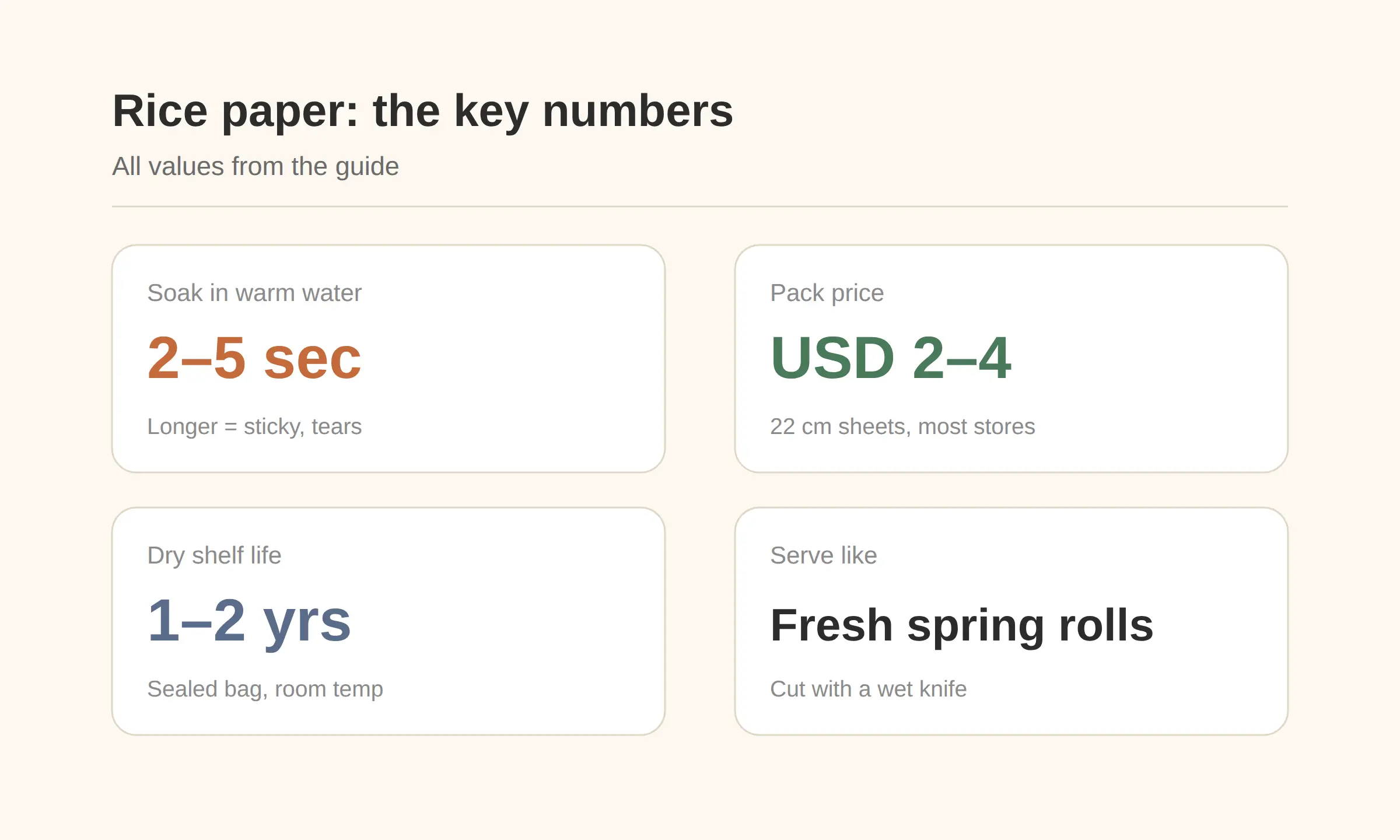
Dip a 22cm rice paper sheet in warm water for 2–5 seconds, lay it flat, and roll the rice and fillings like a fresh spring roll — it sets as it dries.
Longer soaking is not needed, and an over-soaked sheet turns sticky and tears.
The finished wrap is chewy, slightly sticky, and translucent.
The result reads closer to fresh spring rolls than to kimbap: rice paper does not crisp or brown the way toasted seaweed does.
This changes how you serve it — eat the rolls whole, or cut them with a wet knife while the surface is still slightly tacky.
If you want the easiest wrapper to buy, rice paper is the practical pick: 22cm sheets are stocked in most regular supermarkets and Asian grocers year-round, typically USD 2–4 for a pack, which makes them easier to source than soy paper in most countries.
Dry rice paper itself keeps 1–2 years in a sealed bag at room temperature, so an opened pack is not a rush.
Which wrapper fits you: calories and cost per sheet
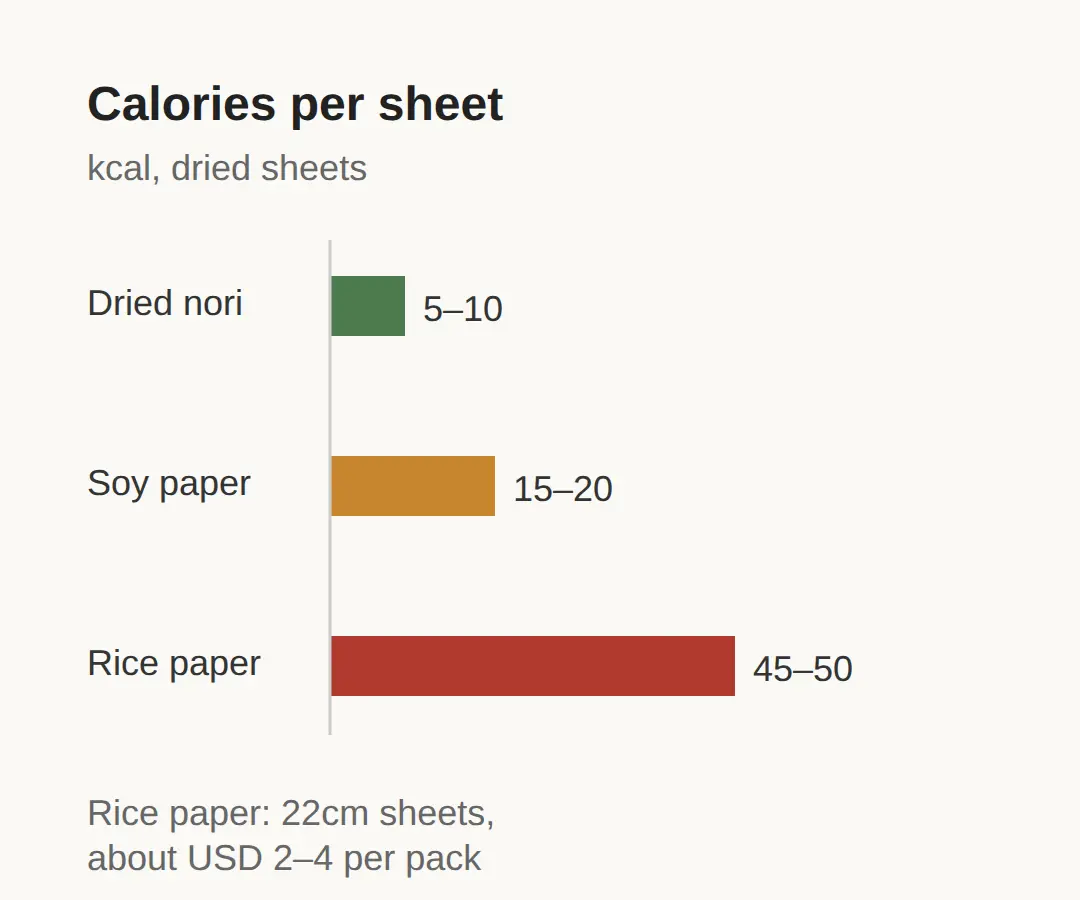
A 22cm rice paper sheet is roughly 45–50 kcal, a soy paper sheet roughly 15–20 kcal, and a dried nori sheet roughly 5–10 kcal — rice paper is the heaviest wrapper of the three.
Calorie figures come from standard nutrition databases for the dried sheets, so cooked weight is not included.
Rice paper packs run about USD 2–4 for 22cm sheets at retail.
| Wrapper | Calories per sheet | Notes for buyers |
|---|---|---|
| Dried nori (reference) | about 5–10 kcal | the item being replaced |
| Soy paper | about 15–20 kcal | contains soy; some brands add sesame oil |
| Rice paper (22cm) | about 45–50 kcal | easiest to find, about USD 2–4 per pack |
If the wrapper swap is about calories, soy paper adds the least; if it is about availability, rice paper wins on both price and shelf presence.
Packs of soy paper typically contain 20–50 sheets depending on the brand, and exact current pack prices vary, so check the live listing before ordering.
Egg sheet and tofu pockets: the traditional routes
Two Korean wrappers need no special purchase: a thin egg sheet (jidan) and simmered tofu pockets (yubu).
For the egg sheet, beat 2–3 eggs, strain them, season lightly with salt, and cook one thin sheet in a lightly oiled pan on low heat.
Use it whole as a wrap around the rice, or cut it into strips as a filling inside another wrapper.
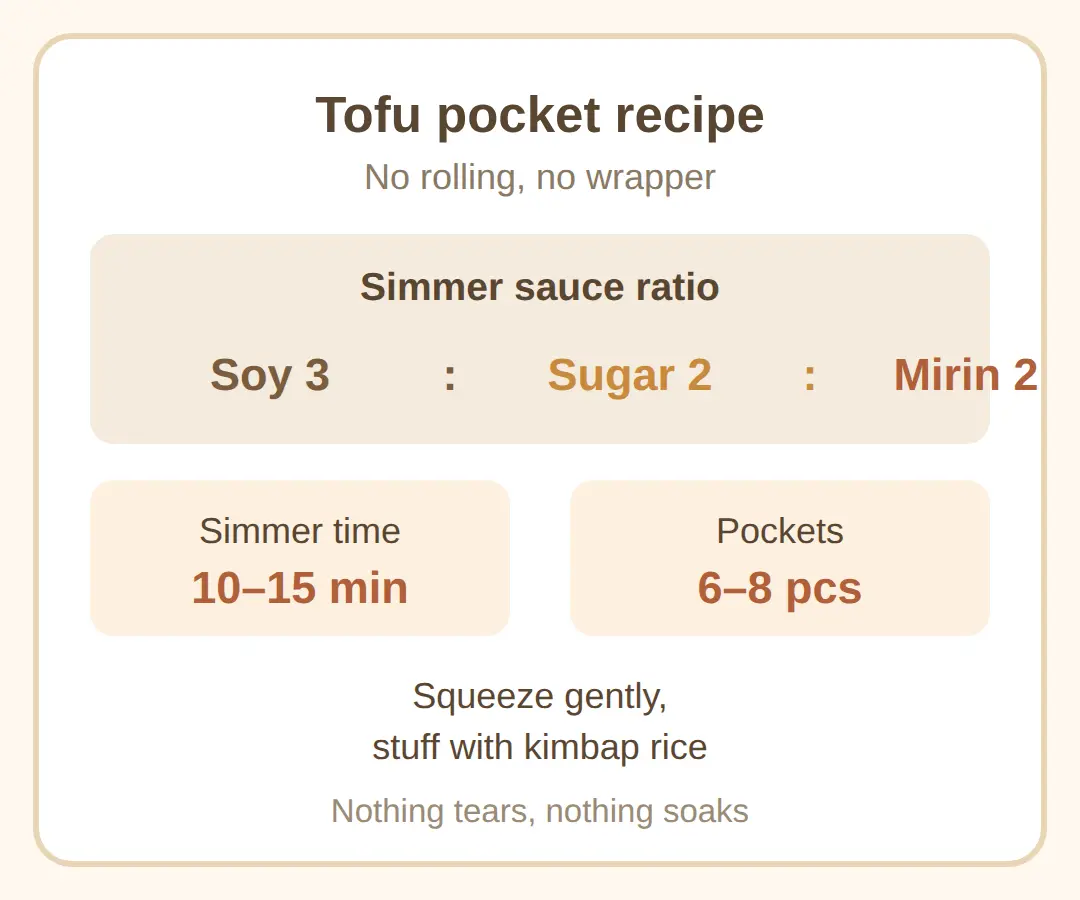
The tofu-pocket route skips rolling entirely: simmer 6–8 pockets in a mix of soy sauce, sugar, and mirin at roughly 3:2:2 for 10–15 minutes, squeeze them gently, and stuff each with the kimbap rice.
This is the same base as yubu-chobap (inari-style seasoned rice pockets), and it needs no wrapper at all.
If eggs and soy are both fine for you, the tofu pockets are the most forgiving option — nothing to tear and nothing to soak, though the simmer does add about 15 minutes to prep.
Rice, fillings, and making it ahead
The rice seasoning never changes across wrappers: cooked short-grain rice mixed while hot with about 1 Tbsp sesame oil and 1/2–1 tsp salt per 4 cups of cooked rice.
Low-moisture fillings work in any wrapper — carrot, spinach, pickled radish (danmuji), burdock, crab stick or tofu — because they release little liquid.
Wet fillings are what break soy paper and rice paper down faster than nori, so squeeze everything dry before rolling.
Wrapped versions are best eaten the same day, because the substitute wrappers do not hold moisture as well as toasted seaweed does.
The no-wrapper version is the one to pack: hand-shaped rice balls with kimbap fillings mixed in go soggy nowhere, and they keep overnight in the refrigerator.
So the rule is simple — slicing and serving the same day suits soy paper or rice paper, while lunchboxes and picnics call for the rice-ball version.
If the goal is only replacing nori that is hard to find abroad, rice paper is the easiest and cheapest wrapper to start with.
Related posts
Sources
- USD 9–14 per pack, 20–50 sheets (amazon.com)
- Rice paper brand availability (amazon.com)
- USD 3–5 per pack (amazon.com)
What to do next
- Pick the wrapper by the reason seaweed is off: soy allergy or a low-iodine diet rules out soy paper, leaving rice paper or an egg sheet.
- Squeeze spinach and pickles dry before rolling — moisture is what makes the substitute wrappers fail.
- Shop once: a pack of 22cm rice paper (USD 2–4) covers several rolls and keeps 1–2 years sealed.
- For lunchboxes, skip the wrapper and make rice balls with the same fillings mixed in.
- Before buying soy paper, look up the brand’s ingredient list online — sesame oil in some sheets matters if your household also avoids sesame.
FAQ
Q. What can I use instead of seaweed in kimbap?
Soy paper, rice paper, a thin egg sheet, or no wrapper at all — the sesame-oil rice and fillings stay the same in every version.
Q. Does soy paper taste like seaweed?
No. Soy paper is neutral to slightly sweet, so the sesame-oil rice and fillings carry the flavor instead of seaweed’s savory depth.
Q. How long do you soak rice paper for kimbap?
Dip it in warm water for 2–5 seconds, then roll like a fresh spring roll — it sets as it dries.
Q. Is soy paper safe on a low-iodine diet?
Not automatically. Low-iodine guidelines restrict soybeans and most soy products, so rice paper or an egg sheet is the safer substitute before thyroid radioiodine therapy.
Q. Can kimbap rolls be made ahead without nori?
Wrapped versions are best eaten the same day; hand-shaped rice balls with the fillings mixed in keep overnight in the refrigerator.
Seoul · September 2026
Cover photo: Grilled Pork, Banh Uot, herbs, rice paper VND10000 each – photo by Julia by avlxyz — CC BY-SA 2.0
#kimbap #koreanfood #soypaper #ricepaper #seaweed-free #koreanrecipesabroad
📅Upcoming Dates — 이번 주 23 · D-day Final two episodes drop on Disney+/Hulu전체 보기 →