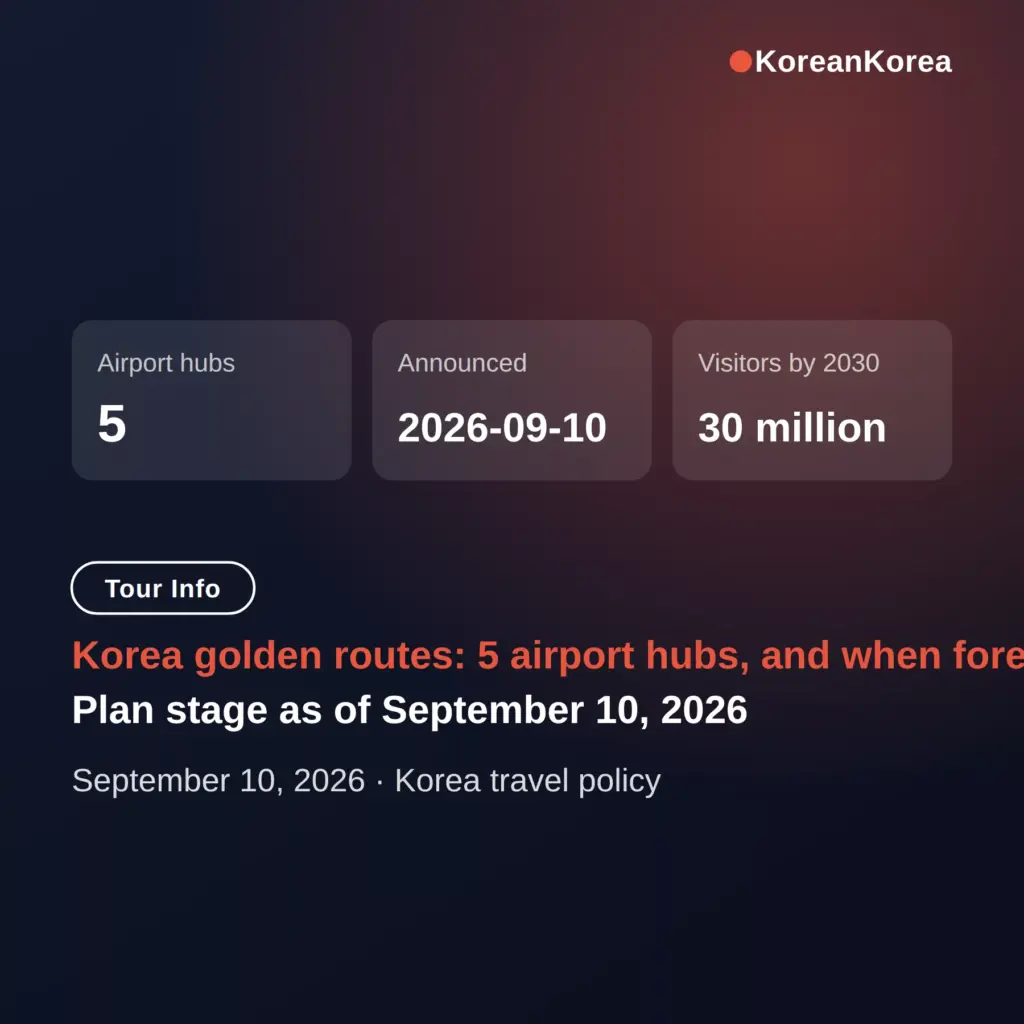
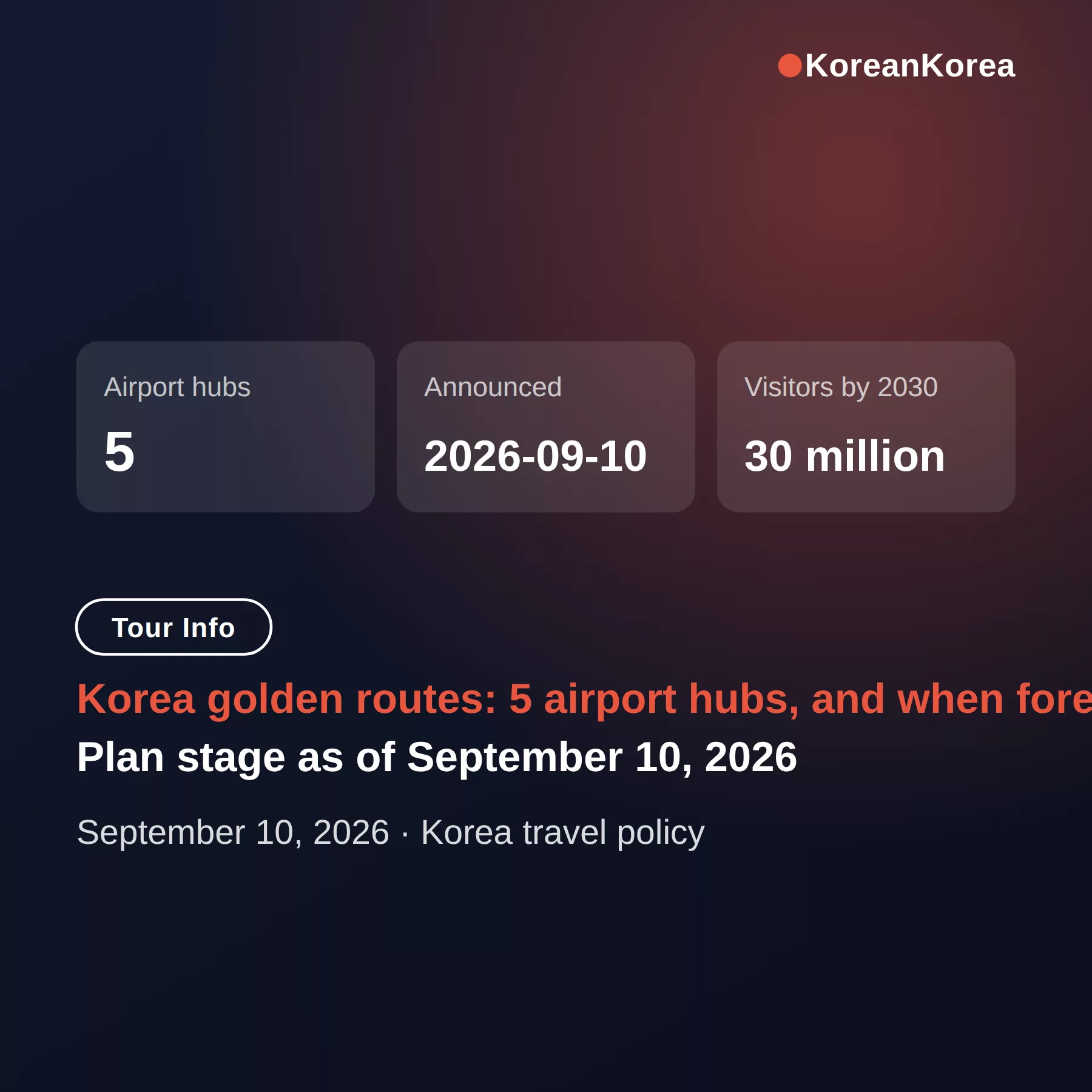
On September 10, 2026, the government mapped out a plan to build golden routes around 5 airport hubs, aiming to send visitors beyond Seoul. Nothing changes for a 2026 booking, and the hub list is not fully public yet — this post explains what the plan means and how to plan an outside-Seoul trip now.
Contents
- Korea golden routes: what the plan actually is
- When does it start
- Which 5 airport hubs are involved
- Does it change your current ticket
- How to plan an outside-Seoul trip now
- Existing route products already cover this pattern
Korea golden routes: what the plan actually is
The plan centers on 5 airport hubs so visitors can land at a regional airport, tour that region, and depart from another.
That is the core idea reported on September 10, 2026.
Today most foreign visitors land at Incheon, stay near Seoul, and leave without seeing secondary cities.
A hub-based route would let a traveler enter through Busan or Jeju and leave through Incheon, or the reverse.
The context is scale: Korea recorded roughly 16 to 17 million inbound visitors in 2024 and 2025, and the government targets 30 million by 2030.
That works out to about 44,000 to 47,000 arrivals per day, and the plan is part of spreading those arrivals beyond the capital.
The Korea Times report on the plan is the primary source.
*Figure: the loop pattern golden routes would encourage — enter at one hub, exit at another*
| Golden routes program | Plan stage only |
|---|---|
| Launch date | Not announced |
| Effect on 2026 bookings | None |
| Number of hubs | 5 |

When does it start
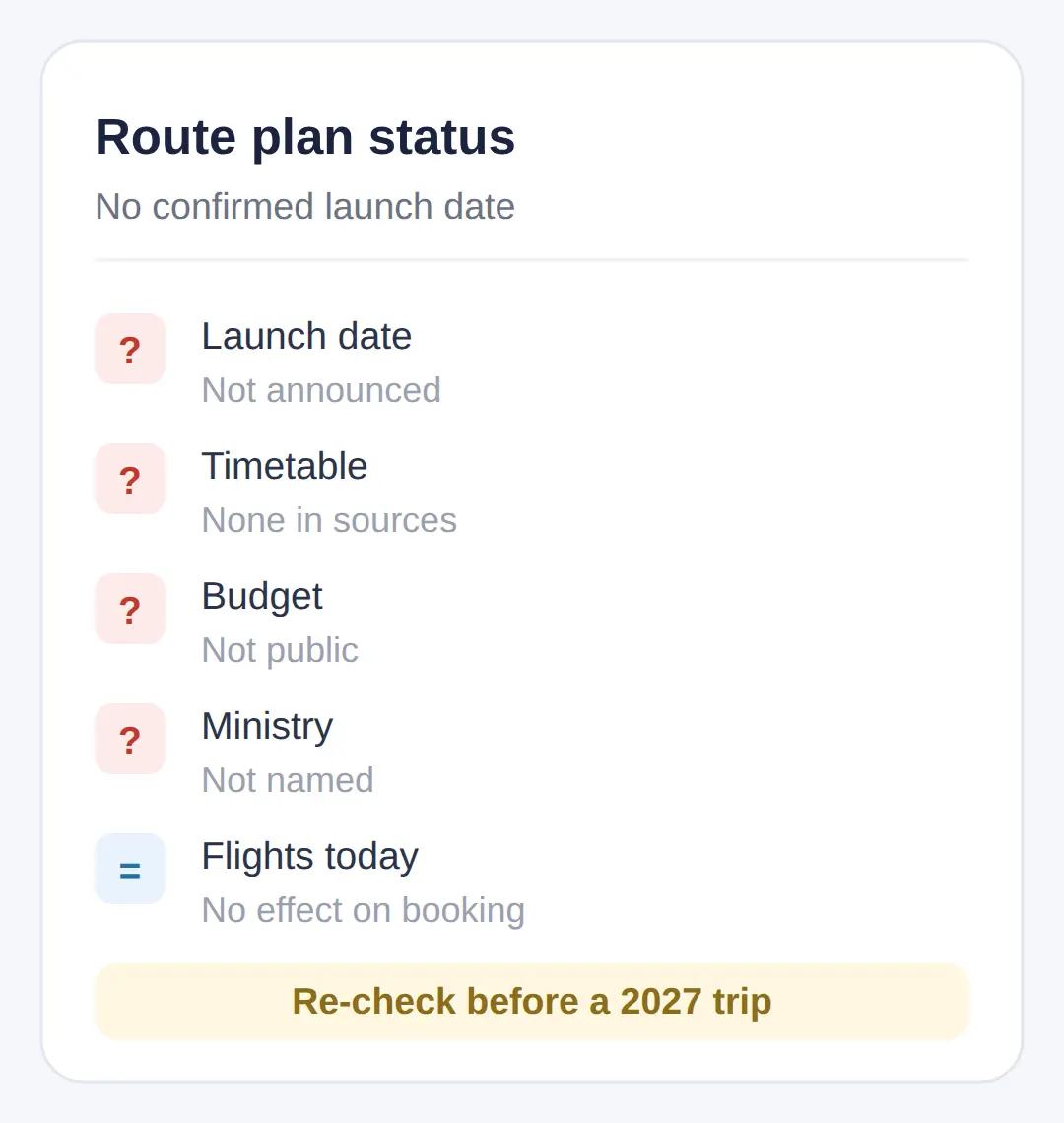
There is no confirmed launch date.
The September 10 report describes a mapping and planning stage, and no timetable for actual route operation appeared in sources from the past six months.
Budget and the implementing ministry are also not public yet.
Until an official launch is announced, the plan has no effect on flights, prices, or itineraries you can book today.
If a 2027 trip is on your calendar, this is a policy to check again closer to booking, not something to wait for.
👉 Korea navigation apps: why Google Maps fails and 4 to install before landing
Which 5 airport hubs are involved
The full list of 5 hubs is not confirmed in available reporting.
Four are widely treated as likely: Incheon, Gimpo, Jeju, and Gimhae in Busan.
A fifth candidate is not identifiable from sources published in the past six months, with Daegu and Yangyang mentioned as possibilities.
A few points support the regional-hub idea regardless of the final list.
Jeju already runs a visa-free entry program for most foreign nationals, which makes it the most ready-made secondary hub today.
Gimpo served as Korea’s international gateway before Incheon opened in 2001, and it still handles domestic flights plus short international routes.
Jeju and Gimhae already handle significant international and charter traffic, so the infrastructure base exists.
The exact official list should be confirmed against the original announcement before planning around it.
*Figure: confirmed status of the likely hub candidates*
Does it change your current ticket
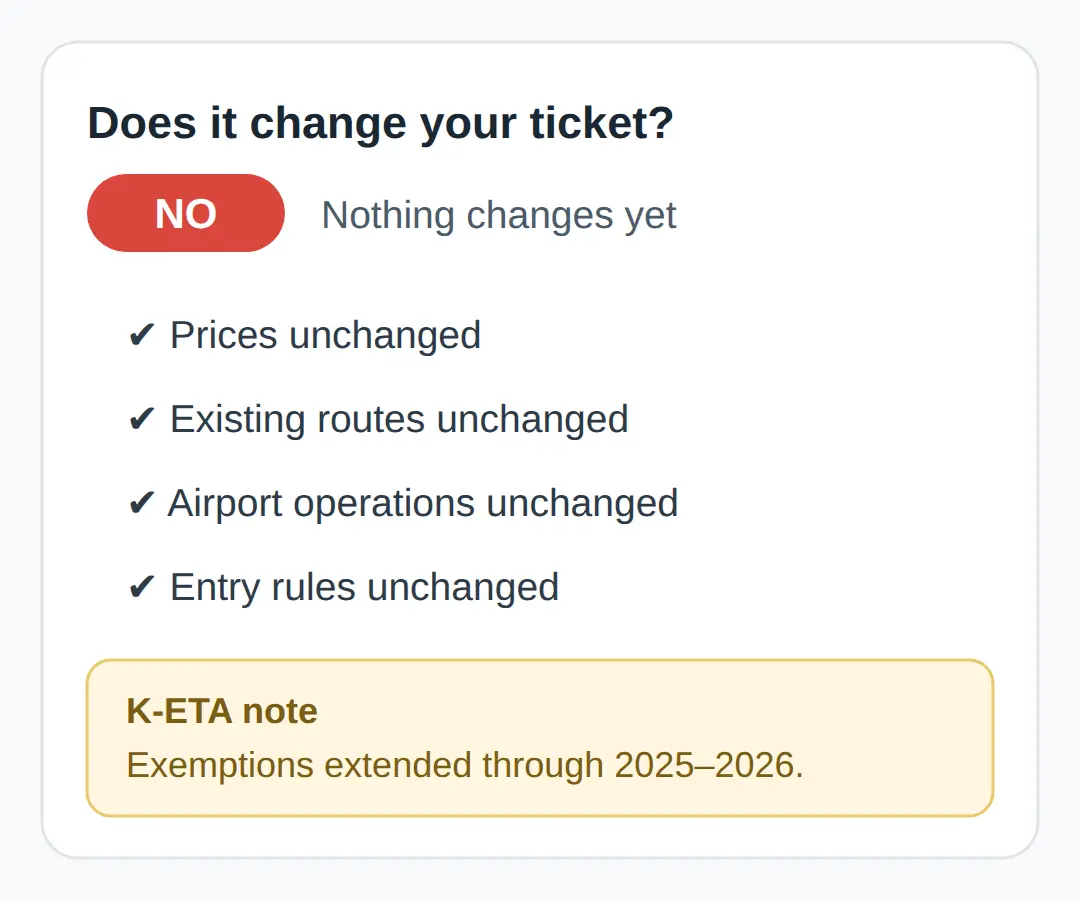
No.
Ticket prices, existing itineraries, and airport operations are unchanged while the plan stays at the mapping stage.
Golden routes are infrastructure and marketing planning, not a bookable product yet.
For a 2026 trip, book flights exactly as you would have before the announcement.
Incheon remains the main international gateway, and domestic connections work the same as before.
Entry rules are also unchanged by this plan, though Korea has extended temporary K-ETA exemptions for major visa-waiver markets through 2025 and 2026.
Check your K-ETA status on the official site before you fly, since exemptions vary by nationality.
How to plan an outside-Seoul trip now
You can build the same kind of trip today with existing transport.
Base yourself in Busan, Daegu, Gyeongju, Jeonju, or Jeju and connect between them.
The Korea Rail Pass (KR PASS) gives foreign visitors unlimited KTX rides on a 3-day pass from about ₩121,000, or about ₩97,000 for travelers aged 13 to 25, covering the Seoul to Busan and Daegu legs.
Note that this fare comes from an older source and should be re-checked on the KORAIL pass page before booking.
For Jeju, low-cost carriers run Seoul to Jeju flights roughly hourly, with one-way fares commonly ₩30,000 to ₩60,000.
City passes already exist for the regional content: the Discover Seoul Pass bundles 24 to 72 hours of free entry with transport, and regional equivalents cover places like Gyeongju and Busan.
A practical 5-day shape: fly into Incheon, take KTX to Gyeongju for the UNESCO sites, continue to Busan, and fly or rail back for departure.
*Figure: a sample outside-Seoul loop you can book today*
👉 Gyeongbokgung night tour 2026: 3,000 won, Sept 2-Oct 2, and how booking works
Existing route products already cover this pattern
Golden routes would extend ideas that already operate.
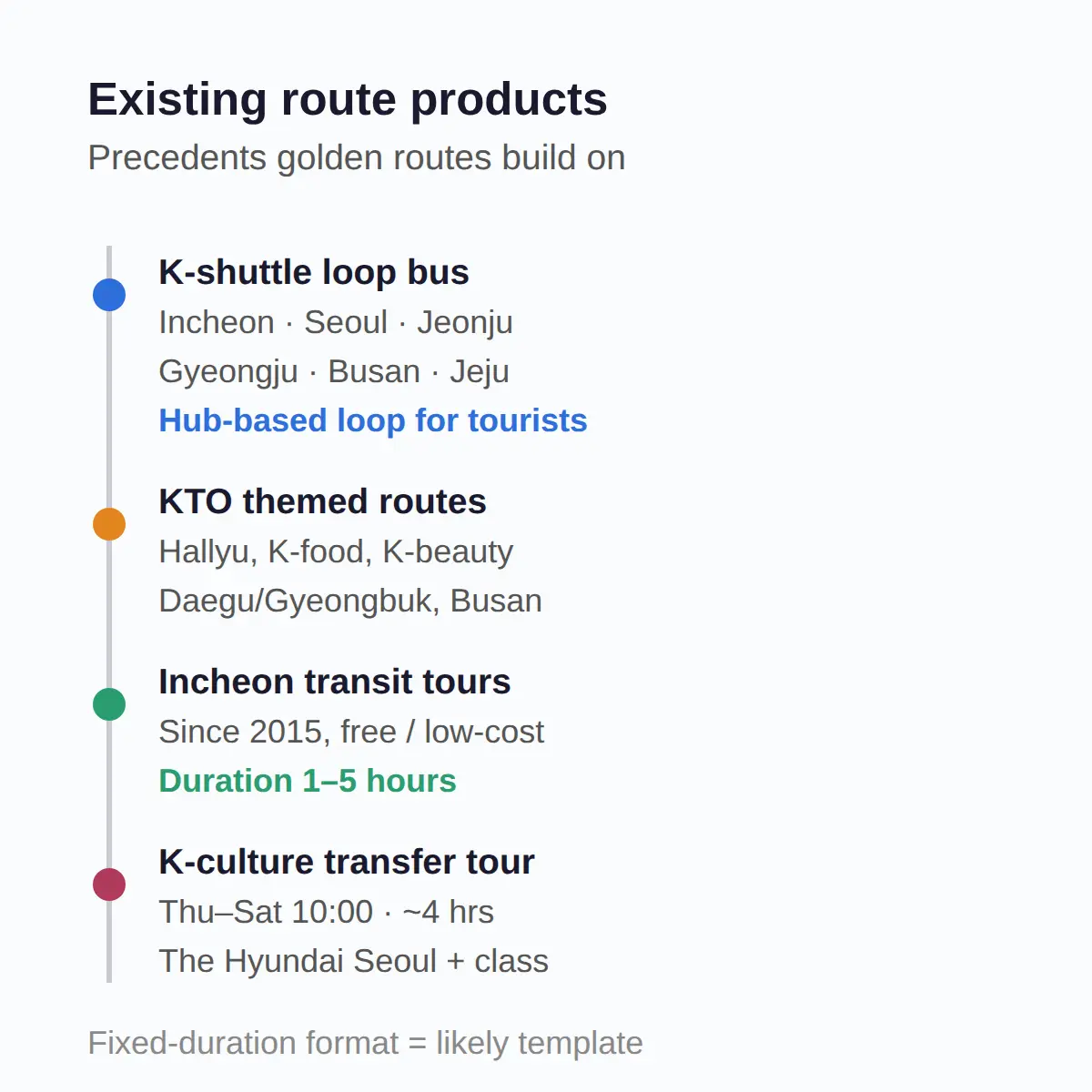
The K-shuttle circular bus has linked Incheon, Seoul, Jeonju, Gyeongju, Busan, and Jeju for foreign tourists, which is a working precedent for hub-based loops.
Korea Tourism Organization also promotes themed routes such as Hallyu, K-food, and K-beauty across regions like Daegu and Gyeongbuk or Busan and Gyeongnam.
For layover travelers specifically, Incheon Airport has run free and low-cost transit tours of 1 to 5 hours since 2015.
A newer example is the K-culture transfer tour launched with Hyundai Department Store and the Visit Korea Committee: departures Thursday through Saturday at 10:00, about 4 hours at The Hyundai Seoul including a Korean cooking class, then return to the airport.
The transfer tour was covered by ETtoday on September 10, 2026.
If golden routes add packaged products at regional hubs, this fixed-duration tour format is the likely template.
👉 The Korea Times report on the plan
👉 Check your K-ETA status on the official site
👉 The transfer tour was covered by ETtoday
Related posts
📎 Seoul — everything we know
📎 Seoul fireworks festival 2026 subway: Which Stations to Use Tonight
📎 Chuseok 2026 Korea travel: free parking, what closes
📎 📅 다가오는 일정 — 발매·개봉·발표 캘린더
Sources
- Fifth hub not confirmed in sources found (koreatimes.co.kr)
- K-shuttle circular route linking Seoul–Jeonju–Gyeongju–Busan (koreatourinfo.com)
- Regional airports handle international flights; official sta (airport.co.kr)
How to plan around the 5 airport hubs today
- Book flights as you would have before the announcement. The plan changes nothing for 2026.
- For trips outside Seoul, base around Busan, Daegu, Gyeongju, Jeonju, or Jeju and connect by KTX or a domestic flight.
- If you have an 8-hour Incheon layover with through-checked baggage, expect about 4.5 usable hours in the city after immigration and security. Return to the airport at least 2 hours before departure.
- The most common layover mistakes are underestimating immigration lines, leaving the airport without checking visa eligibility, and returning too close to departure.
FAQ
Q. When does Korea golden routes start?
No launch date has been announced. The September 10, 2026 report describes a planning and mapping stage only, and no timetable for actual route operation was found in coverage from the past six months.
Q. Which 5 airports are the hubs? Is Jeju and Busan included?
The full official list has not been published. Incheon, Gimpo, Jeju, and Gimhae (Busan) are the widely cited likely four, and the fifth is unconfirmed, with Daegu or Yangyang mentioned as possibilities. Jeju is the most ready-made hub today because it already runs a visa-free entry program for most foreign nationals.
Q. Does the plan change my current booking?
No. Ticket prices, existing itineraries, and airport operations are unchanged while the program stays at the plan stage. Golden routes are not a bookable product yet.
Q. Can I leave Incheon Airport during a layover to shop in Seoul?
Yes, if your layover is long enough. With an 8-hour layover and through-checked baggage, immigration and security overhead leave roughly 4.5 usable hours outside the airport. Plan to be back at the airport at least 2 hours before departure. Incheon also runs transit tours of 1 to 5 hours, and a K-culture transfer tour with a 4-hour city block departs Thursday through Saturday at 10:00.
Q. Can I enter Korea through an airport other than Incheon?
Yes. Jeju and Gimhae (Busan) handle significant international traffic, and Jeju has its own visa-free entry program for most foreign nationals. Daegu and Gwangju also accept some international flights. Entry rules can differ by airport, so confirm your nationality’s requirements before choosing a regional entry point.
Check current KR PASS and Discover Seoul Pass options before your trip.
#Koreagoldenroutes #Koreatravel2026 #Koreaairporthubs #Incheonlayovertour #KoreaRailPass #Jejuvisafree #Busantravel #outsideSeoulitinerary #K-ETAexemption
📅Upcoming Dates — 이번 주 16 · D-day 'The Scandal' global Netflix release전체 보기 →