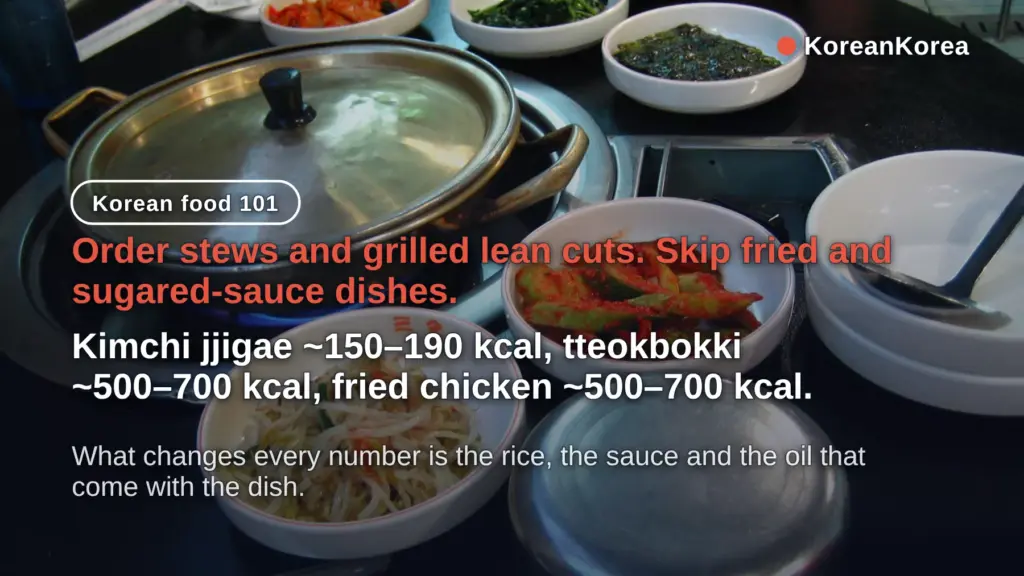
Order broth-and-grill dishes — kimchi jjigae (~150–190 kcal), sundubu jjigae (~160–210 kcal), steamed egg custard (~150 kcal) — and skip tteokbokki and fried chicken (both ~500–700 kcal), where rice and sauce decide the total.
Those skip-list items hold roughly 2.7–3.5x the calories of a kimchi jjigae in one serving, so the swap matters more than the portion.
This post lists the dishes to order, the ones to skip, the ordering moves that cut a meal in half, and the kimchi sodium question.
Key facts — As of 2026-10-03
- Kimchi jjigae runs roughly 150–190 kcal per serving before rice, while tteokbokki hits ~500–700 kcal — about 2.7–3.5x the calories in one swap (2026 dining-guide figures).
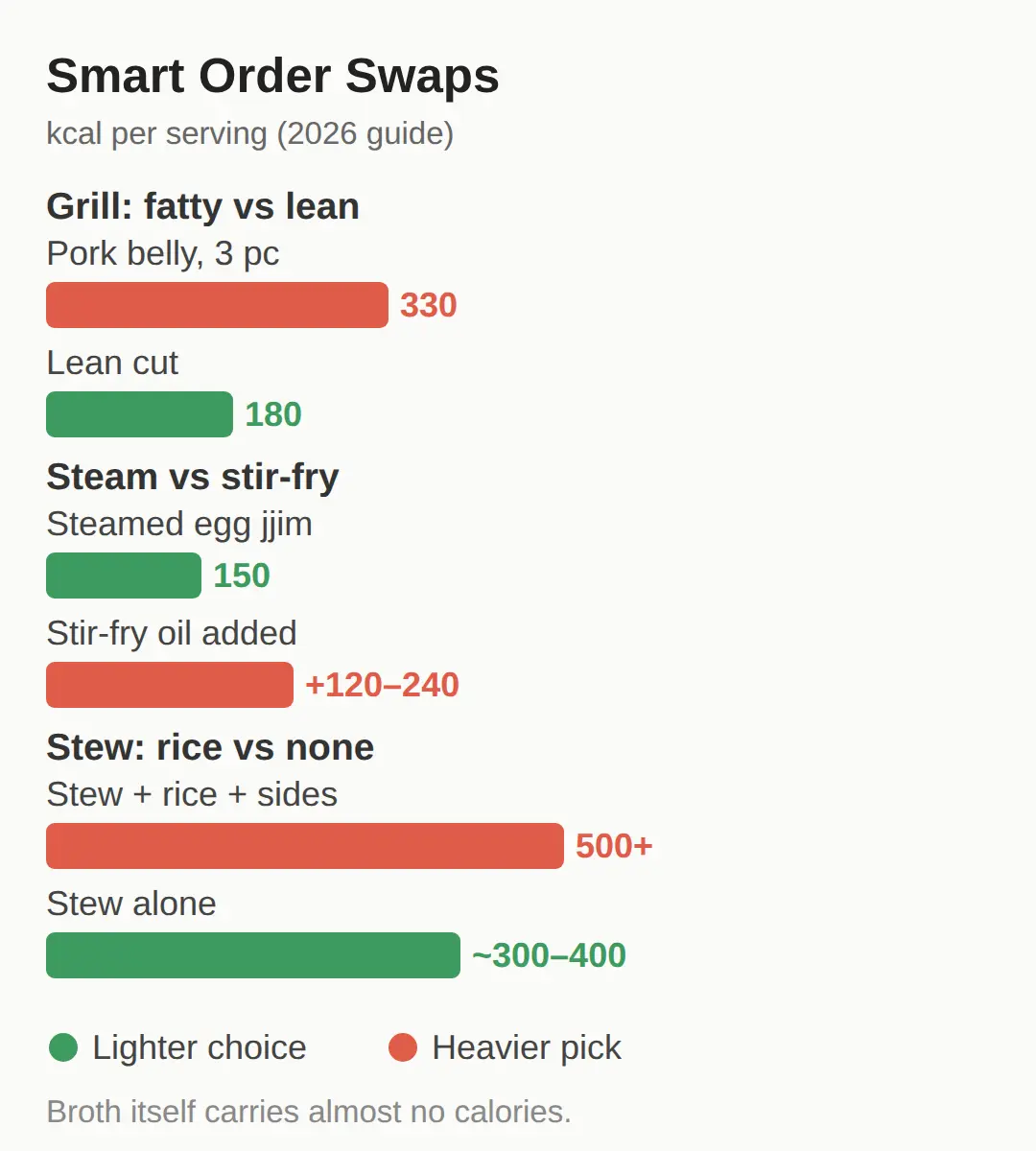
- Daepae-samgyeop (thin-cut pork belly) comes in at ~180 kcal for 3 slices versus ~330 kcal for regular samgyeopsal (MyFitnessPal-style entries).
- Steamed egg custard (gyeopa-gyeran-jjim) is ~150 kcal; choosing it over a small vegetable bibimbap (~400–450 kcal) saves roughly 250–300 kcal per meal (2026 calorie databases).
Best Korean Foods for Weight Loss: The Short Answer
| Kimchi jjigae (kimchi stew) | ~150–190 |
|---|---|
| Sundubu jjigae (soft tofu stew) | ~160–210 |
| Steamed egg custard (gyeopa-gyeran-jjim) | ~150 |
| Vegetable bibimbap (small rice, no fried egg) | ~400–450 |
| Kongguksu (cold soybean noodle soup) | ~350–400 |
| Tteokbokki (rice cakes in sweet sauce) | ~500–700 |
| Korean fried chicken (4–5 pieces) | ~500–700 |
The best Korean foods for weight loss are broth-based stews, grilled lean cuts and steamed dishes, and the ones to skip are fried and sugar-sauce dishes.
Kimchi jjigae runs roughly 150–190 kcal per serving before rice, while tteokbokki hits ~500–700 kcal — about 2.7–3.5x the calories in one swap (2026 dining-guide figures).
The calorie cost sits in rice, meat and oil, not the soup: anchovy and kelp broths carry almost no calories themselves.
That means the dish name matters less than what comes with it by default.
If you eat out several times a week in Korea, start from the order side and treat the skip list as the dishes that blow a day’s budget in one sitting.
Low-Calorie Korean Dishes You Can Order Anywhere
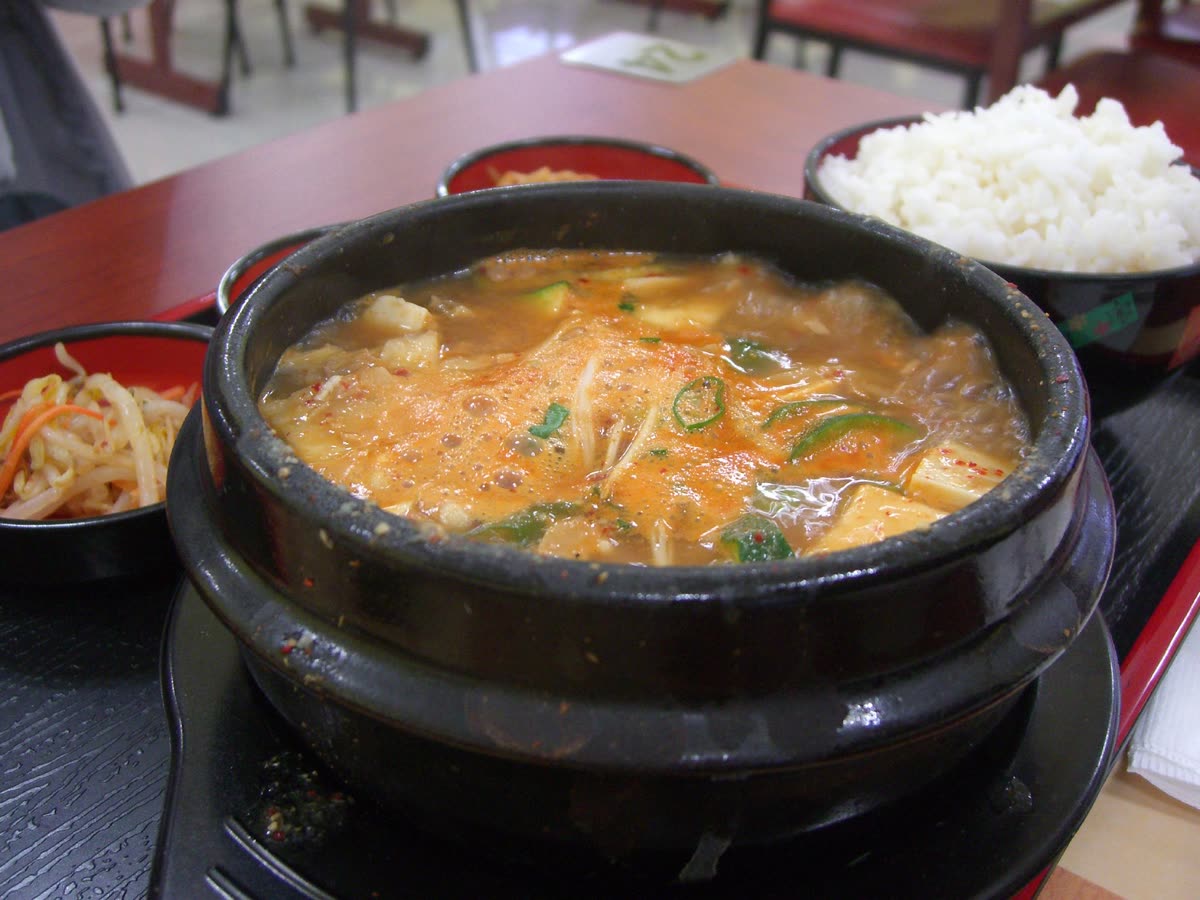
Order half: kimchi jjigae ~150–190 kcal, sundubu jjigae ~160–210 kcal, steamed egg custard ~150 kcal, grilled lean cuts ~180–250 kcal, kongguksu ~350–400 kcal.
Grilled items split by cut: regular samgyeopsal is fatty at ~330 kcal for 3 slices, but daepae-samgyeop (thin-cut) drops to ~180 kcal, and galbi-sal or sauce-free grilled chicken lands in the 200–250 kcal band.
Sundubu jjigae is high-protein because the base is unfiltered soy and tofu, which keeps the carbs low.
Kongguksu works for a similar reason: its base is ground soybeans, not stock, so it carries ~20 g of protein.
If you want the lightest plate, pick a stew or the thin-cut grill; if you want volume, a vegetable bibimbap (~400–450 kcal) still fits under the skip band.
Korean Dishes to Skip While Dieting
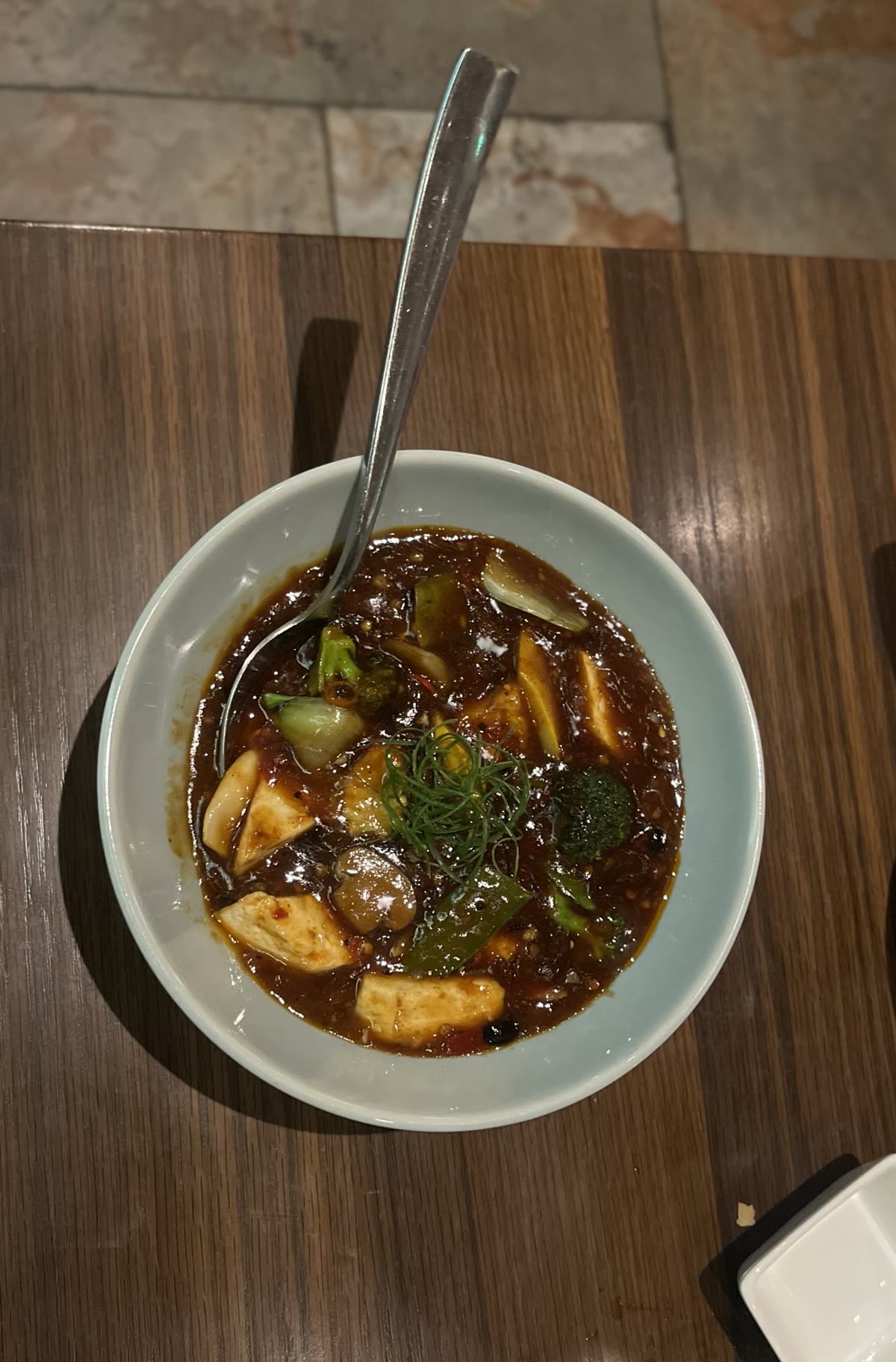
Skip the fried and sugar-sauce dishes: tteokbokki ~500–700 kcal, Korean fried chicken ~500–700 kcal for 4–5 pieces, and battered jeon pancakes at ~350–500 kcal per plate.
The problem is not the base ingredient but the format.
Jeon absorbs oil while pan-frying, and kimchi-jeon runs about ~400 kcal per plate.
Tteokbokki’s main issue is the sweet gochujang sauce over rice cakes — sugar is the dieting cost there.
Fried chicken carries roughly double the calories of a grilled equivalent, so the same appetite costs twice the budget.
If a menu item is described as fried, battered or glazed in sweet sauce, treat it as a skip-list item.
How Default Rice and Sides Change Everything
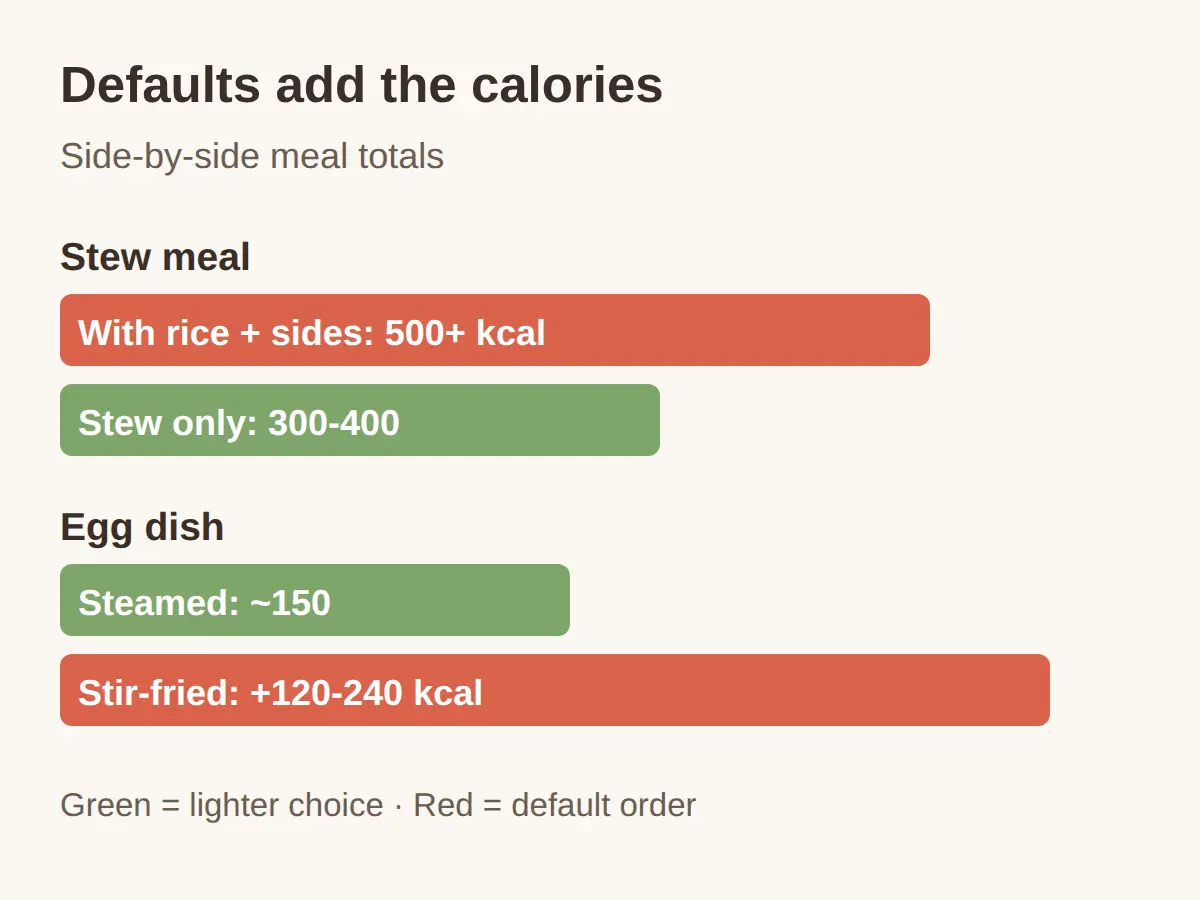
Restaurant stews come with rice and side dishes by default, and eating all of it pushes a 150–190 kcal stew toward a 500+ kcal meal.
- Ask for half-rice or no rice with any jjigae — the broth itself costs almost nothing, so the stew-only meal lands at ~300–400 kcal total.
- At a Korean BBQ place, choose daepae-samgyeop and wrap the meat in lettuce or perilla with ssamjang instead of rice — the whole meal lands at ~400–500 kcal.
- Fill up on the shared vegetable sides (kimchi, namul) before touching rice — the Korean table structure lets you eat volume at low cost.
- Order sauce-heavy dishes with sauce on the side — in bibimbap, gochujang is the calorie and sugar variable.
The banchan-first move is the one that works everywhere, because Korean tables put many small vegetable dishes in front of you anyway.
Order vs Skip: The Calorie Comparison Table
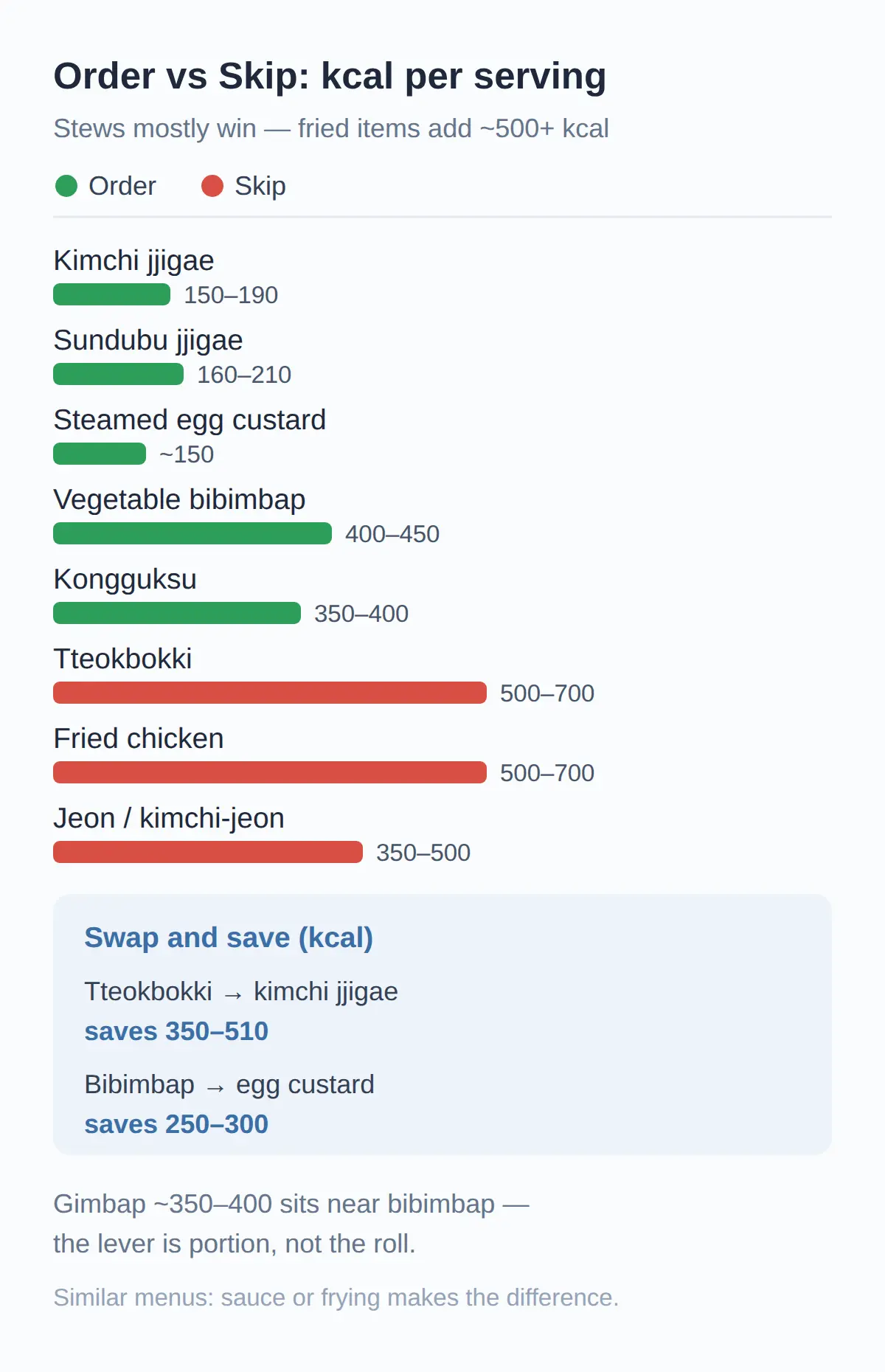
Here is the same meal decision as a table — order side, skip side, and what a swap saves.
| Dish | Side | kcal per serving |
|---|---|---|
| Kimchi jjigae | Order | ~150–190 kcal |
| Sundubu jjigae | Order | ~160–210 kcal |
| Steamed egg custard | Order | ~150 kcal |
| Vegetable bibimbap | Order | ~400–450 kcal |
| Kongguksu | Order | ~350–400 kcal |
| Tteokbokki | Skip | ~500–700 kcal |
| Fried chicken | Skip | ~500–700 kcal |
| Jeon / kimchi-jeon | Skip | ~350–500 kcal |
| tteokbokki → kimchi jjigae | Swap saves | ~350–510 kcal |
| bibimbap → steamed egg custard | Swap saves | ~250–300 kcal |
Swapping tteokbokki for kimchi jjigae saves roughly 350–510 kcal per serving, and swapping a small vegetable bibimbap for steamed egg custard saves ~250–300 kcal.
One gimbap roll (~350–400 kcal) sits close to a small vegetable bibimbap (~400–450 kcal), but with less fiber and no warm broth — the lever there is portion, not the roll itself.
If you want noodles, kongguksu (~350–400 kcal, ~20 g protein) wins on protein per calorie against bibim-naengmyeon (~400 kcal, sugar sauce).
Use the table when two menu items look similar — the difference is usually the sauce or the frying, not the main ingredient.
Is Kimchi Good for Dieting? The Sodium Question
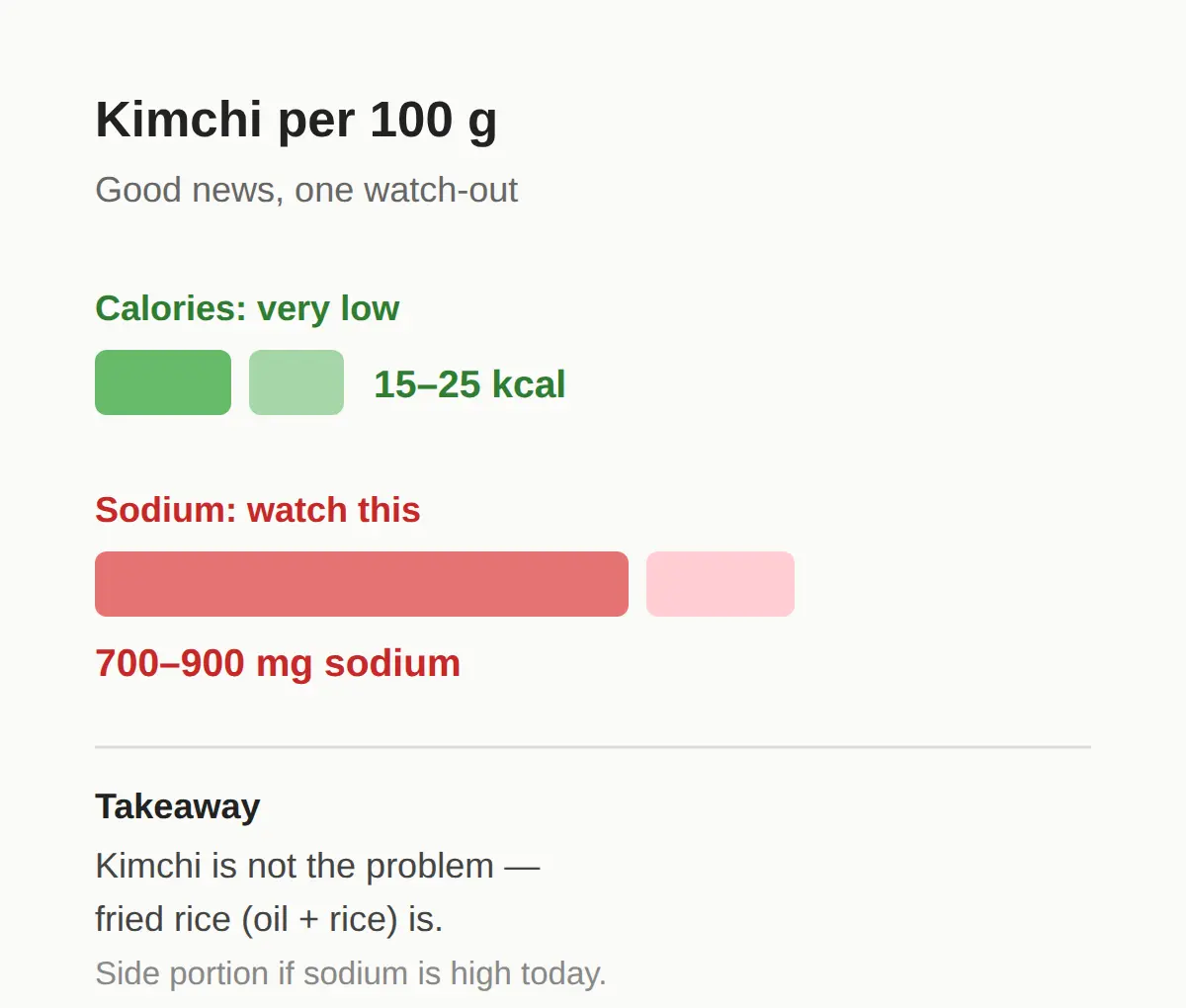
Kimchi itself is light — about 15–25 kcal per 100 g with high fiber — so it stays on the diet list; the thing to watch is sodium, listed around 700–900 mg per 100 g in public nutrition tables.
This is why "is kimchi fried rice healthy" has a split answer: kimchi is not the problem, the fried-rice format is, because oil plus rice pushes the plate up.
When I look at any Korean dish while dieting, I check first what comes with it by default — the rice, the sauce and the oil, not the dish name.
If your sodium intake is already high for the day, eat kimchi as a side portion rather than the main volume; otherwise the fiber-rich sides are the cheapest fullness on the table.
If it were my meal, I would order the stew, skip the rice, and fill up on the vegetable banchan first — the broth costs almost nothing, so the volume does the satiety work without moving the total much.
These figures are database-style estimates, not official restaurant nutrition tables — exact numbers vary by recipe, so treat the bands as approximate.
Related posts
📎 📅 Upcoming Dates — Release & Event Calendar
Sources
- TravelWithHello 2026 dining guide — 2026 prices and composit (travelwithhello.com)
- KoreaExperience 2026 vegan guide — anchovy/dasima broth base (koreaexperience.com)
- Health Chosun — 10-minute brown rice + avocado oil + scrambl (health.chosun.com)
What to Remember
- Order stews, grilled lean cuts and steamed dishes; skip fried and sugar-sauce dishes.
- When two menu items look similar, the difference is usually the sauce or the frying, not the main ingredient.
- At Korean BBQ, pick daepae-samgyeop (~180 kcal) and wrap in lettuce with ssamjang instead of rice.
- Eat the vegetable sides first — the Korean table structure lets you fill up before touching rice.
- Kimchi is fine for dieting (~15–25 kcal per 100 g); watch sodium (~700–900 mg per 100 g), not the kimchi itself.
FAQ
Q. Which Korean dishes are low in calories and good for weight loss?
Kimchi jjigae (~150–190 kcal), sundubu jjigae (~160–210 kcal), steamed egg custard (~150 kcal), grilled lean cuts like daepae-samgyeop (~180 kcal for 3 slices), and kongguksu (~350–400 kcal, ~20 g protein).
Q. Which Korean dishes should I avoid while dieting?
Tteokbokki (~500–700 kcal), Korean fried chicken (~500–700 kcal for 4–5 pieces) and battered jeon pancakes (~350–500 kcal) — frying oil and sweet sauce are the cost.
Q. Is kimchi good or bad for dieting?
Good for calories (~15–25 kcal per 100 g, high fiber) but heavy on sodium (~700–900 mg per 100 g), so portion is the lever — the thing to watch is total sodium, not the kimchi itself.
Q. Does rice with a Korean stew double the calories?
Restaurant stews default-serve rice and sides; eating the default rice pushes a ~150–190 kcal stew meal toward 500+ kcal, so half-rice or no rice cuts the meal roughly in half.
Q. How many calories does one gimbap roll have?
About 350–400 kcal, dominated by rice and sesame oil — close to a small vegetable bibimbap (~400–450 kcal), with the lever being portion rather than filling choice.
Bookmark the order-vs-skip table below and use it on your next meal out — one stew-and-half-rice swap is the easiest place to start.
Cover photo: Korean cuisine-Jjigae and bancahn by ayustety — CC BY-SA 2.0
#koreanfood #weightloss #koreandietfood #kimchijjigaecalories #tteokbokkicalories
📅Upcoming Schedule — this week 1 · D-7 Godsoi lineup removed from menus after 2026-11-09See all →Last updated 2026-11-03. Editorial policy