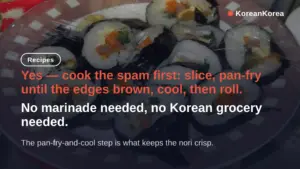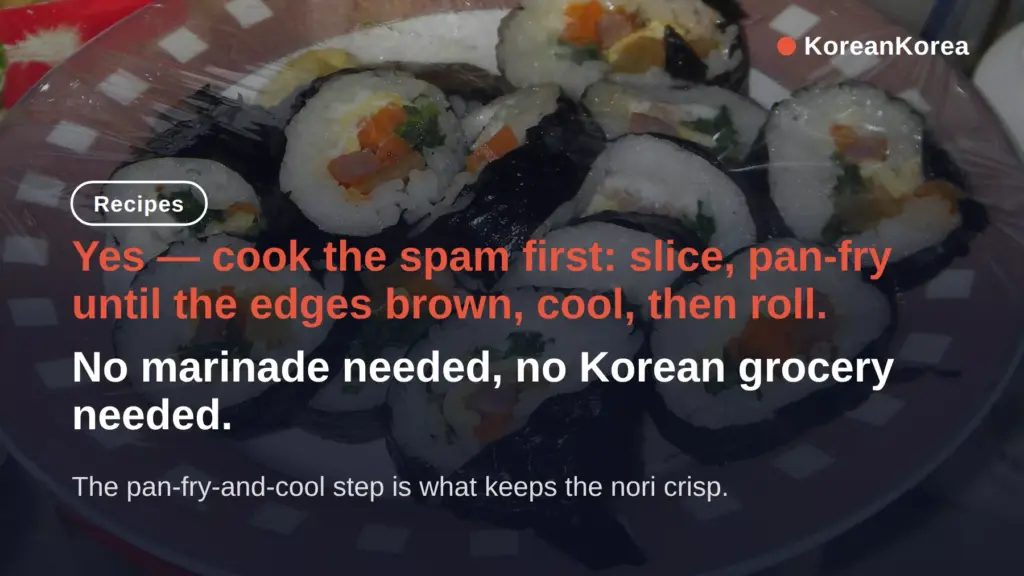
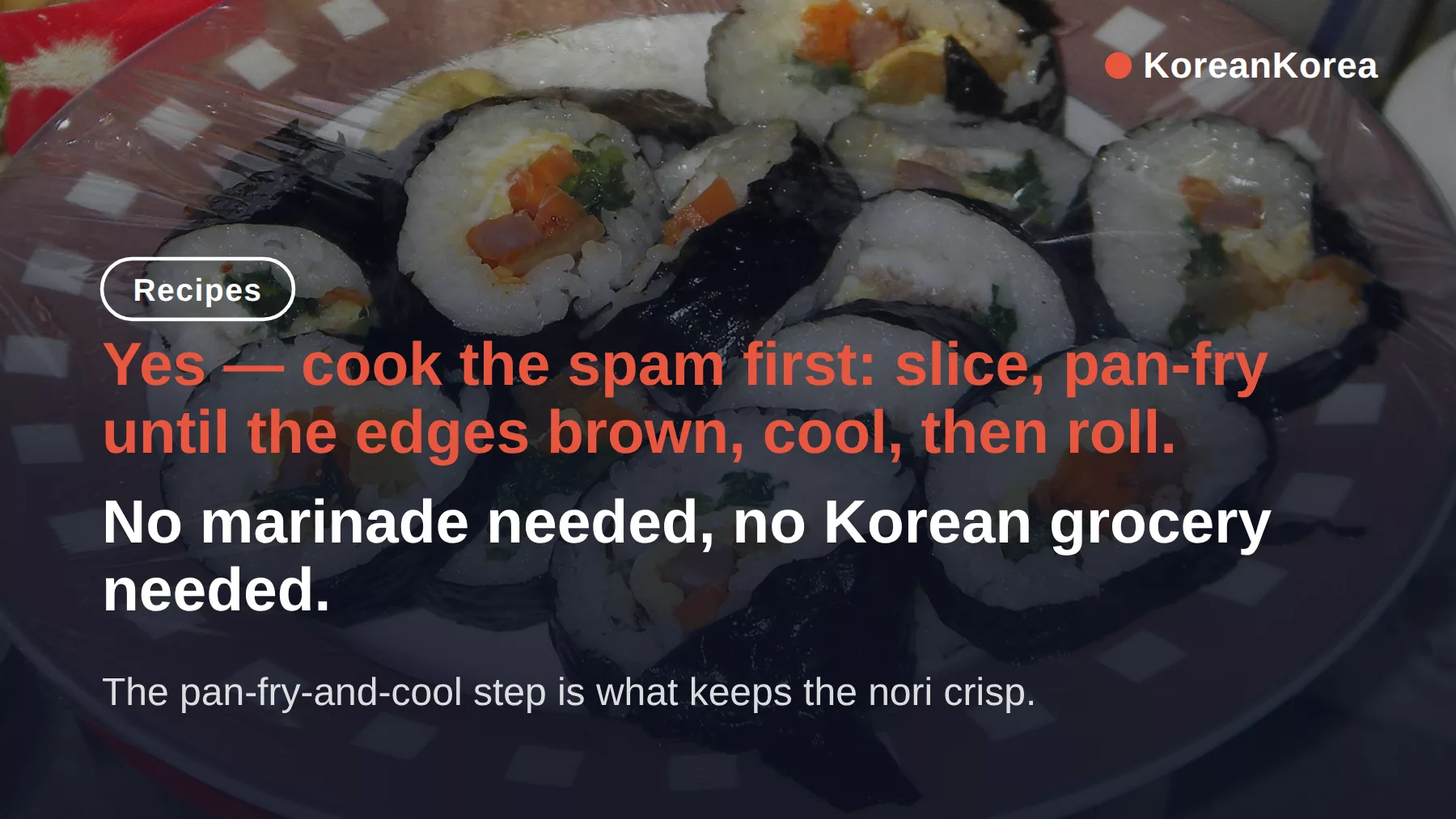
Cook the spam first: slice it into strips, pan-fry until the edges brown, and let it cool before rolling — that is the whole trick.
Canned spam is already salted and shelf-stable, so it needs no marinade and no Korean grocery run.
This post covers the spam method, what to pair it with, how it differs from spam musubi, and the mistakes that make a roll soggy.
Contents
- kimbap recipe spam: fry it first, cool it, then roll
- Why spam works when you can’t find bulgogi beef
- Spam kimbap vs spam musubi — what changes
- Building the rest of the roll
- Common mistakes: soggy rolls and salty filling
- Variations and how long kimbap keeps
kimbap recipe spam: fry it first, cool it, then roll
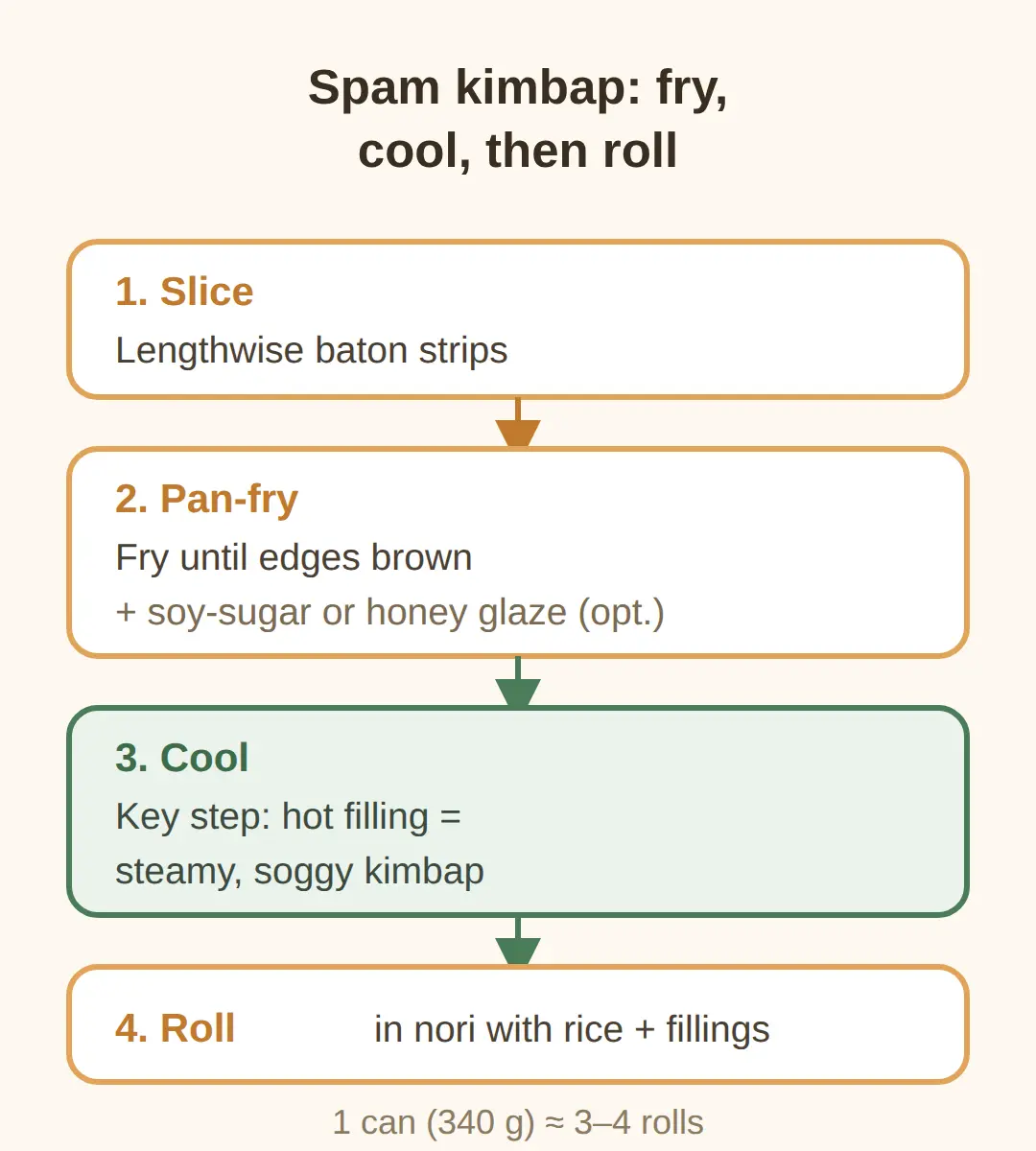
Spam goes into kimbap pan-fried, not straight from the can.
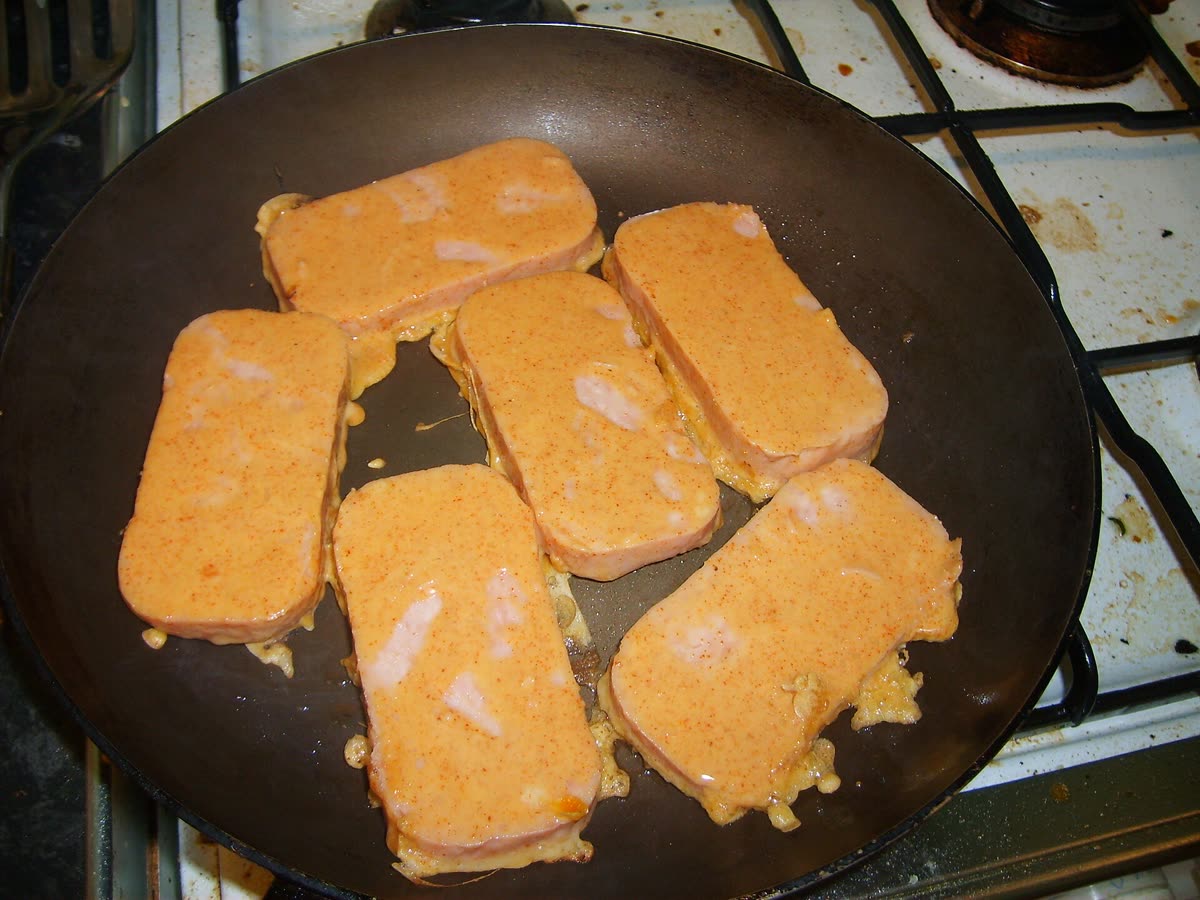
Spam is fully cooked when canned, so frying is not about safety — it is for browned edges and, if you want it, a light glaze.
- Slice the spam slab lengthwise into baton strips, about the size of carrot or beef strips.
- Pan-fry the strips until the edges brown and crisp; add a light soy-sugar or soy-honey glaze in the last minute if you want the sweet-salty musubi flavor.
- Transfer the strips to a plate and let them cool before rolling.
The cooling step matters as much as the frying.
Hot fillings steam the inside of the roll and soften the nori, which is how a kimbap goes soggy.
When a spam kimbap recipe skips the pan-fry-and-cool step, that is the first thing to fix — check for it before following any version you find.
| Carrot | Julienned, stir-fried until just soft, cooled |
|---|---|
| Spinach | Blanched, squeezed dry, seasoned with salt and sesame oil |
| Pickled radish (danmuji) | Cut into long strips — no cooking needed |
| Egg | Thin fried egg sheet, rolled and sliced into strips |
Why spam works when you can’t find bulgogi beef
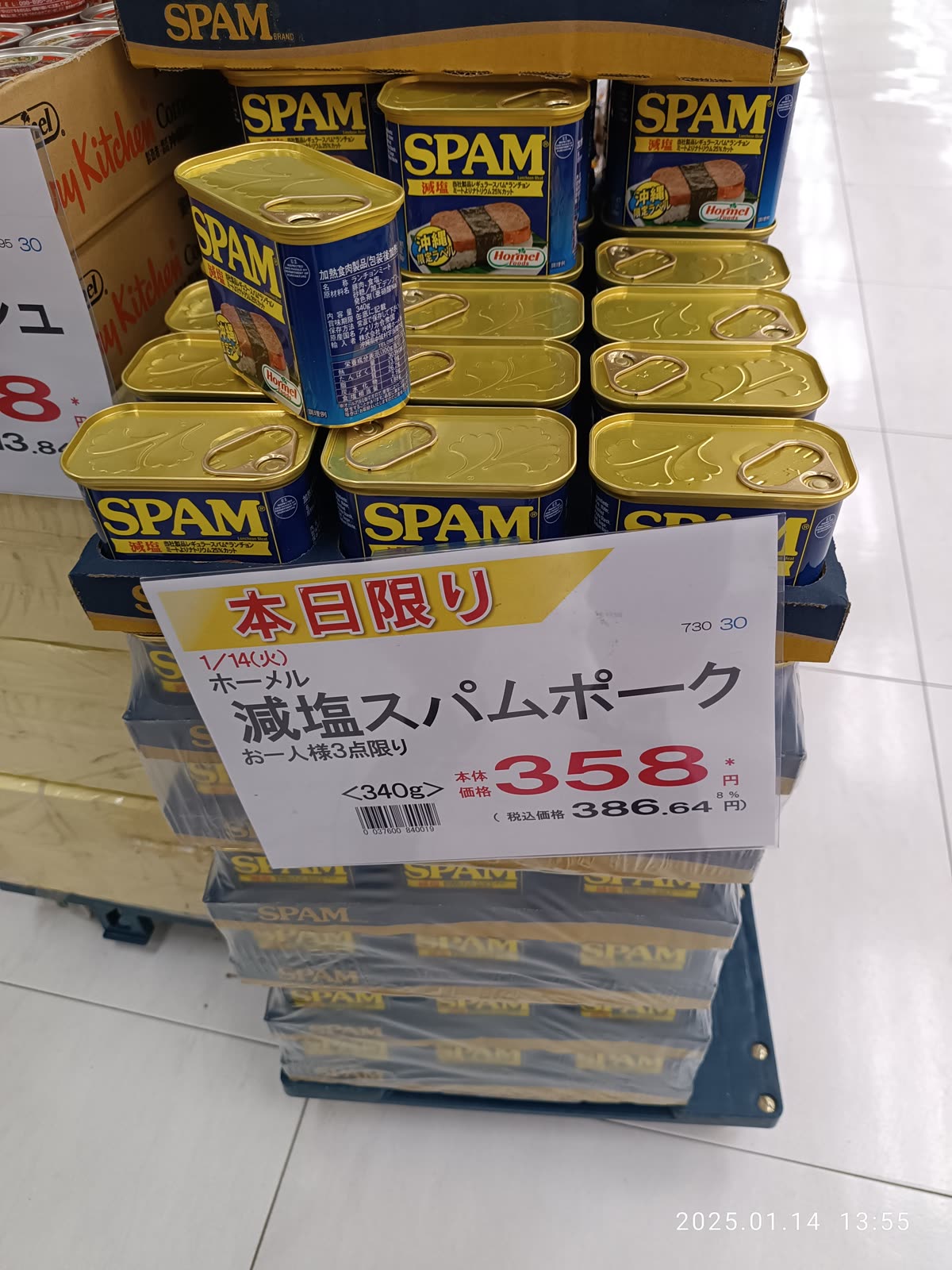
Spam suits kimbap abroad because it is canned, salted, and sold in ordinary supermarkets — no Korean market trip required.
| Answer | Reason |
|---|---|
| Shelf-stable canned meat from any supermarket | Needs no refrigeration until opened, so the whole recipe runs on pantry staples plus supermarket vegetables: rice, nori sheets, carrot, spinach, egg, pickled radish |
| No Korean grocery run | Spam fills the meat slot that bulgogi beef would otherwise require a Korean market for |
| No marinade | Spam is already salted and cured — a light glaze or nothing at all is enough |
| Too salty? | Choose a lower-sodium spam variant rather than cutting the rice seasoning |
Skip the marinade, too.
Bulgogi-style beef is stir-fried with soy sauce, sugar, and sesame oil because raw beef needs seasoning — spam is already salted and cured, so a light glaze or nothing at all is enough.
If the seasoned rice plus original spam tastes too salty, look for a lower-sodium spam variant rather than cutting the rice seasoning.
When something in a recipe calls for Korean-only ingredients, this is the filling that lets you skip them.
Spam kimbap vs spam musubi — what changes
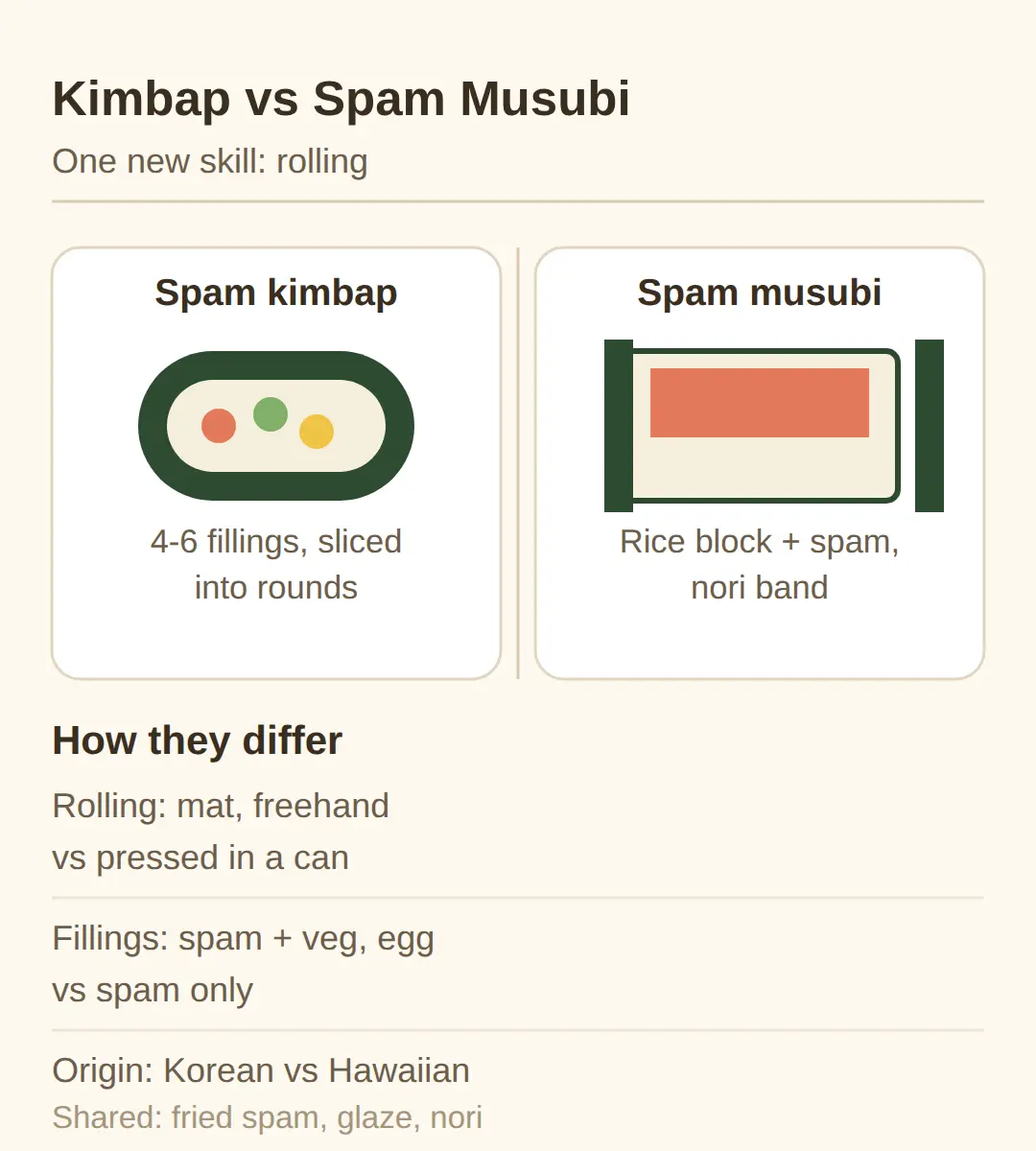
Kimbap is a full multi-filling roll sliced into rounds; spam musubi is a single spam-on-rice block wrapped with a nori band.
Everything else — the pan-fried spam, the optional soy-sugar glaze, the nori — is shared.
| Spam kimbap | Spam musubi | |
|---|---|---|
| Shape | Full nori sheet, 4 or more fillings, rolled and sliced into rounds | Block of rice topped with one spam slice, nori band around it |
| Rolling | Freehand on a bamboo mat | Pressed with the empty spam can or a musubi mold |
| Fillings | Spam strips + vegetables and egg | Spam only |
| Origin | Korean | Hawaiian |
The glaze logic transfers in both directions: musubi’s pan-fried glazed spam becomes kimbap baton strips, and a musubi glaze habit works on kimbap strips without change.
If you have made musubi before, kimbap asks for one new skill — freehand rolling on a mat instead of pressing into a can.
Building the rest of the roll
Season warm cooked rice with sesame oil and salt — not vinegar and sugar, which is the sushi-rice seasoning.
Mix in or sprinkle toasted sesame seeds at the same time, and use pre-toasted nori sheets with the shiny side down.
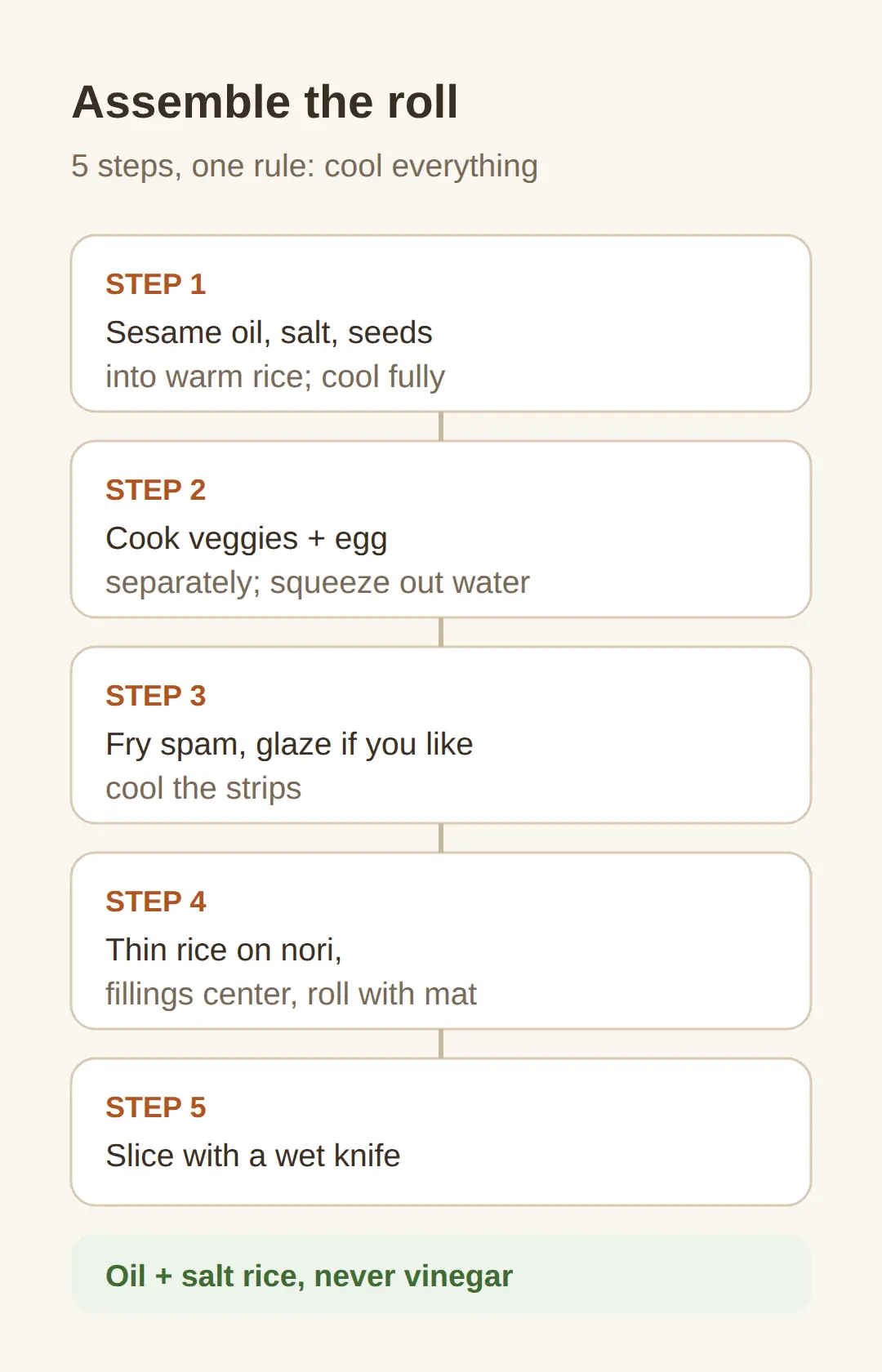
| Step | What to do |
|---|---|
| 1 | Mix sesame oil, salt, and sesame seeds into the warm rice; let it cool to room temperature |
| 2 | Cook each vegetable and egg filling separately, drain or squeeze out the moisture, and cool each one |
| 3 | Pan-fry, glaze if you like, and cool the spam strips |
| 4 | Spread a thin layer of rice over the nori, lay the fillings across the center, and roll with a bamboo mat, pressing gently as you go |
| 5 | Slice with a wet knife into rounds |
The separate-cooking rule applies to every filling, not just the spam — watery fillings are the other common cause of a soggy roll.
Spread the rice thin enough that the roll closes without filling bursting out the ends.
Common mistakes: soggy rolls and salty filling
The two failures are a soggy roll and an over-salted filling, and both come from the same two steps.
- Rolling hot spam or hot rice — steam softens the nori, so cool every filling first.
- Marinating the spam like beef — it is already salted, so extra soy and sugar oversalt the roll.
- Using raw or watery vegetables without cooking and draining them first.
- Skipping the low-sodium variant when original spam fights the seasoned rice.
Both fixes cost nothing: cooling happens on a plate while you prep the other fillings, and the lower-sodium can sits on the same shelf.
If a roll has come out soggy before, the pan-fry-and-cool step is the first thing to reinstate rather than the rice amount.
Variations and how long kimbap keeps
Two easy variations cover the common situations.
| Variation | What changes |
|---|---|
| Half-sheet snack roll | Use half a nori sheet with spam and two vegetables — a thinner roll that needs less rice and no full-spice lineup |
| Egg sheet alongside spam | A thin fried egg sheet is the usual protein companion in home spam kimbap, so double the egg instead of adding a second meat |
| Without spam | The same roll with only seasoned vegetables and egg is the vegan variant, and every step above except the spam prep stays the same |
On storage: kimbap is best eaten the day it is made, and refrigeration hardens the rice and dulls the taste — spam’s low moisture helps the filling, but it does not make the roll a next-day food.
I would follow Maangchi’s beef-filling routine with spam in its place, because it is the same cook-first, cool-first logic the recipe already demands of every filling.
Plan the amount of rice and spam to what the table will finish in one sitting.
Related posts
Sources
- Sesame oil + salt, not vinegar — kimbap vs sushi distinction (en.wikipedia.org)
- Musubi pressed with the empty spam can or a plastic mold; fu (en.wikipedia.org)
- Keyword evidence (google.com)
The short version
- Slice the spam into baton strips, pan-fry until the edges brown, and cool before rolling.
- No marinade — spam is already salted; a light soy glaze or nothing is enough.
- Season the rice with sesame oil and salt, not vinegar and sugar.
- Cook and drain every filling separately so no water reaches the nori.
- Eat the rolls the same day; the refrigerator is what makes kimbap stale.
FAQ
Q. Do you cook the spam before rolling kimbap?
Yes. Slice it into strips, pan-fry until the edges brown, and cool the strips before rolling. Spam is already fully cooked in the can — frying is for texture and browning.
Q. What is the difference between spam kimbap and spam musubi?
Kimbap is a full multi-filling roll sliced into rounds; musubi is a single spam-on-rice block wrapped with a nori band. Musubi is pressed with a spam can or mold, while kimbap is rolled freehand on a bamboo mat.
Q. How do I make kimbap with spam instead of bulgogi?
Replace the marinated beef with pan-fried spam strips and keep everything else the same: sesame-oil-and-salt rice, separately cooked and cooled vegetable and egg fillings, and a bamboo-mat roll.
Q. Does spam kimbap need a Korean grocery store?
No. Canned spam, nori sheets, rice, carrot, spinach, egg, and pickled radish are all available in ordinary supermarkets outside Korea, and spam needs no refrigeration until opened.
Q. How long does spam kimbap keep?
Plan to eat it the day it is made. Refrigeration hardens the rice, and spam’s low moisture helps the filling rather than extending the roll’s life.
This is the fourth named kimbap variant on the blog — the tuna, vegetable, and beef versions cover the other meat and meatless routes.
Cover photo: Kimbap by strikeael by strikeael — CC BY 2.0
#kimbaprecipe #spamkimbap #koreanrecipes #spammusubi #easykimbap #kimbapabroad
📅Upcoming Dates — 이번 주 20 · D-1 Final two episodes drop on Disney+/Hulu전체 보기 →