How much doenjang goes into one pot of doenjang jjigae?
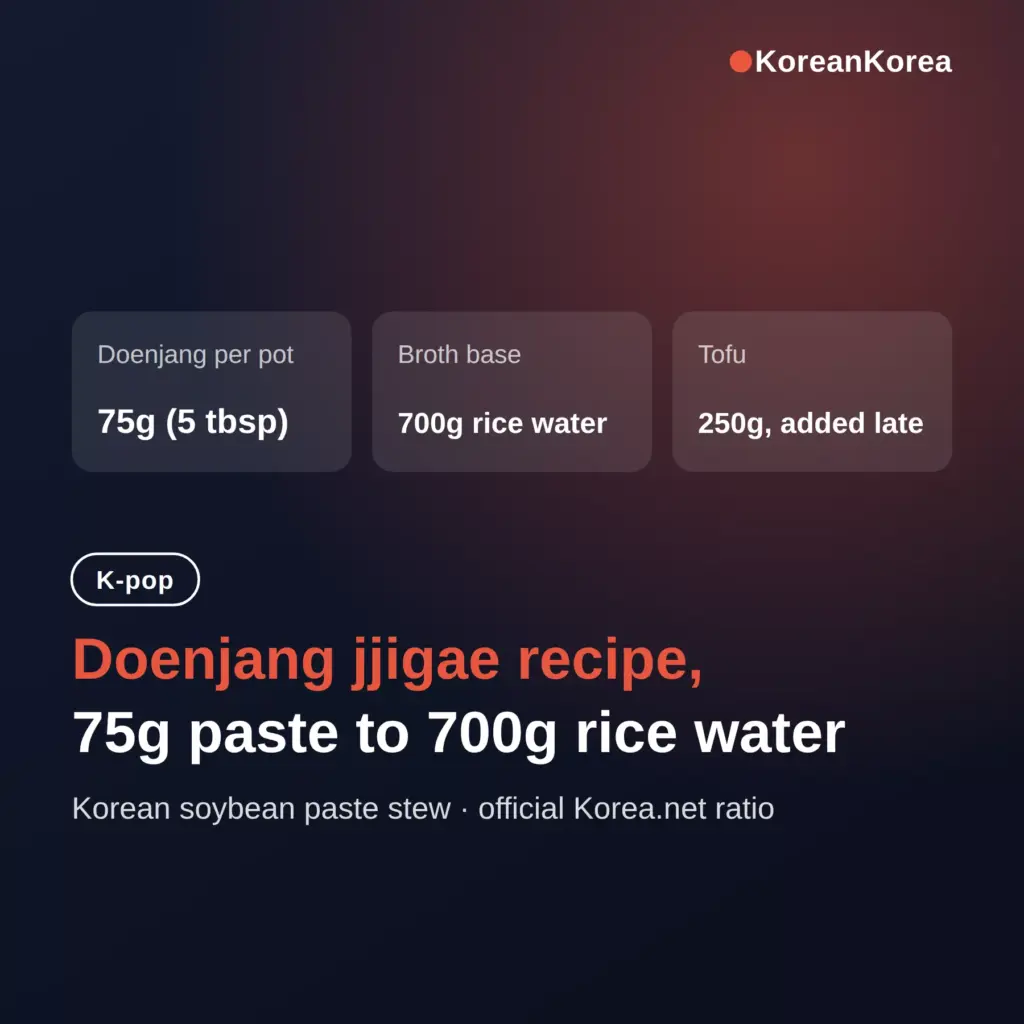
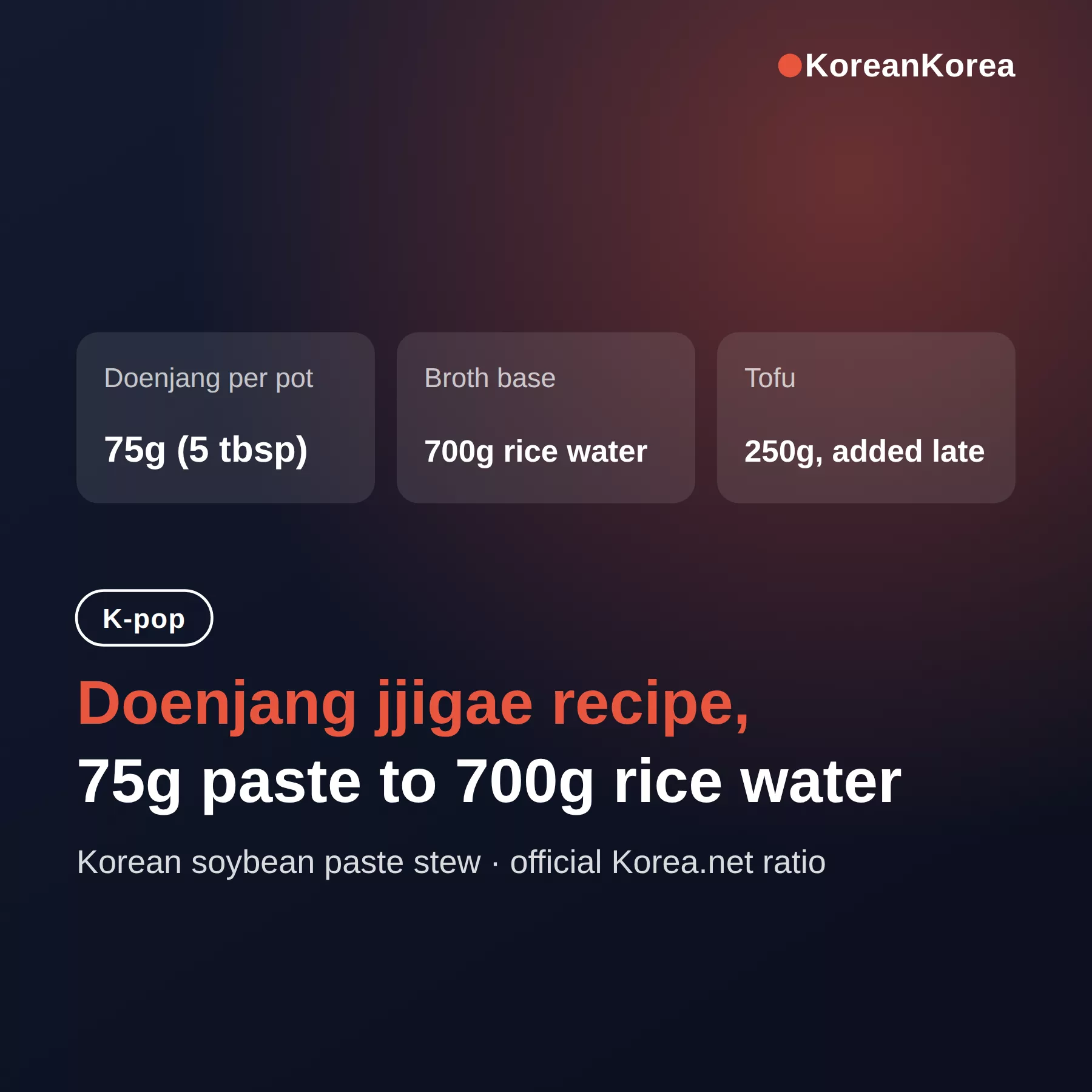
The official Korea.net recipe series fixes the numbers: 75g of paste — about 5 tablespoons — into 700g of rice water.
This post covers that ratio, why the broth starts with rice water instead of plain water, the step order that keeps the tofu intact, and what changes when miso stands in for doenjang.
Contents
- Doenjang jjigae recipe: 75g doenjang per 700g rice water
- Why rice water (ssalddeumul) is the broth base
- Brown the beef and shiitake first, dissolve the doenjang, add tofu last
- Can you use miso instead of doenjang?
- One dish, every season
- Why people call doenjang healthy — the cited fact
Doenjang jjigae recipe: 75g doenjang per 700g rice water
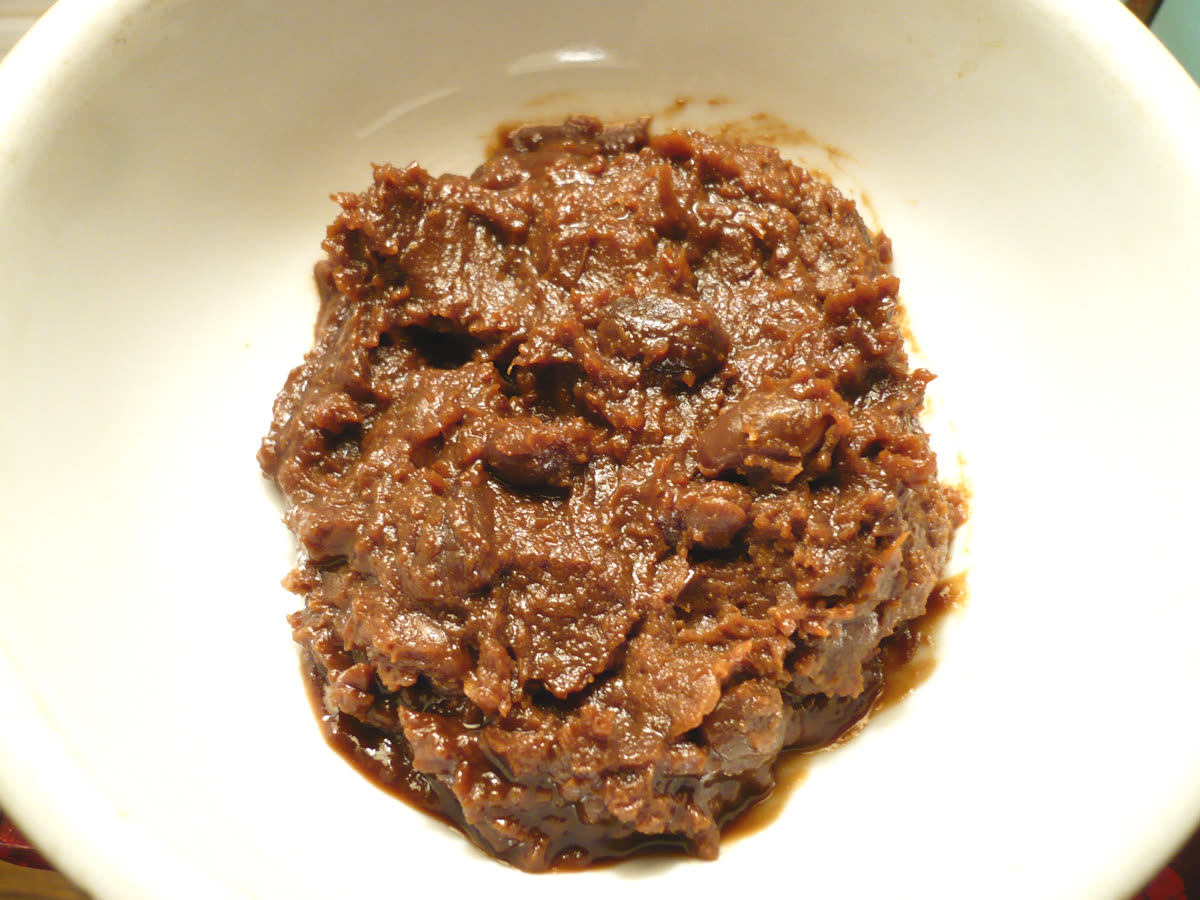
One pot takes 75g of doenjang — roughly 5 tablespoons — into 700g of broth.
That works out to about 10g of paste per 100ml of liquid.
Lighter home versions run from about 5.5g to 8g per 100ml, so the official pot is roughly twice as concentrated as a typical home version.
If a first pot tastes too strong, the paste amount is the first thing to cut, not the simmer time.
Keeping the ratio by weight is more reliable than counting spoons, because doenjang density varies by brand.
| Doenjang | 75g (about 5 tbsp) |
|---|---|
| Broth base | 700g rice water (ssalddeumul) |
| Tofu | 250g, added late in cooking |
| Beef | 90g, browned first with shiitake |
Why rice water (ssalddeumul) is the broth base
The official recipe starts with 700g of ssalddeumul — the cloudy water left after rinsing rice.
It costs nothing extra, because the rice is getting rinsed anyway.
The starch in that water gives the broth body that plain water does not, so the stew coats rice instead of pooling at the bottom of the bowl.
Skip the first rinse and use the second or third, since the first rinse carries the surface dust.
No separate anchovy broth is needed; about 10 cleaned large anchovies go straight into the rice water, which keeps the taste cleaner than boiling a stock pot separately.
Brown the beef and shiitake first, dissolve the doenjang, add tofu last
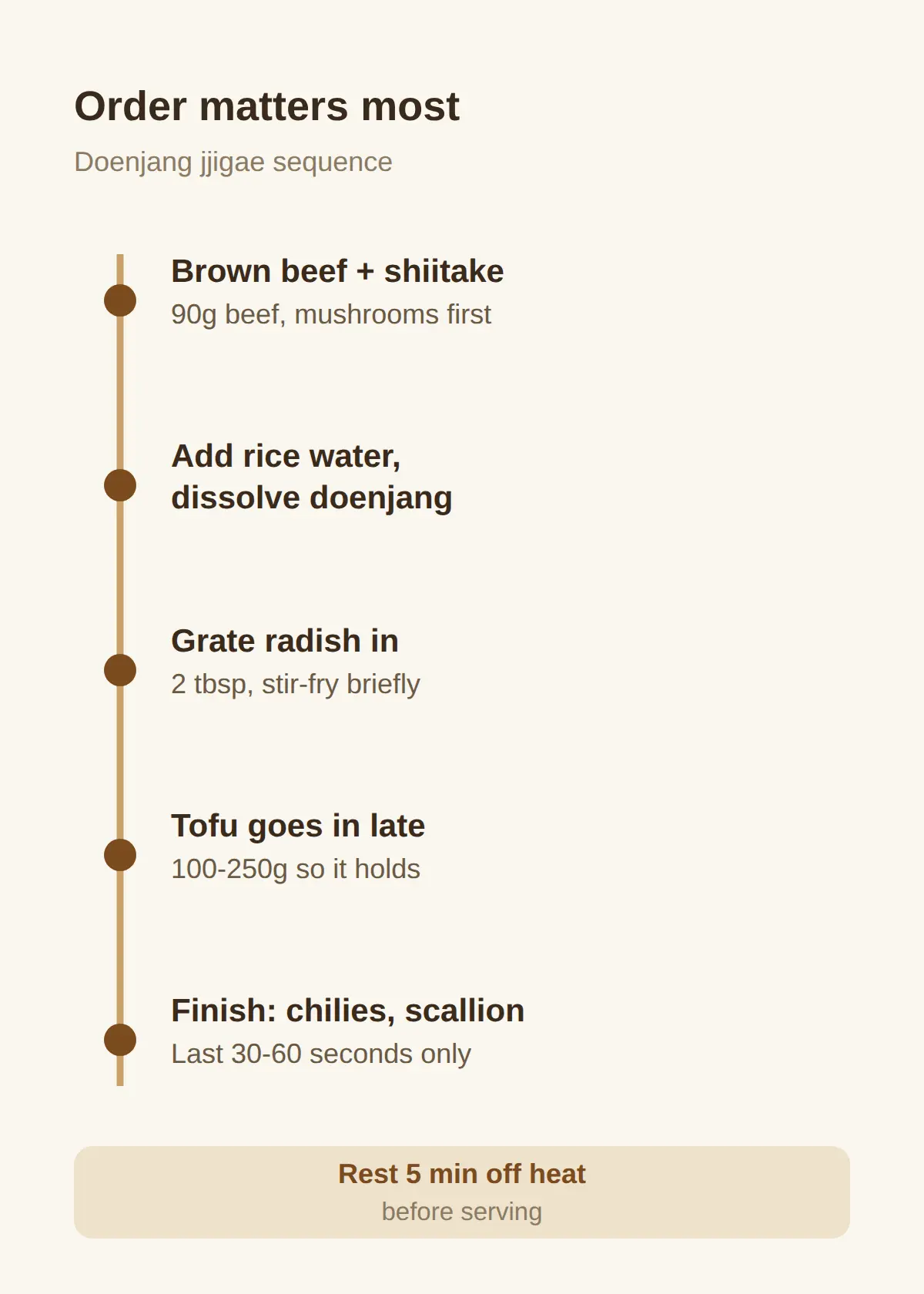
The order matters more than the ingredient list.
Brown the 90g of beef with the shiitake first, then pour in the rice water and dissolve the paste.
Tofu goes in late so it does not fall apart — the official recipe uses 250g, while common home versions use half a block, so anywhere between 100g and 250g works.
A few details lift the flavor noticeably.
Knead the doenjang by hand and stir-fry it briefly with the grated radish before adding liquid, which removes the raw fermented smell.
Grate about 2 tablespoons of radish into the pot for a cleaner, deeper broth.
Chilies and scallion go in for the last 30 to 60 seconds only, and the finished stew rests about 5 minutes off the heat before serving.
Can you use miso instead of doenjang?
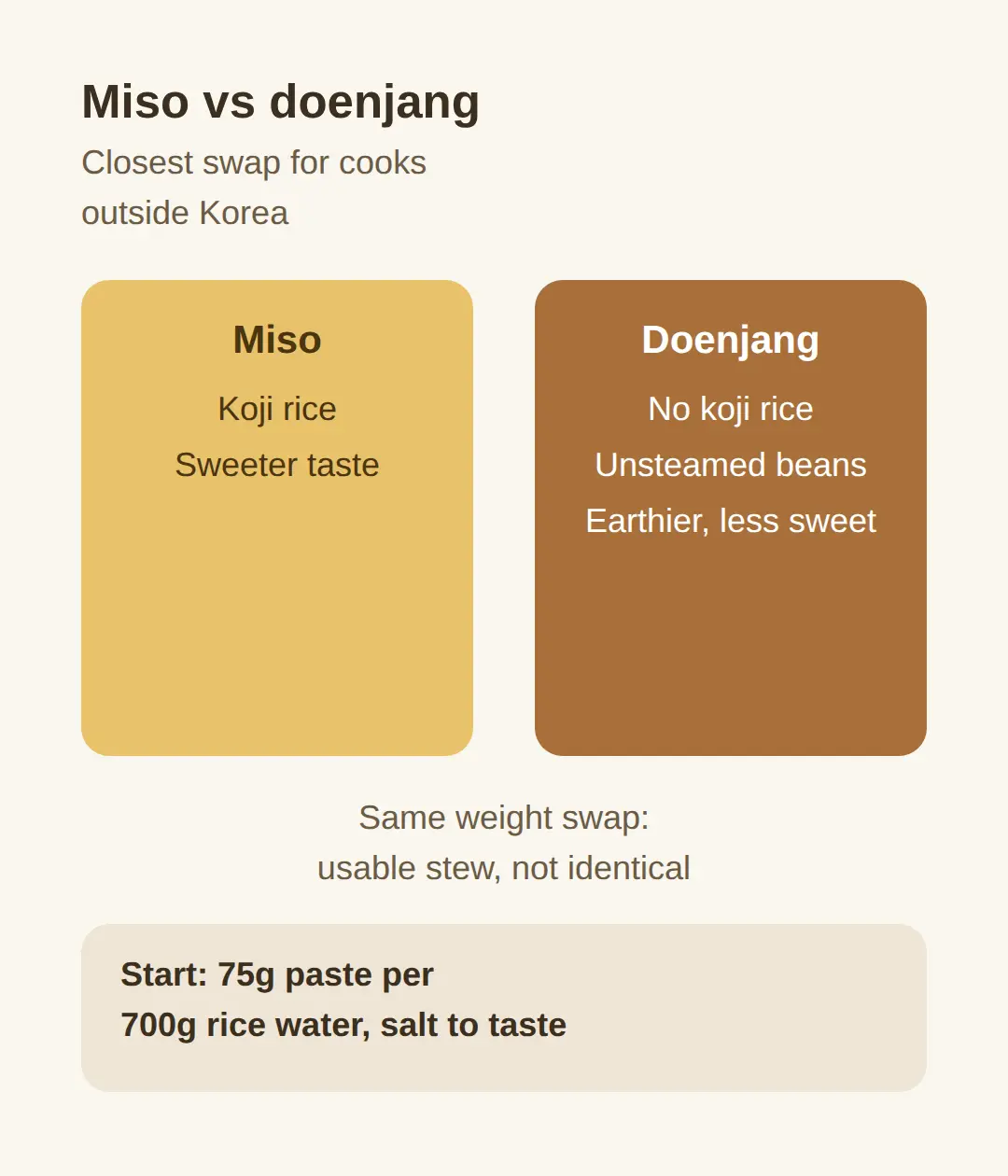
Miso is the closest substitute for cooks outside Korea, because both are fermented soybean pastes used as seasoning.
The flavor will not be identical: doenjang is fermented from unsteamed soybeans without koji rice, so it tastes earthier and less sweet than miso.
Exact substitution ratios adjusted for salinity have not been confirmed by an institutional source, so start with the official 75g and salt to taste at the end.
One dish, every season
Doenjang jjigae is a year-round home dish in Korea, not a holiday or summer food.
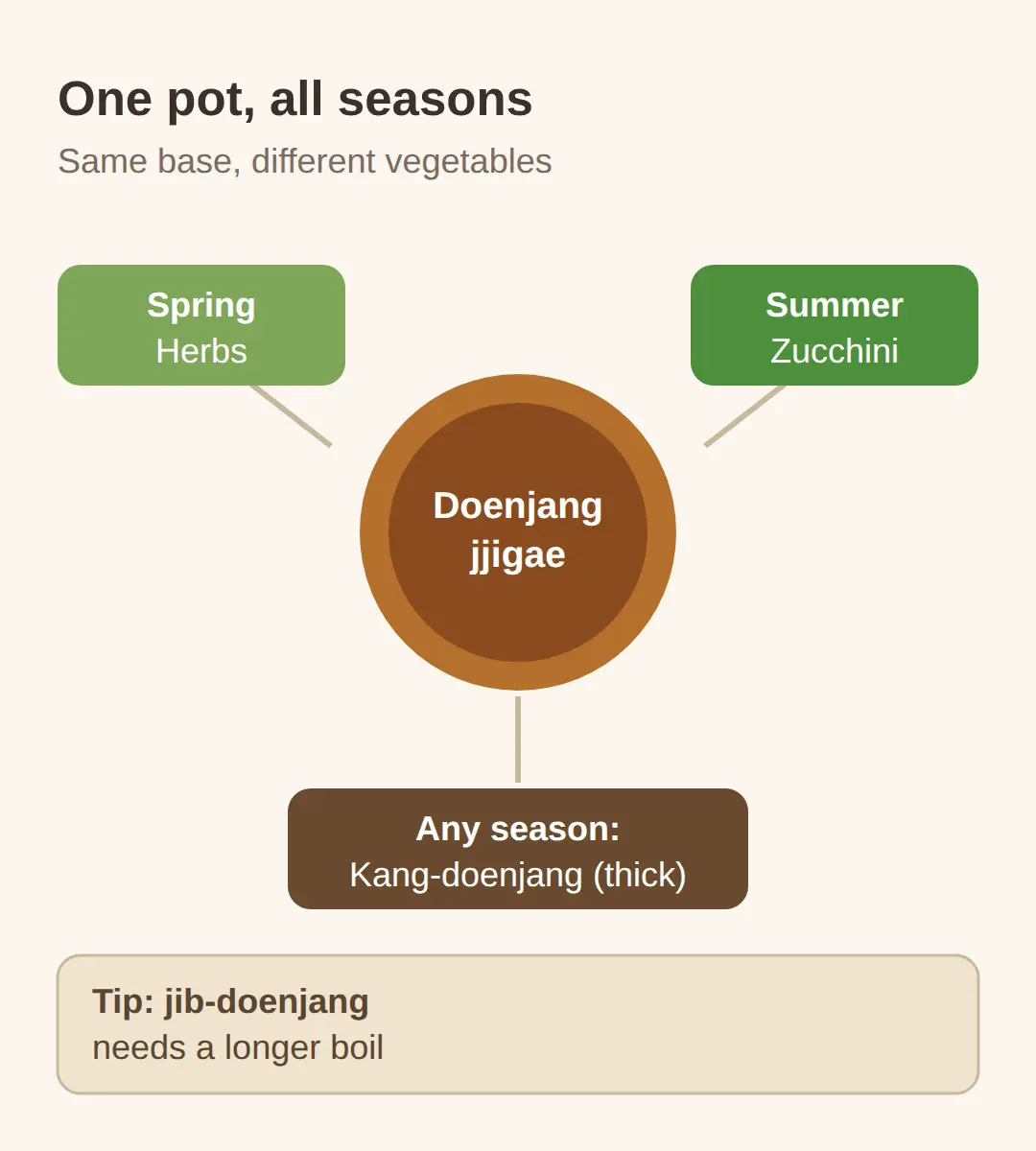
The official recipe page documents seasonal versions: spring herbs, summer zucchini, and kang-doenjang — a thick, unblended style.
This means the same base pot works in any month, and the vegetables are what change with the season.
House-fermented doenjang (jib-doenjang), if found at a Korean grocer, needs a longer boil than store-bought paste to bring out its nutty depth.
👉 Bulgogi recipe: why Asian pear makes the marinade, and what to use instead
Why people call doenjang healthy — the cited fact
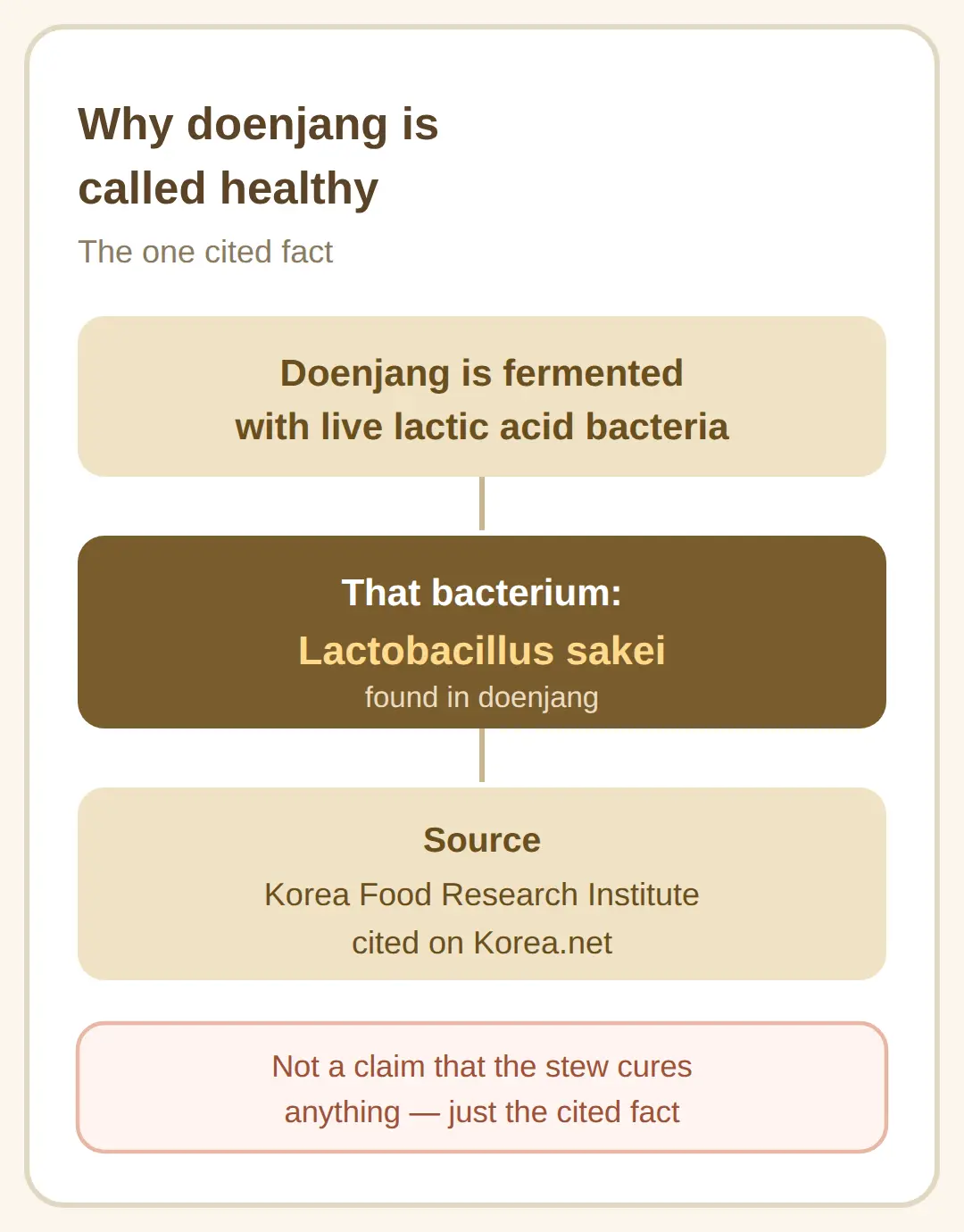
The claim with an institutional source behind it is this: the Korea Food Research Institute identified Lactobacillus sakei in doenjang, as cited on the Korea.net recipe page.
That makes doenjang a fermented food with live lactic acid bacteria, which is the specific fact — not a general claim that the stew cures anything.
Per-serving calorie and sodium figures for the finished stew have not been verified from a recent source, so no numbers are given here.
👉 official Korea.net doenjang jjigae recipe page with the ingredient weights and steps
👉 Wikitree home-cook feature on grating radish, hand-kneading doenjang, and rice-water rinses
Related posts
📎 Samgyetang Recipe: Fight Summer Heat With a Boiling Soup, Not Ice
📎 bibimbap recipe: season every vegetable separately, then mix — 4 servings
📎 📅 다가오는 일정 — 발매·개봉·발표 캘린더
Sources
- Korea.net official recipe: 75g doenjang, 700g rice water, 25 (korean-culture.org)
- Wikitree: grate ~2 tbsp radish, knead doenjang by hand over (wikitree.co.kr)
- KFOOD Journal: perilla oil + garlic base, 2-min potato/onion (kfood.bumkok.com)
Common mistakes
- Dissolving the paste into cold liquid instead of browning it first — the raw fermented smell stays.
- Adding tofu at the start — it breaks apart during the simmer.
- Boiling chilies and scallion for minutes instead of seconds — the color bleaches and the broth clouds.
- Using the first rice rinse for the broth — the second or third rinse tastes cleaner.
- Seasoning with regular soy sauce before tasting — the paste already salts the pot; adjust only with soup soy sauce if needed.
FAQ
Q. How much doenjang per pot?
The official recipe uses 75g — about 5 tablespoons — per 700g of rice-water broth. Lighter home versions use 30g to 60g for a similar pot, so the range is wide and taste decides.
Q. Can I use miso instead of doenjang?
Yes, miso is the closest substitute, but the taste is milder and sweeter because doenjang is fermented without koji rice. Start with the same weight and adjust.
Q. Why rice water instead of plain water?
The starch in rice water thickens the broth slightly and gives it body. It is free — it is the cloudy second or third rinse from the rice you are cooking anyway.
Before Chuseok
#doenjangjjigae #doenjangjjigaerecipe #Koreansoybeanpastestew #ricewater #misosubstitute #Koreanstew #jjigae #easyKoreanrecipes
📅Upcoming Dates — 이번 주 16 · D-day 'The Scandal' global Netflix release전체 보기 →