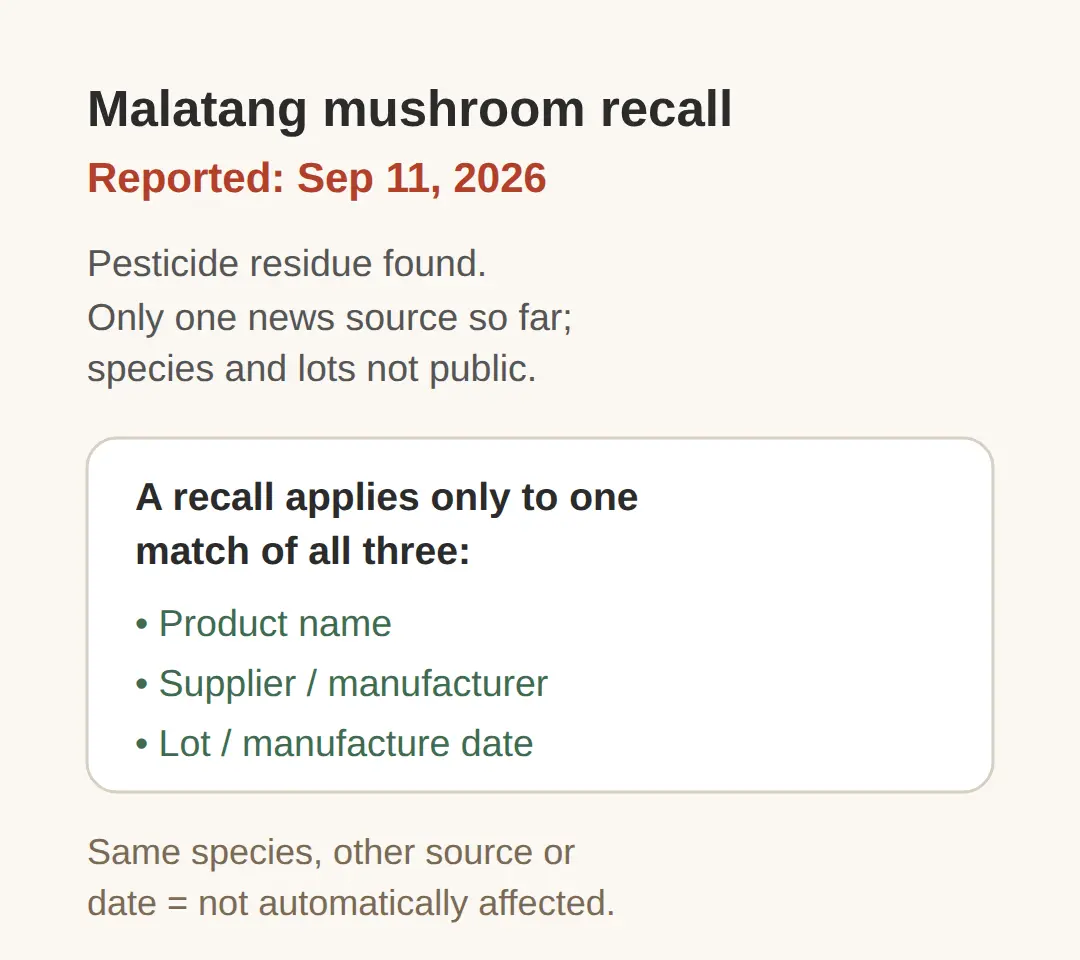
On September 11, 2026, the Korea Herald reported that some mushrooms sold as malatang ingredients were recalled over pesticide residue.
Malatang is one of the most-searched Korean street foods among visitors, so this news hit an active question: is malatang still safe to eat in Korea?
This post covers what was recalled, what a Consumer Agency hygiene survey found in September, and what to check before you order.
Contents
- malatang mushroom recall Korea — what was recalled on September 11
- Is malatang safe to eat in Korea now?
- What the Consumer Agency found — which stores and how bad
- How to check mushroom toppings before you order
malatang mushroom recall Korea — what was recalled on September 11
Some mushrooms sold as malatang ingredients were pulled from sale after pesticide residue was found.
The recall was reported on September 11, 2026.
Recalls in Korea usually apply to a specific product from a specific supplier and a specific manufacture date or lot — not to every mushroom on the market.
So the same mushroom type bought from a different supplier on a different date is not automatically affected.
The specific mushroom species, brand names and lot dates have not been made public yet, and no second news outlet has confirmed the story so far.
That also means a recall listing alone does not tell you whether the mushrooms in front of you are affected — you have to match product name, manufacturer and lot together.
| Mushroom recall over pesticide residue | September 11, 2026 (Korea Herald) |
|---|---|
| Consumer Agency survey: 40 products at 20 malatang franchises | September 2026 |
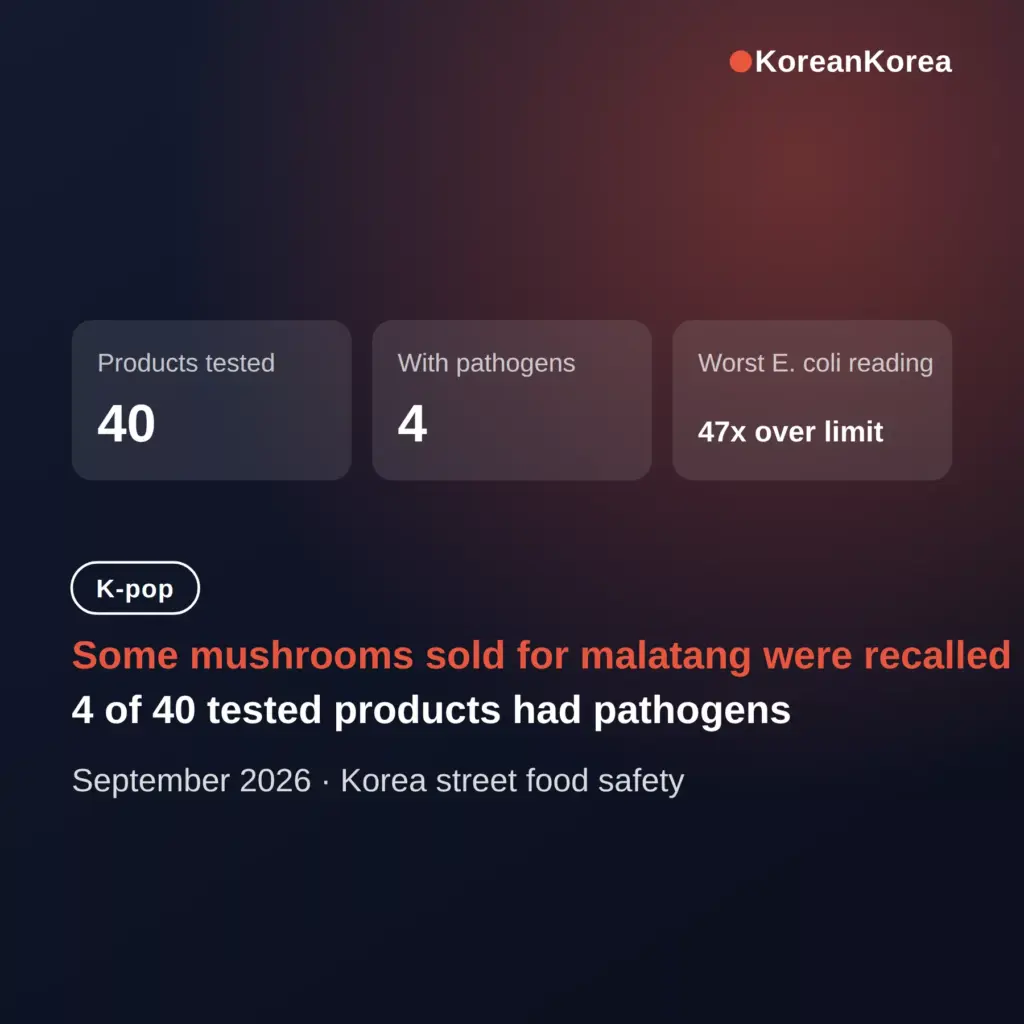
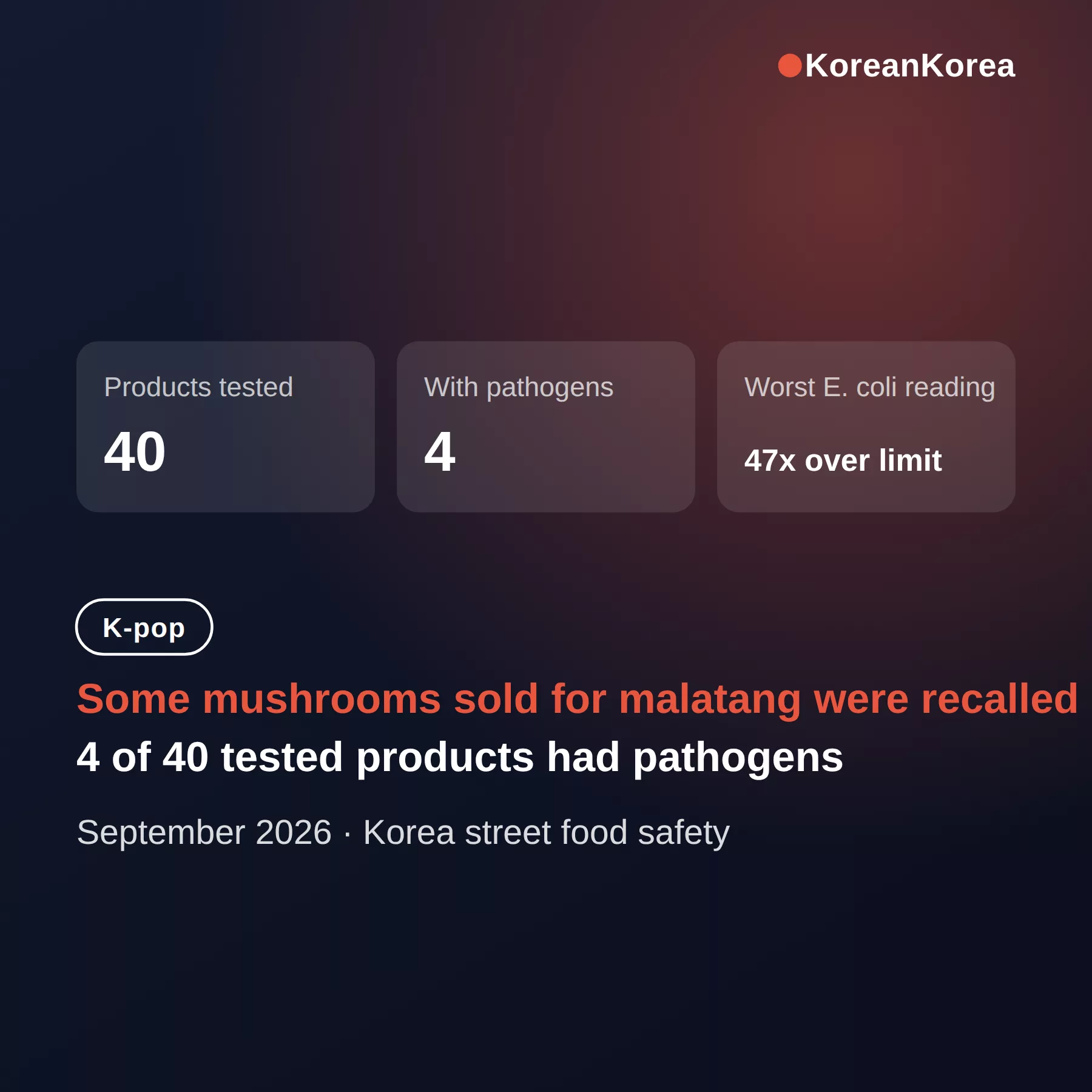
| Products with foodborne pathogens | 4 of 40 (about 10%) |
| Worst peanut sauce reading | E. coli 470/g, 47x the 10/g limit |
| Consumer remedy | 1372 Consumer Call Center, Consumer24 |
Is malatang safe to eat in Korea now?
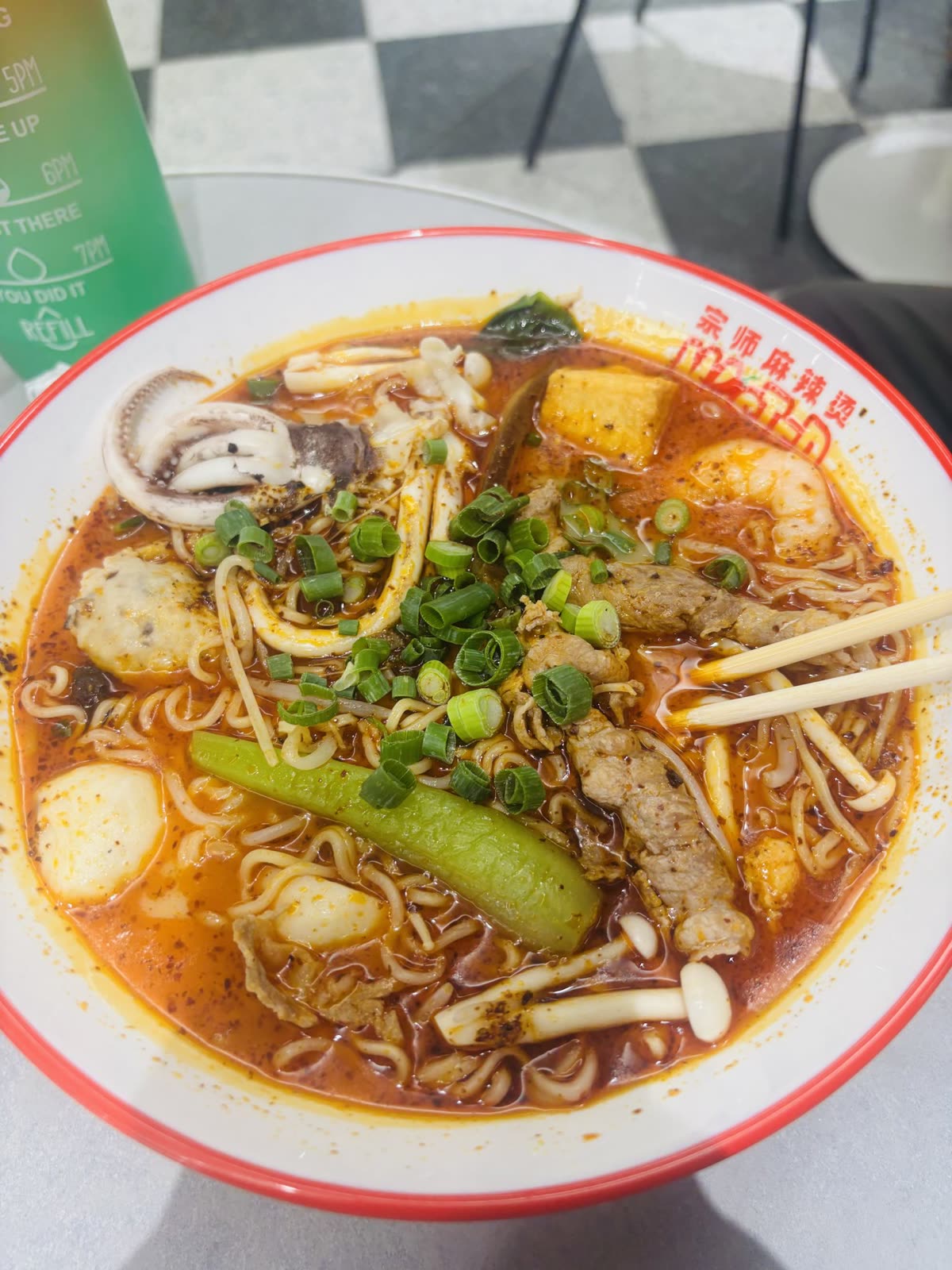
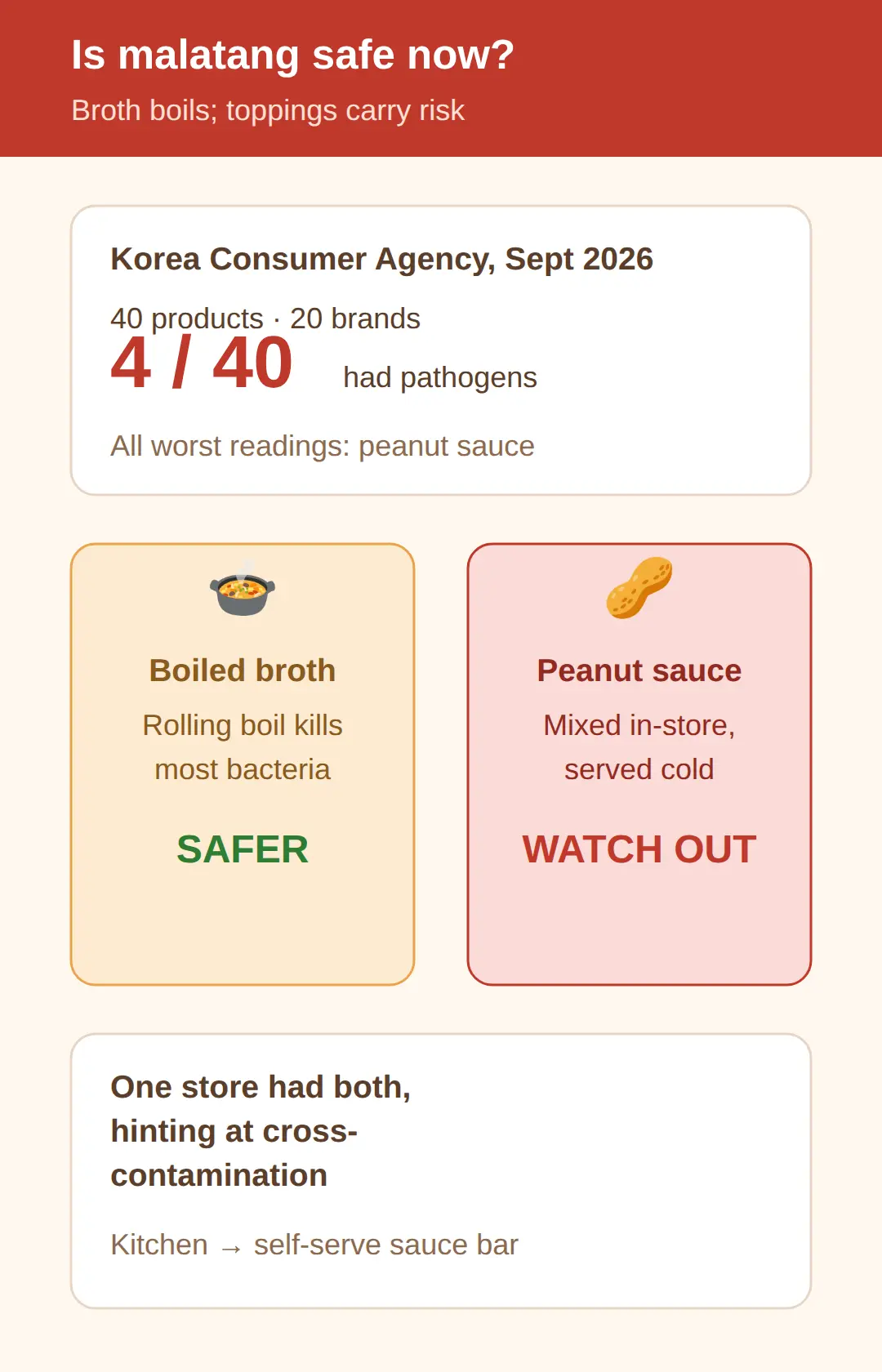
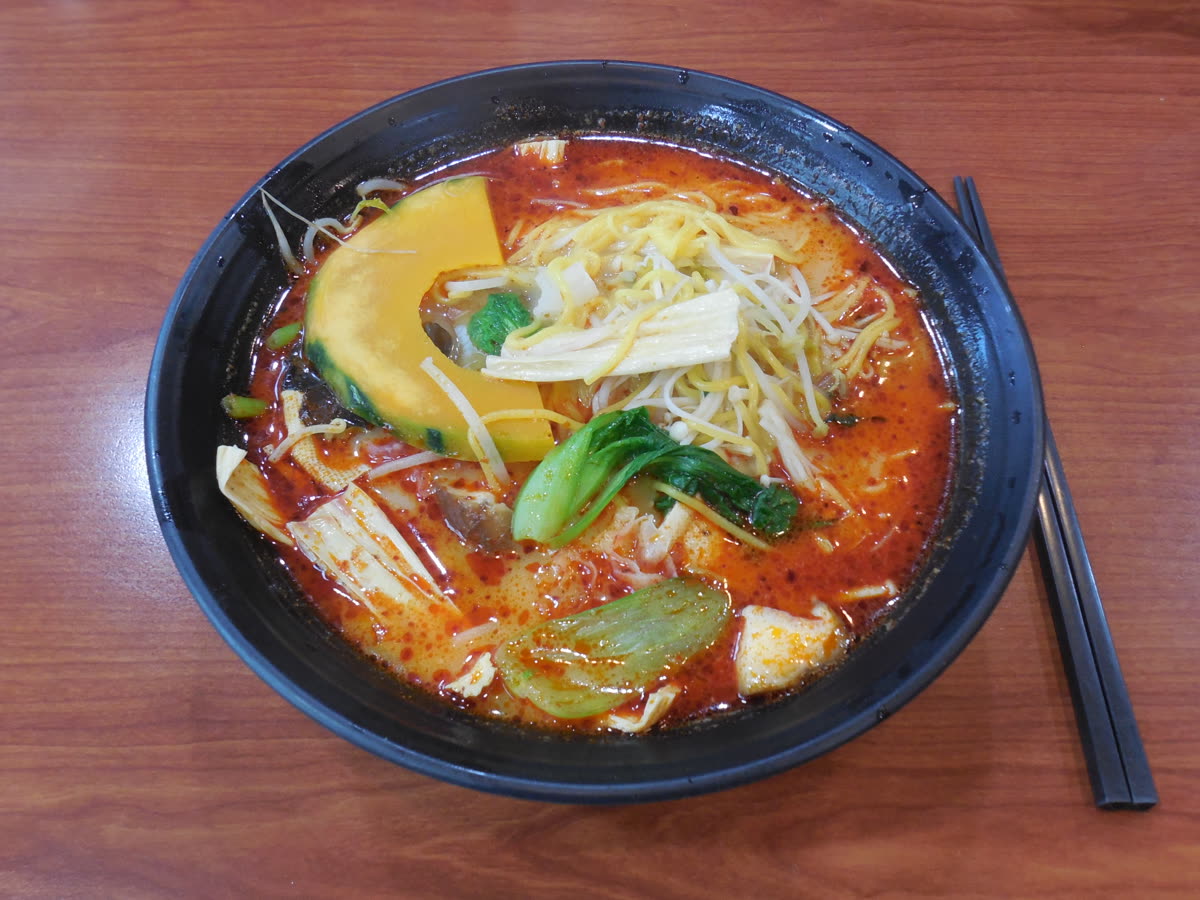
Yes, with one caveat: the malatang broth itself is boiled, which kills most foodborne bacteria.
The risk sits in what is served alongside it.
In a September 2026 survey, the Korea Consumer Agency tested 40 products at 20 major malatang franchise brands — 20 malatang dishes and 20 peanut sauces.
Pathogens were found in 4 products, and all the worst readings came from peanut sauce, not the boiled soup.
One store had bacteria in both its malatang and its peanut sauce, which points to cross-contamination between the kitchen and the self-service sauce bar.
Peanut sauce is often mixed in-store and served cold without further heating, so whatever is in it reaches you directly.
Practical reading for a visitor: the hot pot is the safer part of the tray; the cold sauce and loose toppings are where to look.
👉 Chipotle Gangnam, first store in Asia — what to know before you join the line
What the Consumer Agency found — which stores and how bad
Three stores were named in the survey results.
At Chunli Malatang’s Myeongdong main branch, Staphylococcus aureus was found in the malatang and Listeria monocytogenes in the peanut sauce.
Shangchi Mara’s store near Aju University had E. coli at 210/g in its peanut sauce — about 21 times the 10/g limit — plus Listeria.
The worst single reading belonged to Sorim Mara’s Gajaeul branch: E. coli 470/g in peanut sauce, 47 times the limit, roughly 2.2 times Shangchi Mara’s reading.
After the findings, Shangchi Mara announced same-day sauce disposal, a hygiene committee with outside directors, third-party audits of all stores, and standardized self-bar cleaning.
The Ministry of Food and Drug Safety ordered local governments to inspect the named restaurants and collect samples immediately.
Consumers harmed by the flagged foods can call the 1372 Consumer Call Center, with no area code, or file through Consumer24.
How to check mushroom toppings before you order
Three checks work without needing Korean.
First, before heading out, search the product name in the MFDS recall and sales-suspension listing on Korea’s food safety portal — it covers both domestic and imported products, and a recent load held around 355 active recall records.
Second, at the counter, ask whether the mushrooms came from the recalled supplier or lot.
In many mall-based stalls, customers pick loose mushroom toppings from open bins, which makes lot-level tracing harder — sealed, packaged toppings are easier to source.
Third, look at the self-service bar: covered and chilled toppings, and peanut sauce made the same day, are the signals to prefer.
None of these guarantees a lot match on its own, but together they take about two minutes and cover the two weak points: pesticide residue in mushrooms and bacteria in cold toppings.
Related posts
📎 Fresh Jujubes Korea: Season, Taste, and How to Eat Them
📎 Ottogi Han River ramyeon: what’s different and how to cook it
📎 📅 다가오는 일정 — 발매·개봉·발표 캘린더
Sources
- No second outlet or brand-name detail found; recall specific (koreaherald.com)
- Consumer Agency survey: foodborne bacteria in 4 of 40 produc (foodtoday.or.kr)
- Shangchi/Chunli reform plans; MFDS ordered immediate inspect (foodtoday.or.kr)
If you felt sick after eating malatang
- Call 1372 from any phone in Korea, no area code needed — it is the Consumer Call Center for food and product disputes.
- File online through Consumer24 if you prefer not to call; both channels handle the same cases.
- Keep the receipt or delivery app order record, and note the store name and the date you ate.
- For leftover delivered or take-out malatang, refrigerate it and reheat it thoroughly before eating — the Consumer Agency’s standing advice is to eat it immediately when possible.
FAQ
Q. Is malatang safe to eat in Korea now?
The boiled broth kills foodborne bacteria, so the main dish is the low-risk part. The September 2026 Consumer Agency survey found problems in 4 of 40 products, mostly in cold peanut sauce, not in the boiled soup.
Q. Which mushrooms were recalled for malatang?
As of September 12, 2026, the recall has been reported by a single outlet, the Korea Herald, and the specific mushroom species, brands and lot dates have not been published. Check the MFDS recall listing by product name before relying on any specific answer.
Q. What should I do if I got sick after eating malatang in Korea?
Dial 1372 for the Consumer Call Center, or file through Consumer24. Both are open to visitors, not only Korean speakers.
Check the MFDS recall listing before your next malatang run, and treat the sauce bar as the part worth a second look.
#malatang #malatangsafety #Koreanstreetfood #foodrecallKorea #malatangmushroomrecall #Koreafoodsafety #MFDSrecall #Myeongdongmalatang
📅Upcoming Dates — 이번 주 16 · D-day 'The Scandal' global Netflix release전체 보기 →