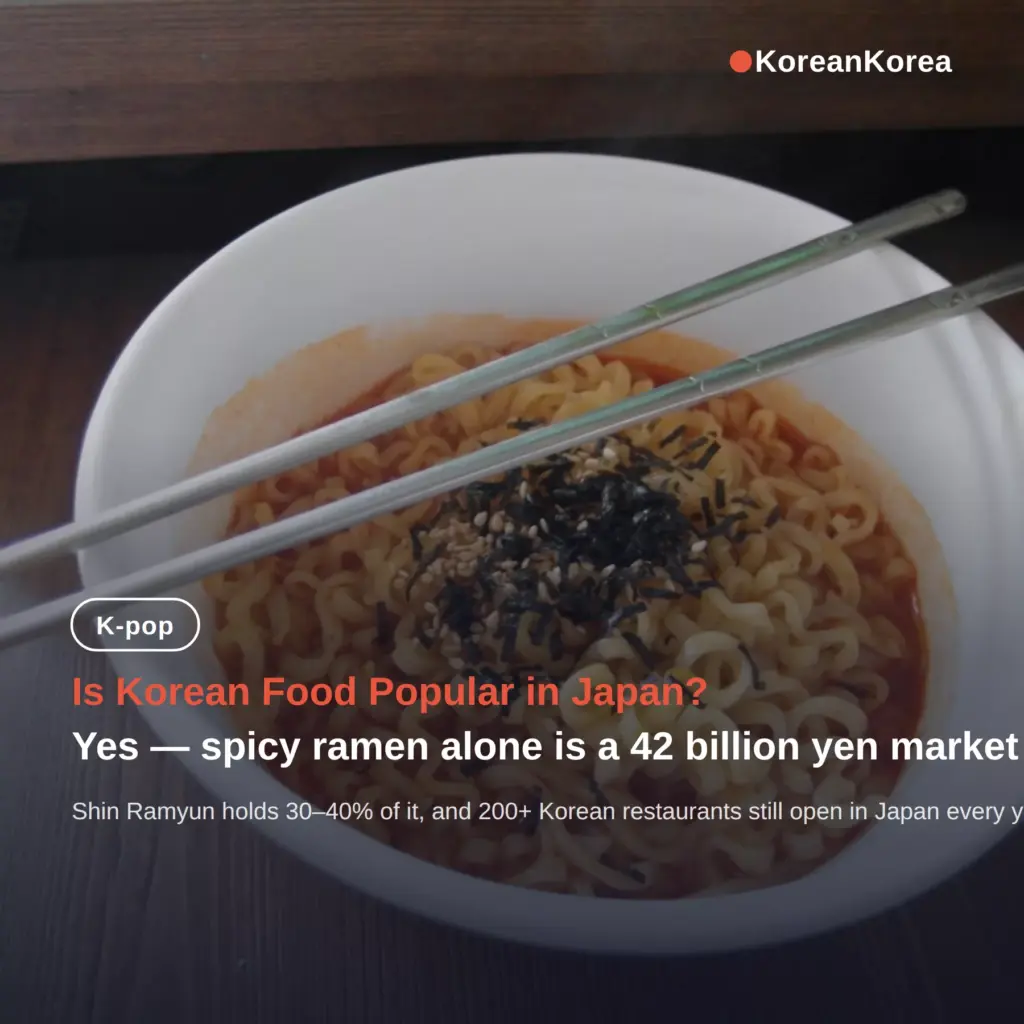
Yes — Korean food has settled into everyday dining in Japan, with spicy ramen as the leading category.
Spicy instant ramen alone is a 42 billion yen market in Japan, and Shin Ramyun holds 30–40% of it.
This post covers the numbers behind the popularity, the dishes Japanese people actually eat, what a bowl costs in Harajuku, and whether the boom is fading.
Contents
- Is Korean food popular in Japan? The short answer is yes — spicy ramen leads
- What Korean food do Japanese people eat?
- Spicy ramen in Japan: how big the market really is
- How to eat Korean ramen in Japan right now: Shin Ramyun Bunsik Harajuku
- Is the Korean food boom in Japan fading?
- Korean food in Japan beyond ramen: chicken, burgers, and malatang
Is Korean food popular in Japan? The short answer is yes — spicy ramen leads
Yes — Korean food has moved from a short-lived trend to an everyday dining choice in Japan.
Spicy ramen is the leading category: Japan’s spicy ramen market is about 42 billion yen, and Shin Ramyun holds 30–40% of it as the No.1 spicy instant noodle brand and #9 in the overall ramen market (2025 data).
A review of 3,083 Korean restaurant opening records in Japan reaches the same conclusion: Korean cuisine is now chosen as everyday food, not as a topic-driven boom.
The numbers behind that answer are concrete.
Nongshim’s Japan subsidiary earned a record 17.3 billion yen in 2024, up from 3.0 billion yen in 2015, and Shin Ramyun accounts for 75% of those sales.
Tokyo (563) and Osaka (418) hold about 30% of all 3,083 Korean restaurant openings on record, so a first-time visitor has plenty of options in those two cities.
If you want a quick read on whether a food trend is real, check store counts and yearly sales — that is what separates a boom from everyday dining.
| 2022 | 267 |
|---|---|
| 2023 | 298 (peak) |
| 2024 | 259 |
| 2025 | 247 |
What Korean food do Japanese people eat?
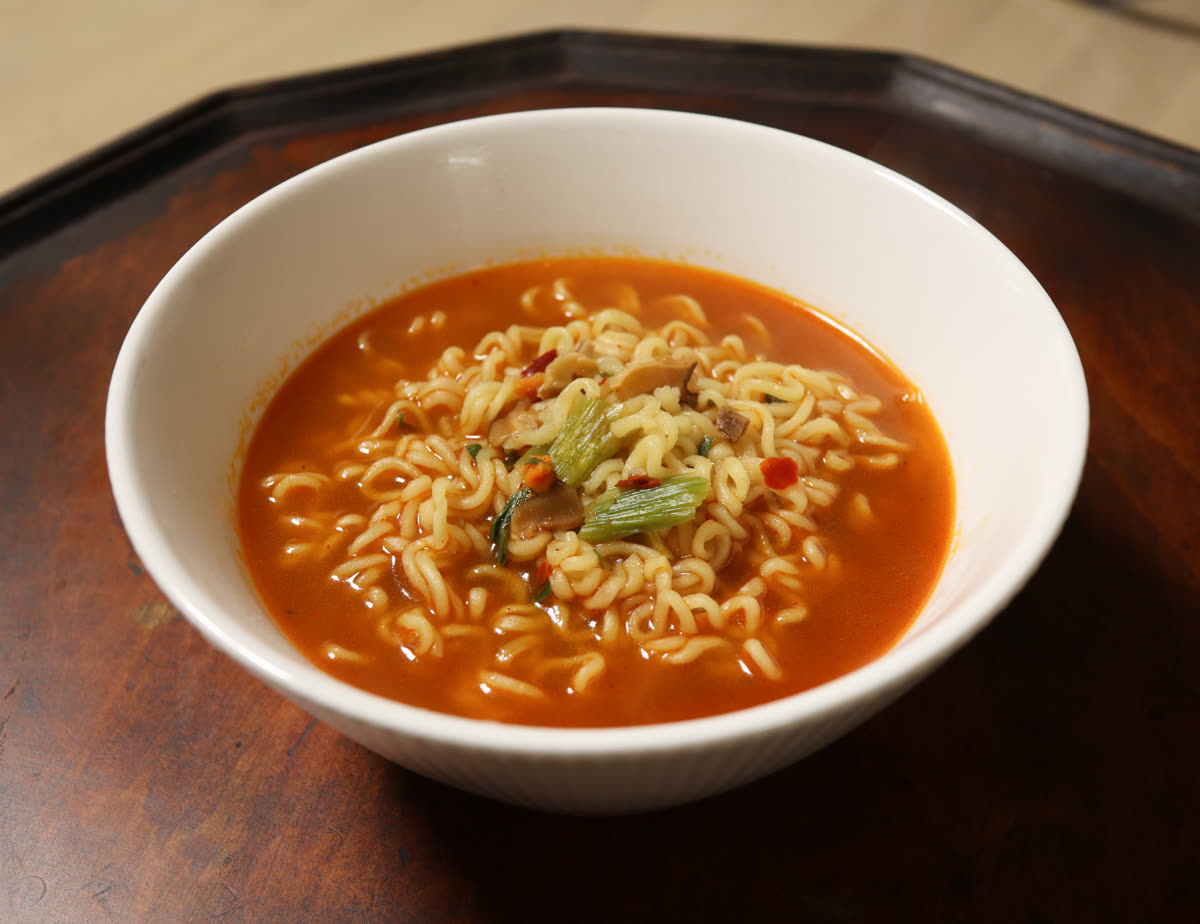
The dishes actually selling are spicy ramen, Korean fried chicken, Korean burgers, and malatang.
Shin Ramyun leads the spicy segment, and Samyang’s Buldak fire noodles are a best-selling Korean instant noodle in Japan, pushed by Japanese ‘fire noodle challenge’ YouTube videos since the mid-2010s.
On the restaurant side, Korean burger chain Mom’s Touch opened in Shibuya in April 2025 and its first Japanese franchise in Chigasaki on December 27, 2025.
Malatang — a one-bowl meal where you pick ingredients by weight, priced cheaply — has spread through Tokyo’s university districts like Myogakadani and Takadanobaba.
Korean fried chicken is expanding too: Goobne operates 18 stores across 7 countries, though a Japan-specific store count could not be confirmed in this round of data, so check Goobne’s official site for Japan locations before quoting numbers.
If you are packing a Japan itinerary around food, spicy ramen and malatang are the easiest to find, chicken and burgers are the newer arrivals.
👉 Is Korean Food High in Sodium? Twice the WHO Limit, and How to Cut It
Spicy ramen in Japan: how big the market really is
Spicy ramen carved out a segment in Japan that did not exist before Nongshim introduced it.
| Traditional four flavors | Spicy segment | |
|---|---|---|
| Main flavors | Miso, shoyu, shio, tonkotsu | Spicy (Korean-style) |
| Share of Japan’s ramen market | 60–70% combined | Roughly 6% of the total instant ramen market |
| Market position | Long-standing default | New segment Nongshim pioneered |
| Leading brand | Divided among Japanese makers | Shin Ramyun — No.1 among spicy instant noodles and #9 across all ramen |
| Scale | Contested for decades | 42 billion yen, within Japan’s roughly 700 billion yen instant ramen market |
If you assumed Japanese eaters avoid spicy food, these numbers say otherwise — the spicy segment now has a stable slice that the four traditional flavors never contested.
How to eat Korean ramen in Japan right now: Shin Ramyun Bunsik Harajuku
Go to Shin Ramyun Bunsik on Takeshita Street in Harajuku — Nongshim’s first Asian experience store, opened June 2025, where you cook the ramen yourself.
Ramen costs mostly 690 yen, toppings like cheese, kimchi, sausage, or scallion add 110 yen, and the ramen plus gimbap set is 1,190 yen.
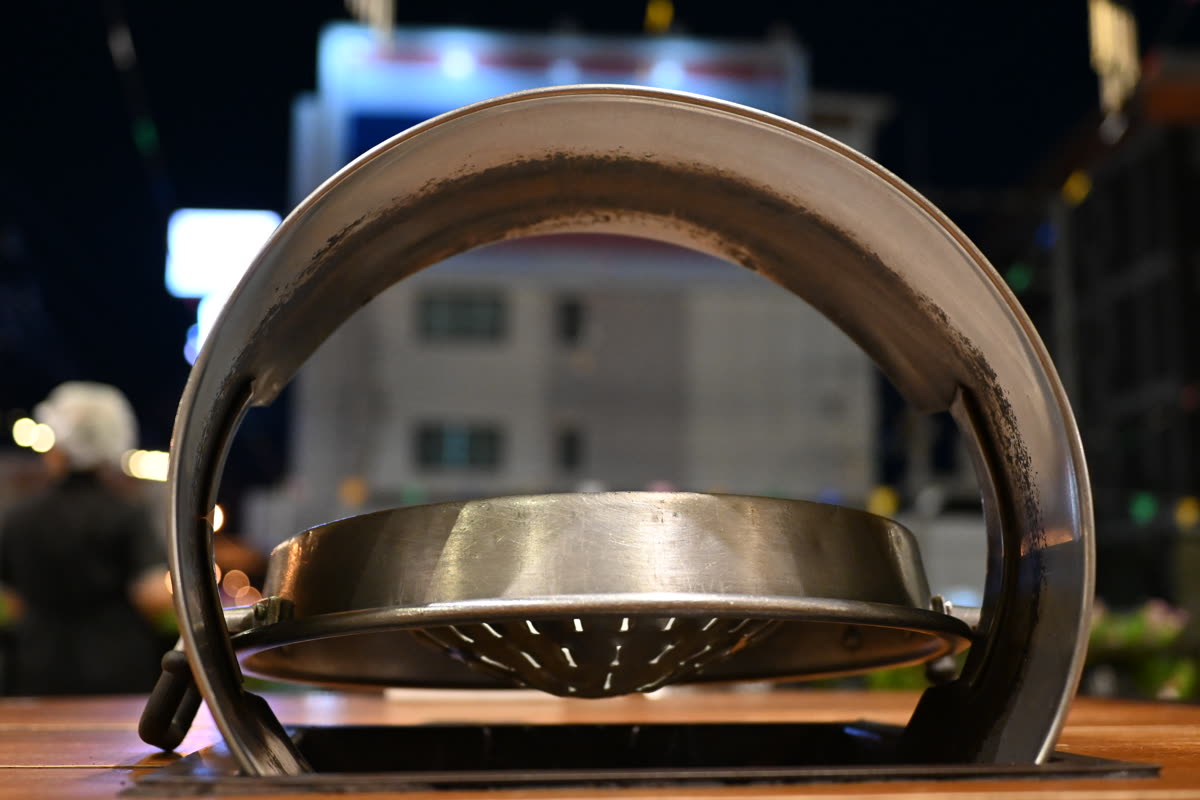
Ordering runs through a kiosk, and the setup copies the Korean ‘Han River ramen’ custom with instant noodle cookers on the tables, alongside gimbap (bulgogi, tuna mayo, samgyeopsal) and Korean-style chicken in yangnyeom, honey-soy, or cheese.
The store averages about 10,000 visitors a month and sells around 150 ramen packs a day.
Over 80% of visitors are women in their 20s–30s who found it on TikTok or Instagram, and taking photos before eating is common — go early if you want a seat without a wait.
If Harajuku is out of your way, Shin Ramyun is stocked nationwide from Hokkaido to Okinawa in most convenience stores and AEON channels, so a 690-yen-style bowl is reachable anywhere.
Is the Korean food boom in Japan fading?
No — openings peaked at 298 in 2023 and settled to 247 in 2025, still over 200 a year.
An analysis of 3,083 Korean restaurant opening records concludes that Korean cuisine has shifted from a boom driven by topics to being chosen as everyday dining in Japan.
Where the stores are is telling: Tokyo (563) and Osaka (418) account for about 30% of openings, and the top districts are Shinjuku’s Shin-Okubo with 66, Osaka’s Chuo-ku with 60, Kita-ku with 53, and Ikuno-ku’s Koreatown with 51.
Korean food is also showing up inside Japanese chains: the shabu-shabu chain Shabu-yo, with 390 stores, served Shin Ramyun as a hotpot dessert, taking 180,000 packs over two months from July 21, 2025.
A Nakameguro K-food pub called Iyоsan Seoul cooks Nongshim ramen in tabletop cookers with beer, about 300 packs a month since late June 2025.
If you are planning where to eat, Shin-Okubo in Shinjuku and Osaka’s Koreatown in Ikuno-ku are the densest districts to walk.
👉 Is Korean Food Sweet? The Answer Depends on the Dish, Not the Cuisine
Korean food in Japan beyond ramen: chicken, burgers, and malatang
Fried chicken, burgers, and malatang all have a foothold, but the verifiable numbers are thinner than ramen’s.
Mom’s Touch is the clearest case: its 70-seat Chigasaki franchise posts average sales per seat of 16,300 yen, 63% higher than the 220-seat Shibuya flagship’s 9,970 yen, so the smaller franchised store outperforms the flagship per seat.
Malatang is spreading through Tokyo’s student areas as a low-cost one-bowl meal — the format, choosing ingredients by weight, carried over unchanged from Korean stores — but an exact count of Korean-style malatang stores in Tokyo could not be verified.
Korean-style malatang chain Lahongbang opened a new store near Myogakadani Station in Bunkyo-ku, Tokyo in September 2026, targeting students and office workers.
Tteokbokki’s market size in Japan was never confirmed from a primary source, so treat any specific tteokbokki figures you see elsewhere with caution.
If you want Korean food beyond noodles on a Japan trip, Mom’s Touch and malatang shops are the ones with confirmed, dated openings.
If I were recommending a first taste of Korean food in Japan, I’d send you to Shin Ramyun Bunsik in Harajuku — you cook the ramen yourself for 690 yen, and the format is proven by roughly 10,000 visitors a month.
My own rule for a first visit: start with the milder variants like Shin Ramyun Kimchi or Tomba, then move to the original, because that is the same entry ladder Nongshim uses in the market.
Related posts
📎 Is Korean Food Gluten Free? Rice Cakes Are — What to Order in Korea
📎 Must Eats in Korea 2026: The Answer Right Now Is Tteok, Not BBQ
📎 📅 다가오는 일정 — 발매·개봉·발표 캘린더
Sources
Where to start if you are planning a Korean food stop in Japan
- Before your trip, check the Shin Ramyun Bunsik Harajuku page for hours — it sells around 150 ramen packs daily and draws about 10,000 visitors a month.
- Look up whether your local Japanese convenience store or AEON stock Shin Ramyun — it is sold nationwide from Hokkaido to Okinawa.
- Watch the Shabu-yо collaboration dates if you want ramen as a ‘dessert’ after hotpot — 180,000 packs were supplied over two months from July 21.
- If spicy food is a stretch, start with Shin Ramyun Kimchi or the cheese-cream ‘Tomba’ before the original — that is the entry ladder Nongshim itself uses.
- Search TikTok or Instagram for the Harajuku store before visiting — 80%+ of visitors are women in their 20s-30s who found it there.
FAQ
Q. Is Korean food popular in Japan?
Yes — Korean restaurant openings still run over 200 a year after peaking at 298 in 2023, and spicy ramen alone is a 42 billion yen market.
Q. What Korean food do Japanese people eat?
Spicy instant ramen (Shin Ramyun, Buldak), Korean fried chicken, Korean burgers (Mom’s Touch), and malatang are the categories with confirmed store openings and sales.
Q. How big is the spicy ramen market in Japan?
About 42 billion yen, with Shin Ramyun holding 30–40% of it and ranking #9 in the overall ramen market (2025 data).
Q. Where can you eat Korean ramen in Tokyo?
Shin Ramyun Bunsik on Harajuku Takeshita Street — ramen mostly 690 yen, cook-it-yourself, about 10,000 visitors a month — plus convenience stores nationwide stock Shin Ramyun.
Q. Are Korean restaurants in Japan increasing or decreasing?
Openings peaked at 298 in 2023 and settled to 247 in 2025 — still over 200 a year, which points to steady everyday demand rather than a fading boom.
If you are putting together a Japan trip around food, start with the Harajuku store and the Shinjuku/Osaka districts above.
Cover photo: Untitled — CC0 1.0
#koreanfoodinjapan #shinramyun #koreanrestaurantstokyo #malatang #k-food
📅Upcoming Dates — 이번 주 16 · D-day 'The Scandal' global Netflix release전체 보기 →