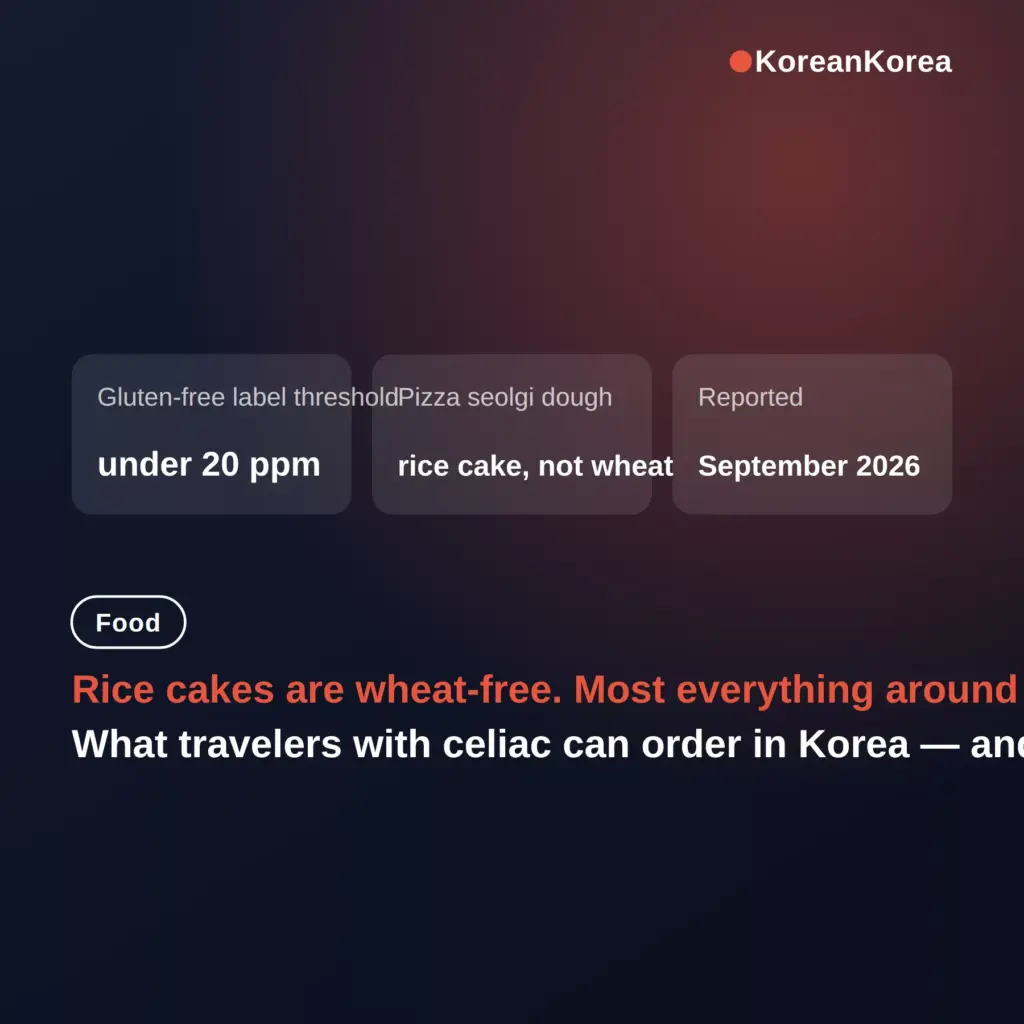
No — Korean food is not gluten free by default, but the rice-cake dishes driving the current dessert trend are, because they are made from rice flour instead of wheat.
Contents
- Is Korean food gluten free? Rice-based dishes are, wheat sauces are not
- Pizza seolgi: the September 2026 trend that skips wheat
- Is tteok gluten free?
- What Korean dishes have no wheat — and what hides it
- Packaged food carries a 20 ppm gluten-free label, but restaurants rarely do
- Where to find gluten-free desserts in Seoul now
Is Korean food gluten free? Rice-based dishes are, wheat sauces are not
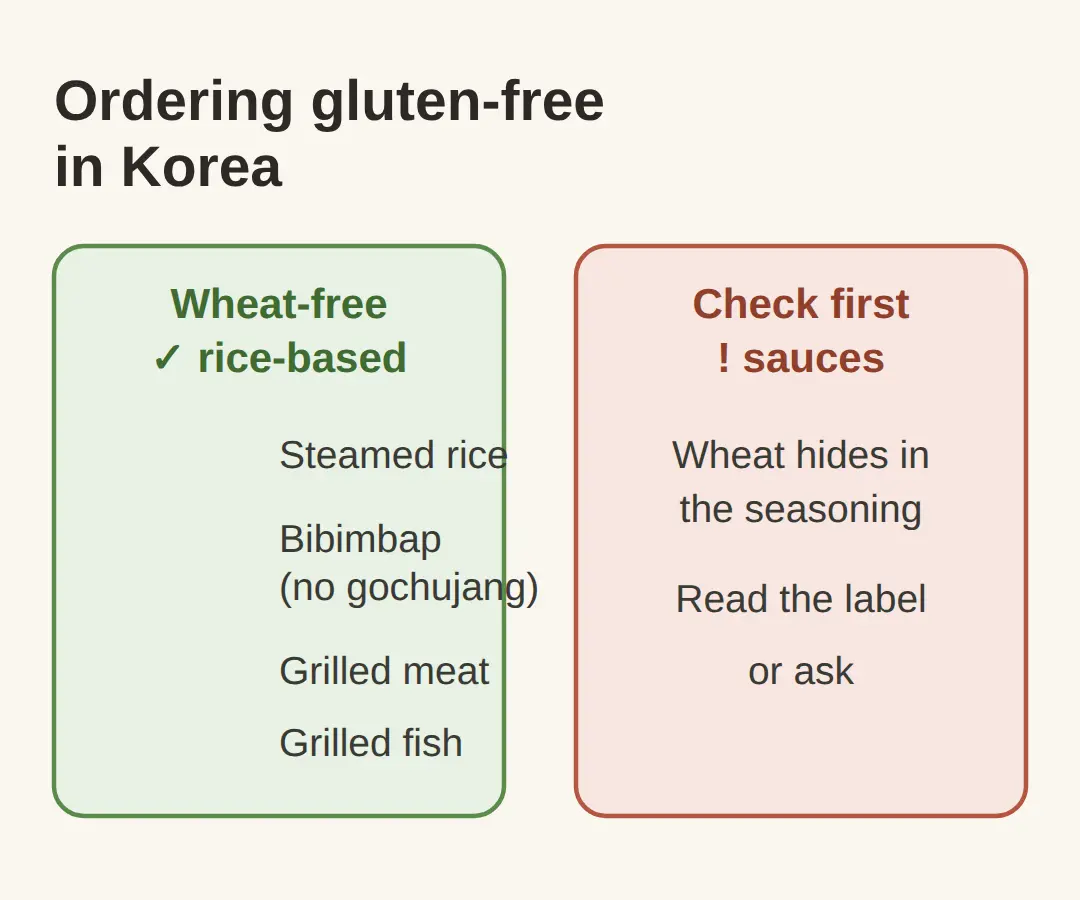
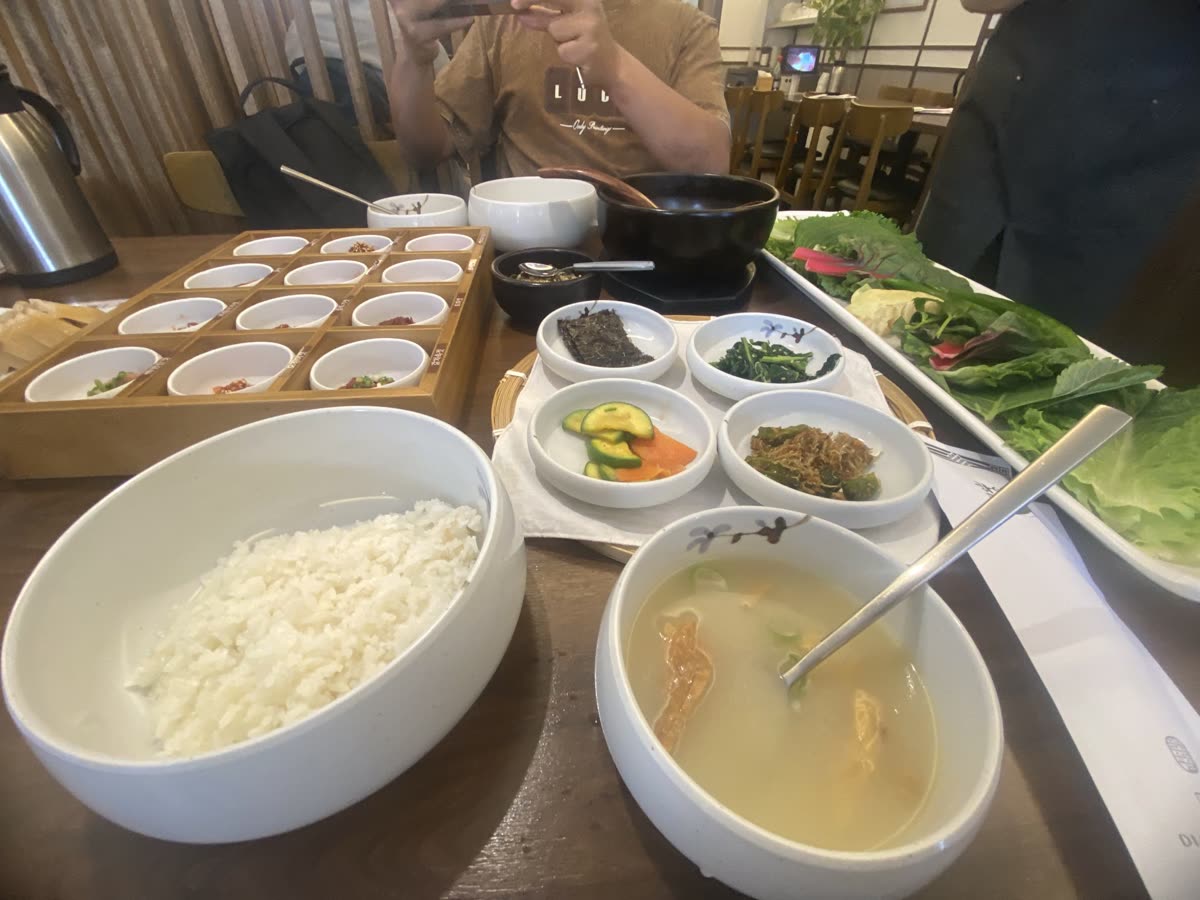
Rice-based dishes are wheat-free, and most Korean meals are built on rice.
Plain steamed rice, bibimbap ordered without gochujang, grilled meats and grilled fish are all candidates for a wheat-free order.
Everything else needs a label check or a question, because the seasoning is where wheat usually hides.
| Bap (plain steamed rice) | Yes |
|---|---|
| Bibimbap without gochujang | Yes |
| Grilled meats without marinade (samgyeopsal, plain galbi) | Yes |
| Grilled fish | Yes |
| Plain tteok and injeolmi | Yes |
| Pizza seolgi (rice-cake pizza base) | Yes |
| Japchae | Noodle yes, sauce usually no — soy sauce base is common. |
Pizza seolgi: the September 2026 trend that skips wheat
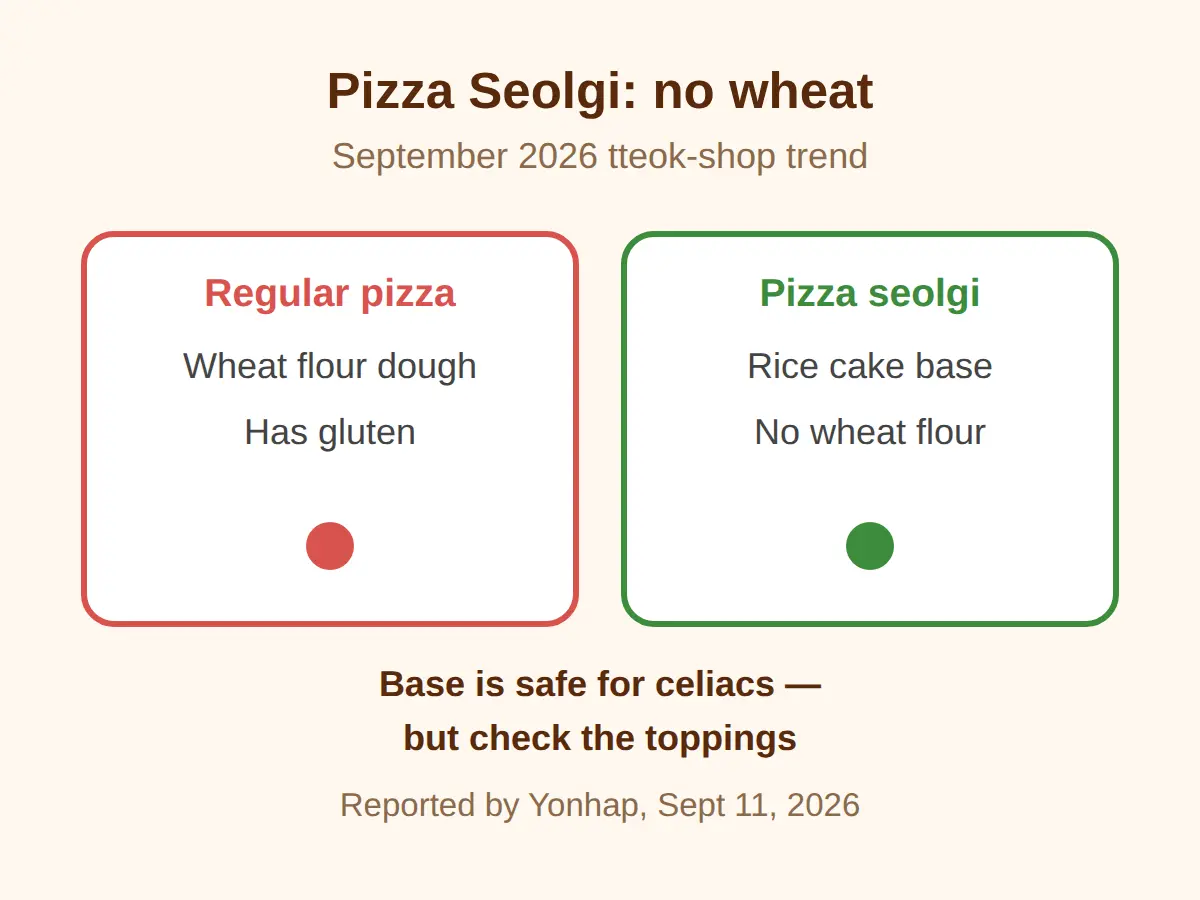
Pizza seolgi, the dessert selling at tteok shops this September, uses seolgi rice cake in place of wheat flour dough.
A tteok shop official told Yonhap News on September 11, 2026 that the item is made from rice rather than wheat, and that demand is coming mostly from mothers of young children.
Rice-cake desserts including pizza seolgi and injeolmi items are the biggest current Korean food story, per Segye Ilbo on September 9, 2026.
For a celiac traveler, this is one trend item that is safe at the base — the dough itself is rice cake, not wheat.
The rule for any cafe version is the same as everywhere else in Korea: check what is on top and around it, because toppings and fillings are not covered by the rice base.
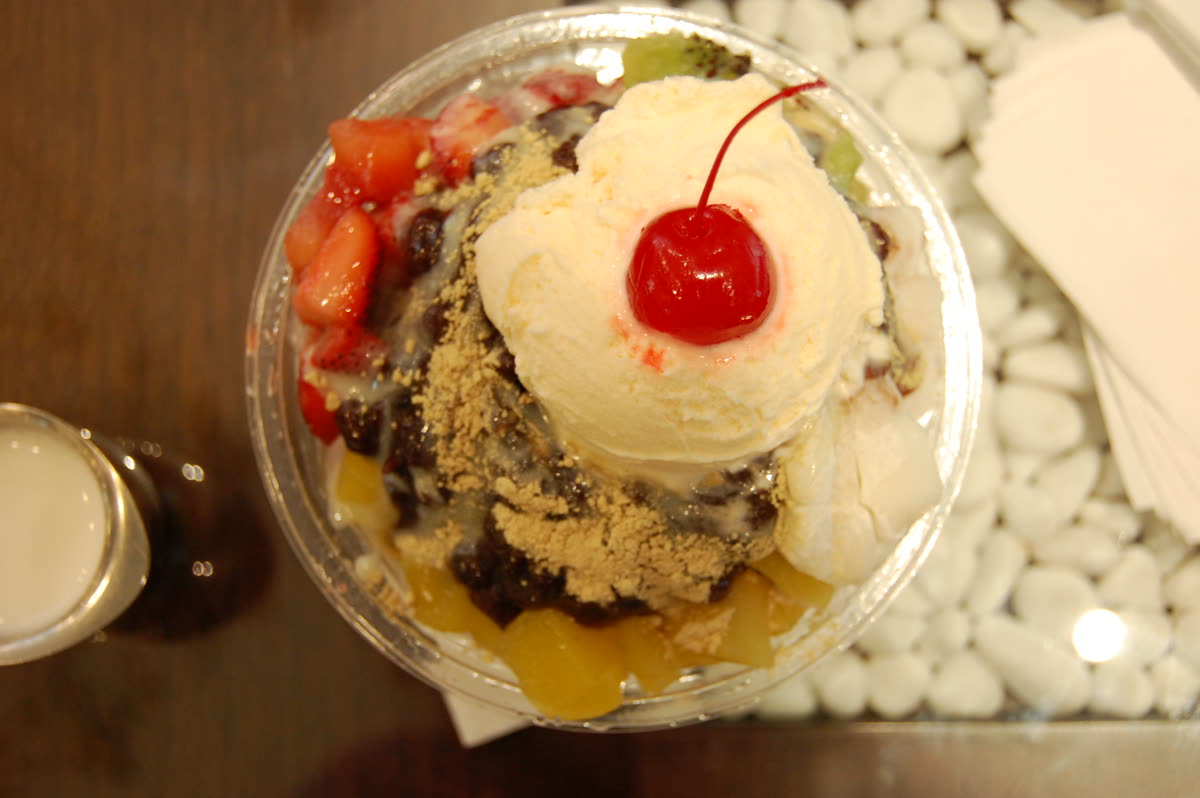
👉 malatang mushroom recall Korea — what to check before you order
Is tteok gluten free?
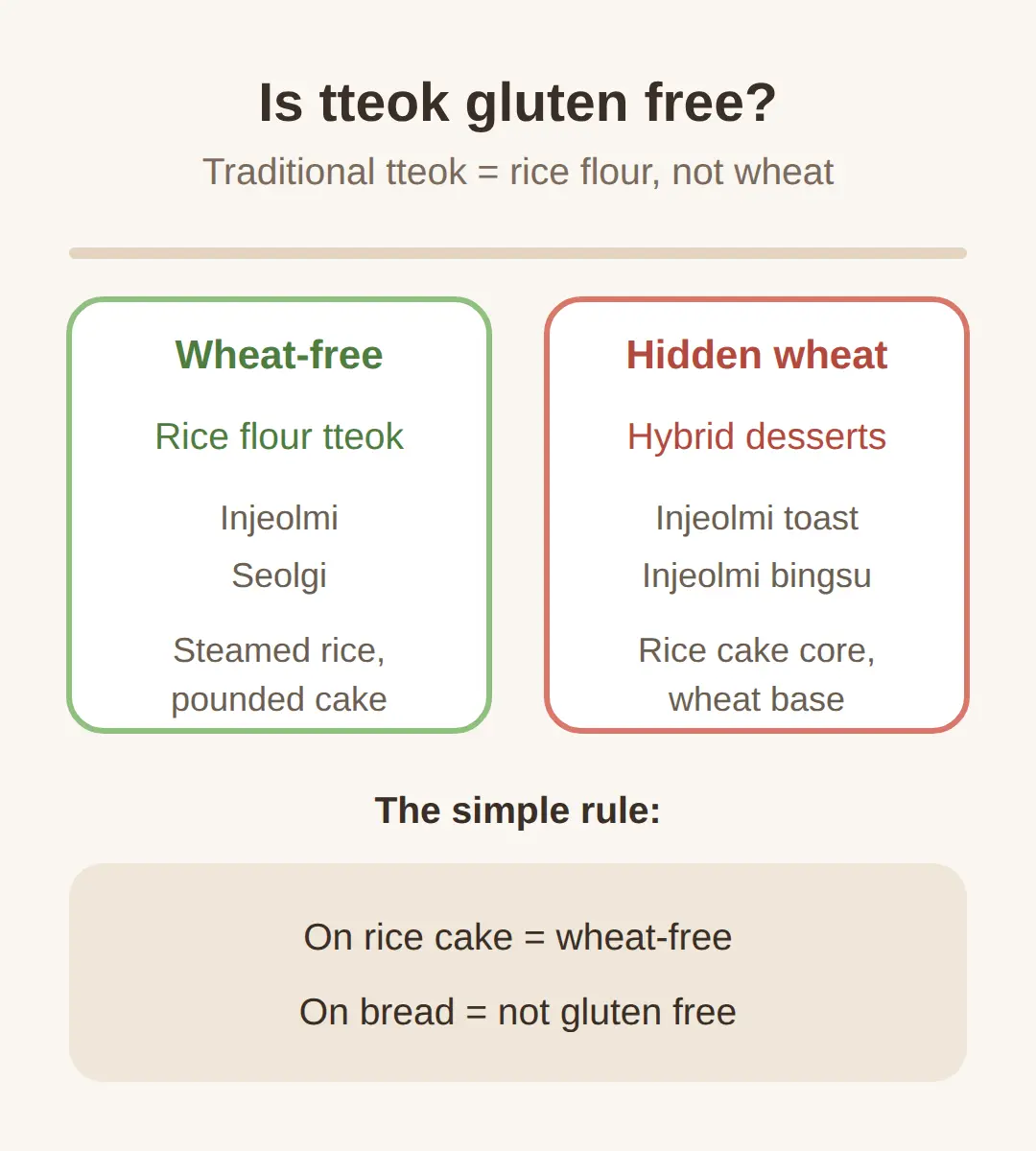
Traditional tteok is made from rice flour, not wheat flour — injeolmi, seolgi and most other varieties included.
Injeolmi, the rice cake behind the current dessert wave, is steamed glutinous rice pounded and coated in roasted soybean powder, both wheat-free.
The trap is the hybrid versions.
Injeolmi toast, injeolmi bingsu and injeolmi lattes keep the rice-cake core, but the toast base is wheat — a hidden-wheat item inside a ‘healthy’ trend, as the Yonhap trend coverage notes.
If the injeolmi sits on rice cake, it is wheat-free; if it sits on bread, it is not.
What Korean dishes have no wheat — and what hides it
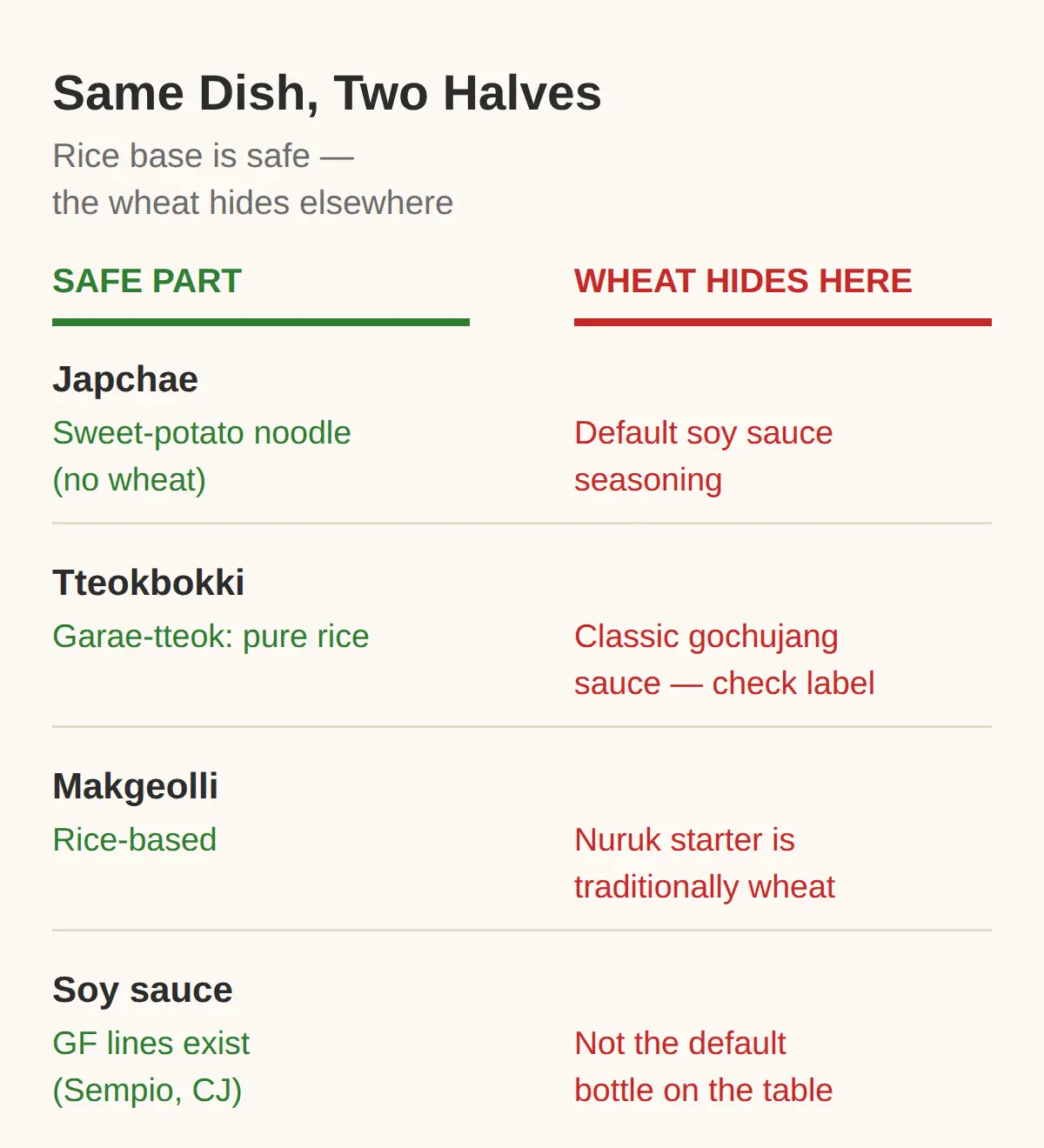
The noodle in japchae is sweet-potato starch with no wheat, but the standard japchae seasoning uses soy sauce, so the dish is only safe with the sauce swapped or omitted, per Maangchi’s japchae recipe.
Tteokbokki has the same split: the garae-tteok is pure rice, while the classic gochujang sauce usually is not, so order it only after checking the specific gochujang label, as My Korean Kitchen explains.
Makgeolli is rice-based but is fermented with nuruk, a starter traditionally made from wheat, so classic makgeolli contains wheat, per Wikipedia’s makgeolli entry.
Sempio and CJ both sell certified gluten-free soy sauce lines, which means wheat-free soy sauce exists in Korea as a distinct product — not as the default bottle on a restaurant table, per Sempio.
Packaged food carries a 20 ppm gluten-free label, but restaurants rarely do
Packaged foods in Korea carry a government-backed label, so the ingredient check works.
Korea’s Ministry of Food and Drug Safety enforces a gluten-free labeling standard requiring less than 20 ppm gluten, with a separate tier under 100 ppm.
The 20 ppm mark is the number to look for on packaged snacks, sauces and rice-cake products.
For gochujang, the label — not the dish name — decides: wheat content varies by brand, so read the ingredient list on the specific tub, per My Korean Kitchen’s gochujang guide.
👉 Chipotle Gangnam, first store in Asia — what to know before you join the line
Where to find gluten-free desserts in Seoul now
The rice-cake trend is doing part of the work: plain tteok and injeolmi desserts at tteok shops are wheat-free by base.
Pyeongsangsi in Hongdae sells GF-labeled items including an oat chocolate chip cookie at 4,700 KRW and a blueberry cheesecake at 10,500 KRW, per its Diningcode listing.
Lee Nak-geun, a 51-year rice-cake bakery in Jamsil’s Galleria Palace, sells rice cakes alongside a corn bread made with reduced wheat flour, so check the item, per the store page.
Korean home-baking blogs publish fully gluten-free recipes such as a mushroom quiche, which means GF ingredients are reachable for home cooks, per one published recipe.
If a dessert shop does not label items, ask about the base — rice or wheat — before ordering.
👉 Tteok shop official quote on rice-based pizza seolgi demand (Yonhap News, September 11, 2026)
👉 Report on pizza seolgi replacing wheat dough with seolgi rice cake (Segye Ilbo, September 9, 2026)
👉 Japchae recipe that calls for wheat-based soy sauce (Maangchi)
👉 Makgeolli entry explaining rice brewing and gluten questions (Wikipedia)
👉 Product pages showing soy sauce brewed with wheat (Sempio)
👉 Official gluten-free labeling standards for packaged food (Ministry of Food and Drug Safety)
👉 Gochujang ingredient guide showing which brands include wheat (My Korean Kitchen)
👉 Vegan bakery listing with gluten-free labeled items (Diningcode)
👉 Gluten-free mushroom quiche recipe with oven temperature and bake time (marcwiner.com)
Related posts
📎 Korean Mexican Food: Chipotle Gangnam’s 3-Hour Wait, Cucharra’s 12,900 Won K-Mex Pop-Up and Where to Try It
📎 Pizza Seolgi: A Pizza-Shaped Korean Rice Cake That Started in Busan
📎 📅 다가오는 일정 — 발매·개봉·발표 캘린더
Sources
- Segye 2026-09-09 and Yonhap 2026-09-11 coverage: pizza seolg (segye.com)
- Yonhap: tteok shop official says pizza seolgi is rice-based (yonhapnewstv.co.kr)
- GF-labeled oat cookie, blueberry cheesecake, plum brûlée tar (diningcode.com)
Checklist for ordering wheat-free in Korea
- Order the rice base: bap, bibimbap without gochujang, grilled meats without marinade, grilled fish, plain tteok.
- Treat sauces as the question, not the dish — japchae sauce and tteokbokki sauce both usually carry soy sauce or gochujang.
- Read the gochujang and soy sauce label by brand; wheat-free versions exist but are separate products.
- Skip classic makgeolli — the traditional starter is wheat-based.
- On packaged food, look for the gluten-free label at under 20 ppm.
FAQ
Q. Is tteok gluten free?
Traditional tteok is made from rice flour, not wheat, so plain tteok and injeolmi are wheat-free. Hybrid cafe versions on toast or in bread are not.
Q. Is gochujang gluten free?
It depends on the brand. Some gochujang products include wheat, so the ingredient label on the specific tub decides.
Q. Is tteokbokki gluten free?
The rice cake is, but the classic gochujang sauce usually is not. Order it only after checking the sauce’s gochujang label.
Q. Is makgeolli gluten free?
No — classic makgeolli is fermented with nuruk, a wheat-based starter, though some breweries sell rice-only versions.
Q. What Korean dishes can a celiac traveler order safely?
Plain rice, bibimbap without gochujang, grilled meats without marinade, grilled fish and plain tteok. Sauces and marinades are where wheat hides.
Save this list before your trip: ask at every meal whether a dish contains flour (a wheat-allergy framing works better than ‘gluten-free’), and when in doubt, stick to plain rice, grilled meat, and tteok made only from rice flour.
#isKoreanfoodglutenfree #glutenfreeKorea #celiactravelKorea #tteok #injeolmi #pizzaseolgi #Koreanricecake #gochujang
📅Upcoming Dates — 이번 주 16 · D-day 'The Scandal' global Netflix release전체 보기 →