Most Korean food is not sweet — the core of a Korean meal is rice, soup and savory side dishes, and sugar shows up in specific places: meat marinades, street snacks, drinking food and desserts.
For a visitor, this means you cannot judge a whole cuisine by one sweet BBQ dish; you judge each dish before you order it.
This guide gives the one-line answer, lists the sweet dishes, lists the savory ones, explains why Korea seems sweet to foreigners, and covers where dessert fits in.
Contents
- Is Korean food sweet? The one-line answer per dish
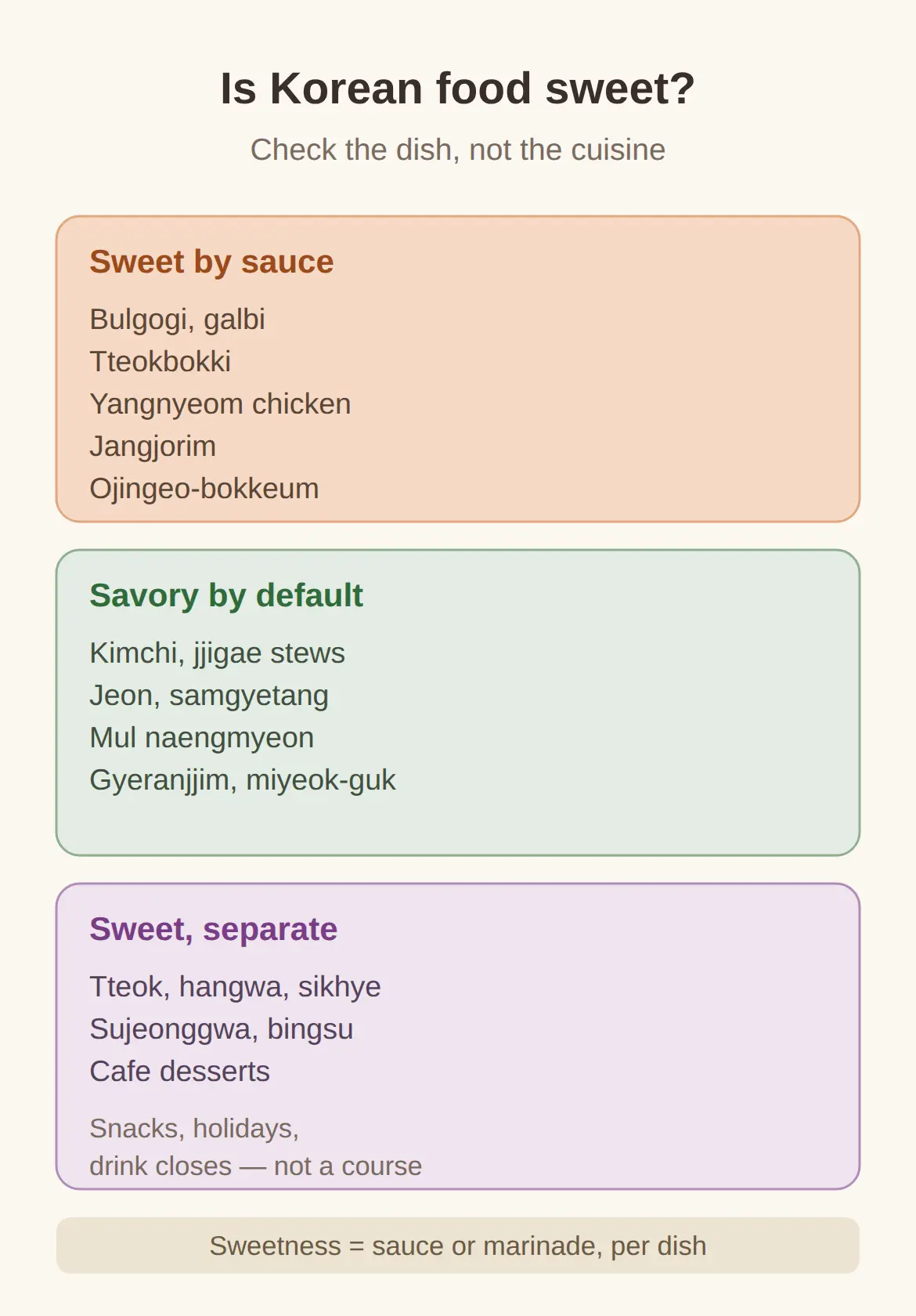
- Which Korean dishes are sweet
- Which Korean dishes are not sweet
- Why Korean food seems sweet to foreigners
- Korean desserts and sweet drinks — where sweetness actually lives
- Does Korea eat less sugar than other countries
Is Korean food sweet? The one-line answer per dish
Usually no — most everyday banchan, stews and broths are savory, and sweetness lives in specific dishes rather than in the cuisine as a whole.
The three core seasonings of a Korean kitchen are soybean paste, soy sauce and gochujang, and only gochujang contains added sweeteners.
That is why the everyday seasoning base of the meal table is salty and savory, with sweet-spicy heat as one option rather than the base.
The reliable test is per dish, not per cuisine.
Marinades such as bulgogi and galbi run sweet, stews and kimchi side dishes do not.
When judging whether a Korean dish will taste sweet, the first thing to check is whether the sweetness comes from a sauce or marinade — and the check is always per dish, never per cuisine.
A typical Korean meal centers on banchan — shared side dishes served alongside rice and soup — not on a single main course followed by dessert.
So the question ‘is Korean food sweet’ is really a question about which dishes carry sugar, and that split is the short version of everything below.
| Bulgogi, galbi, tteokbokki, yangnyeom chicken | Clearly sweet or sweet-spicy |
|---|---|
| Kimchi, steamed egg, soybean-paste stew, savory pancakes | Savory, sour or spicy — little to no added sugar |
| Tteok, hangwa, sikhye, cafe desserts | Sweet, but served outside the meal |
| Korean fried chicken or corn cheese at a bar | Sweet — modern restaurant and drinking food |
| Samgyetang, mul naengmyeon | Not sweet — direct counterexamples |
Which Korean dishes are sweet
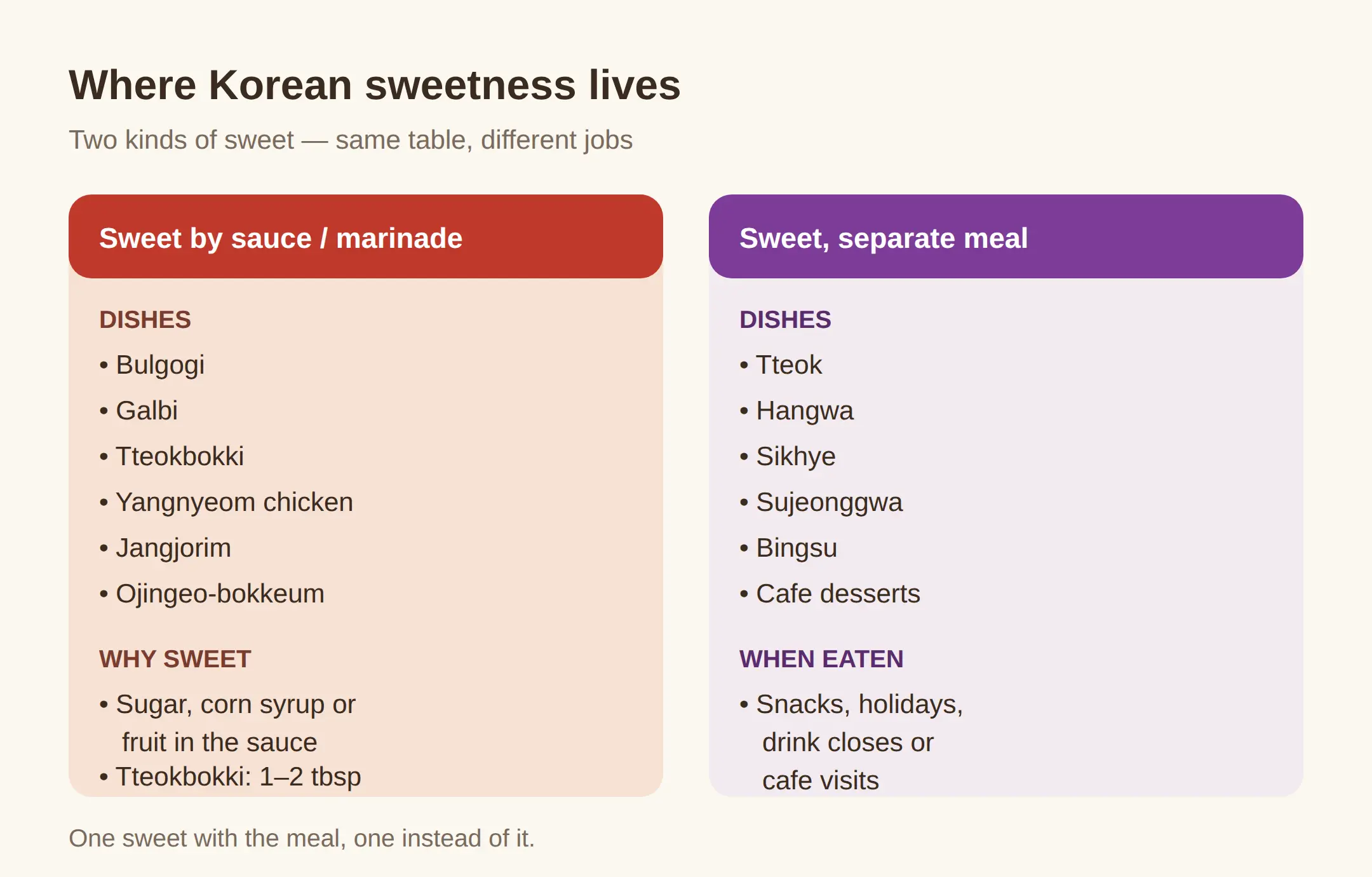
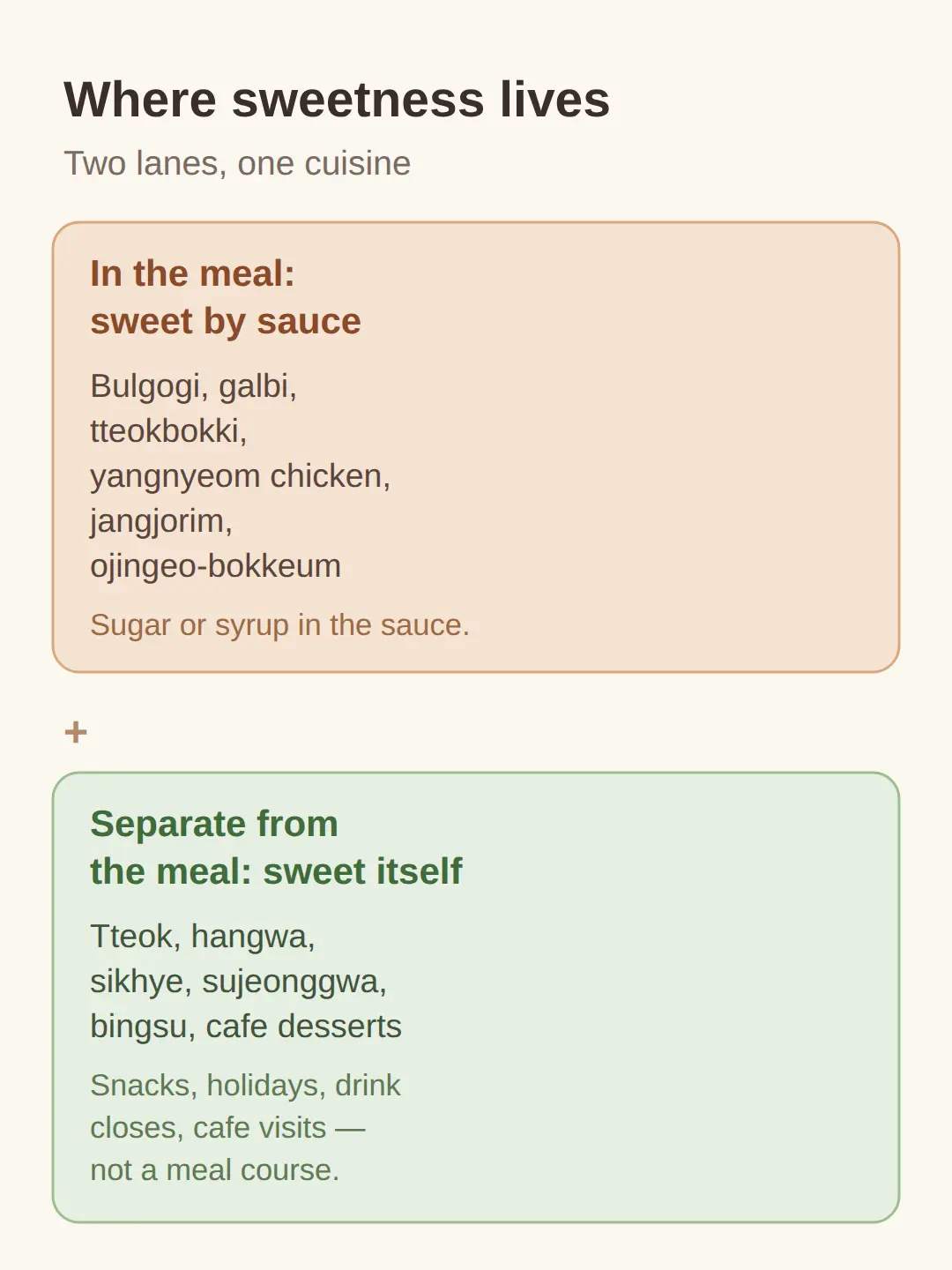
The sweet dishes cluster in four slots: BBQ marinades, street snacks, glazed fried chicken, and small soy-braised sides.
Bulgogi is marinated in soy sauce with sugar or Asian pear, and sweetness is a defining trait of the dish rather than an accident.
Galbi goes further — LA-galbi style marinades add pear puree, sugar and sesame oil, giving a sweeter, caramelized profile than bulgogi.
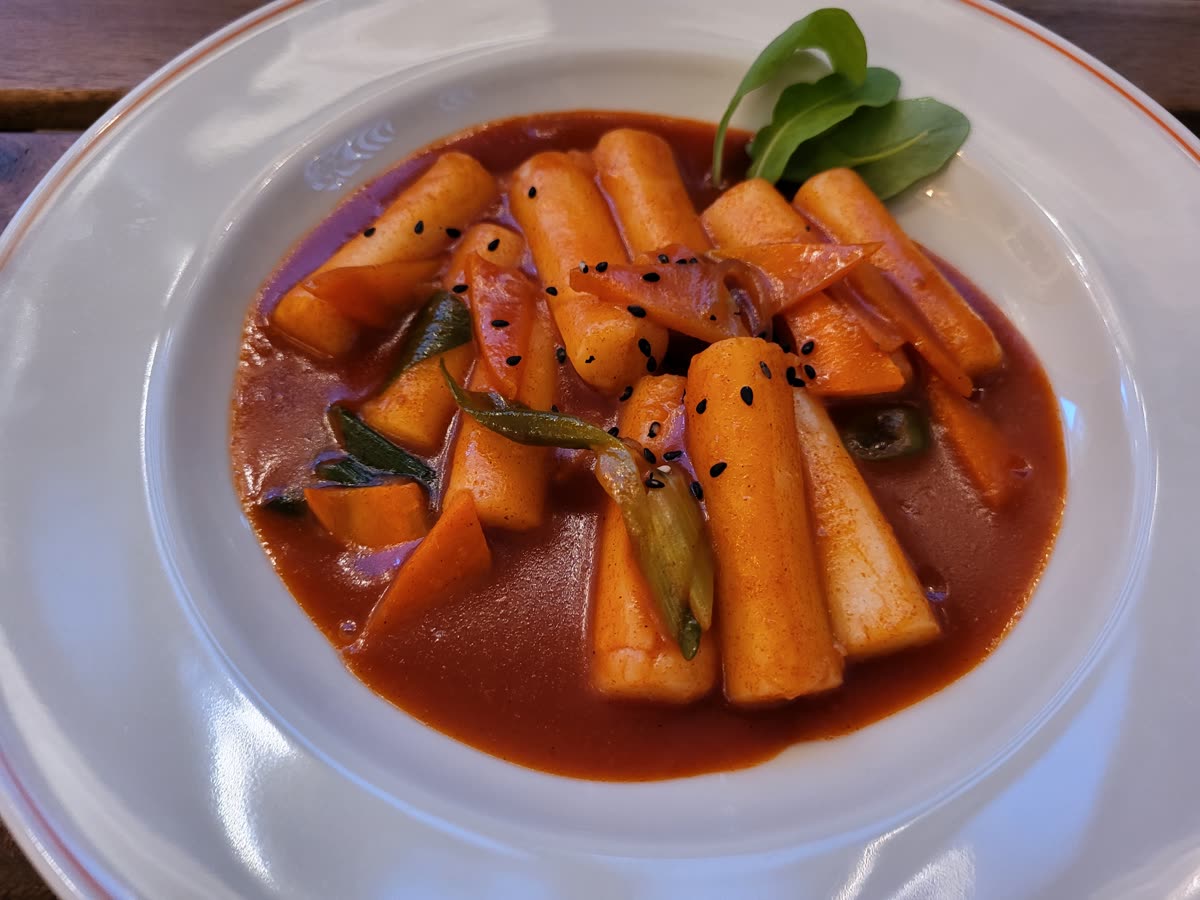
Tteokbokki, the flagship street food, is rice cakes in a gochujang sauce, and the sauce is where the sweet-spicy taste comes from.
Yangnyeom chicken and soy-garlic chicken are glazed sweet, a modern restaurant style rather than traditional home cooking.
Jangjorim — soy-braised beef or eggs — is simmered with sugar or corn syrup, and ojingeo-bokkeum (spicy squid stir-fry) repeats the same gochujang-plus-sugar pattern.
Two milder surprises sit on the savory side of the table.
Danmuji, the yellow pickled radish that appears by default at many restaurants, is seasoned with vinegar, sugar and turmeric.
Kimbap rice is seasoned with sesame oil, salt and a small pinch of sugar, so the savory street food carries a faint sweetness.
If a dish on this list appeals to you, order it expecting sweetness as a deliberate feature — the same tteokbokki can read sweet-spicy or only mildly sweet depending on the cook.
👉 Is Korean Food Gluten Free? Rice Cakes Are — What to Order in Korea
Which Korean dishes are not sweet
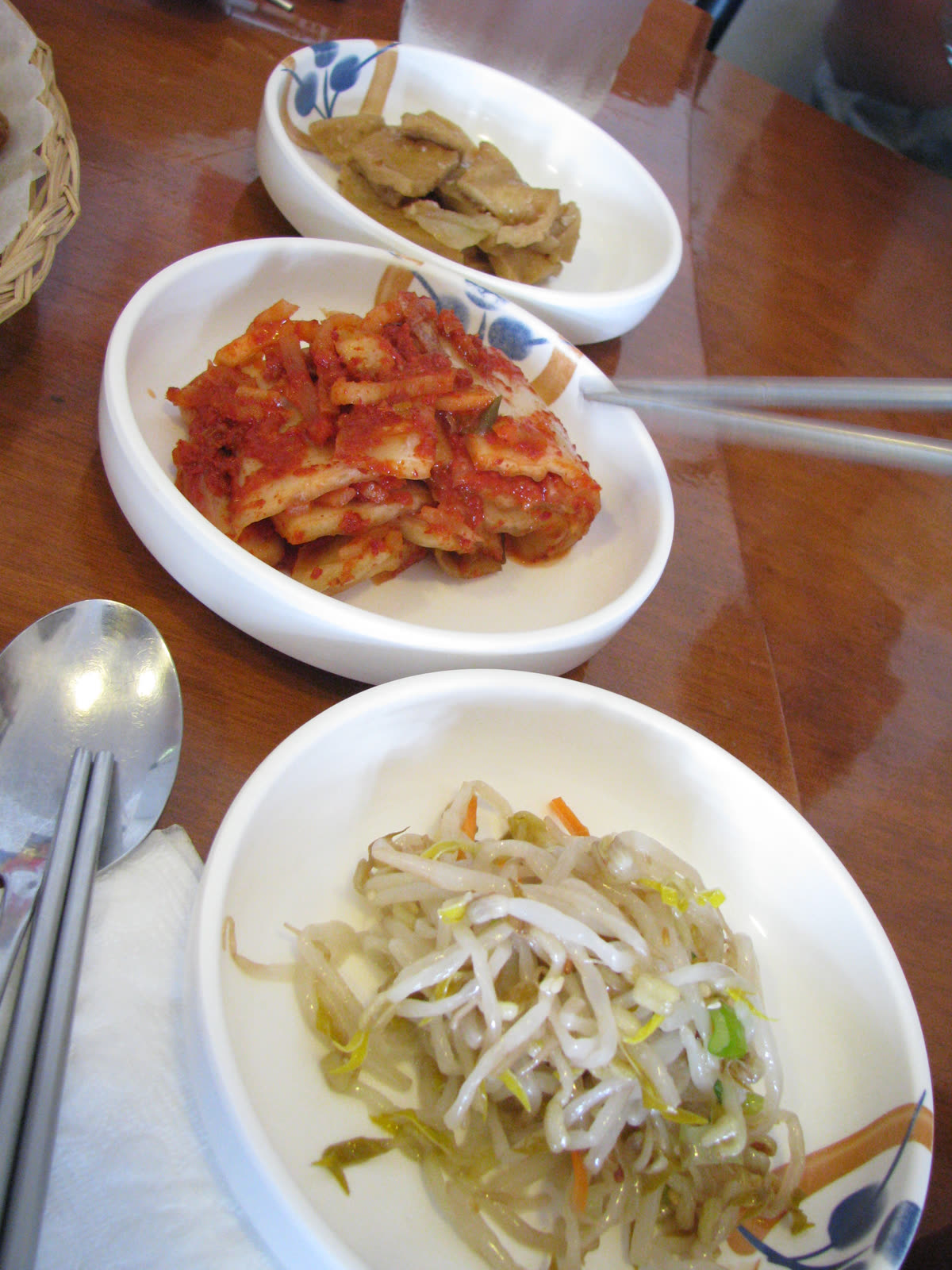
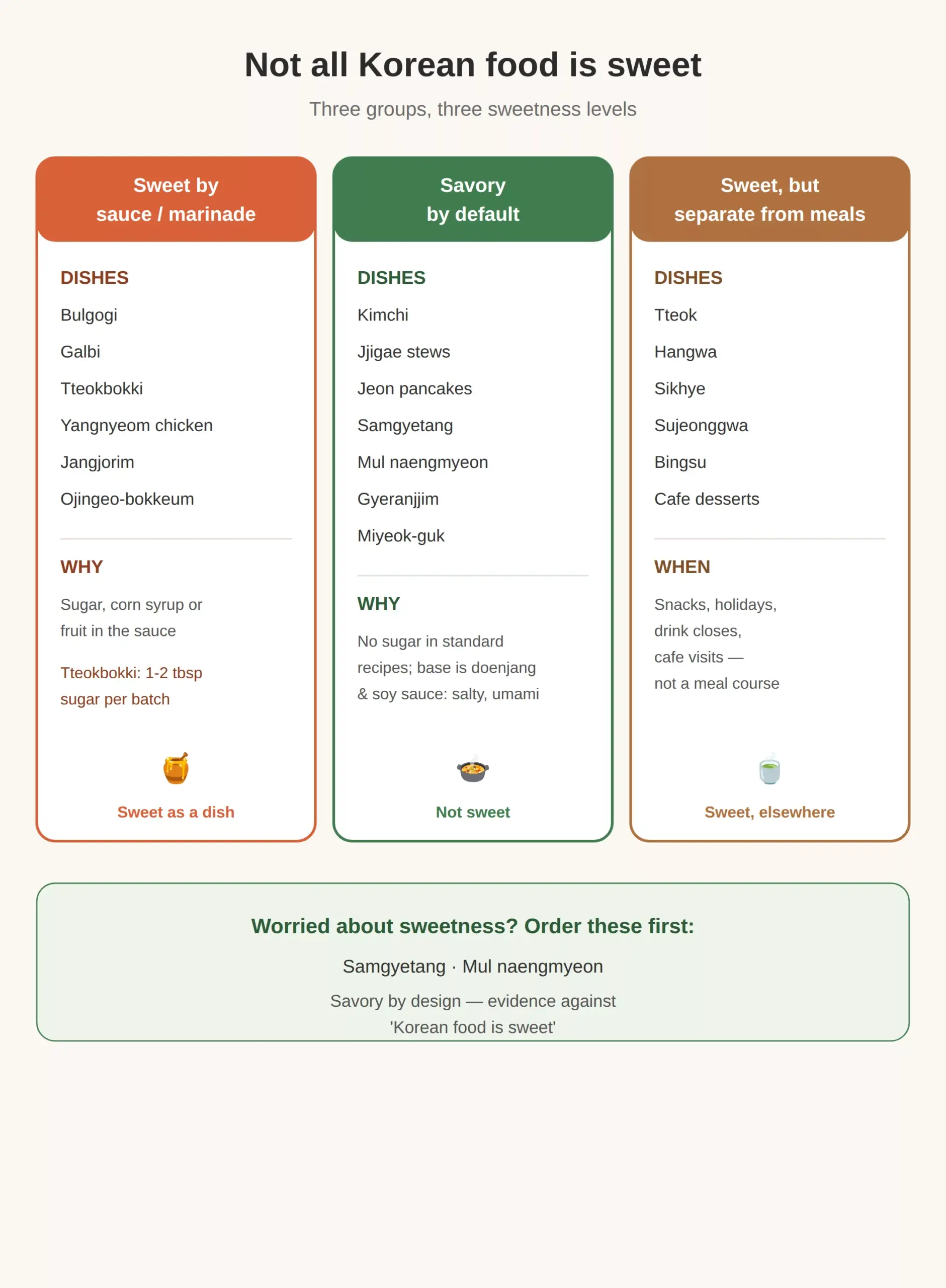
The everyday meal table is savory by default — kimchi, stews, pancakes, steamed egg and soup carry little to no added sugar in standard recipes.
Baechu kimchi’s dominant profile is lactic sourness plus chili heat, and sweetness is minimal in most versions.
Samgyetang, the ginseng chicken soup, is seasoned so lightly that salt is served on the side for you to adjust, and mul naengmyeon broth is a savory-sour radish-water broth with no added sweetness — optional pear slices are the only sweet note.
The common home-style banchan and stews — gyeranjjim (steamed egg), kimchi-jjigae, doenjang-jjigae and miyeok-guk — use no sugar in standard recipes.
Their seasoning base is soybean paste and soy sauce, which are salty and carry savory depth rather than sweetness.
If you are worried about sweetness, these are the dishes to order first.
Samgyetang and mul naengmyeon are flagship dishes that are savory by design, so they work as direct evidence against the ‘Korean food is sweet’ assumption.
Why Korean food seems sweet to foreigners
The mismatch comes from what first-time visitors order, not from what Koreans eat daily.
A first visit usually runs on sweet-marinated BBQ and sweet-spicy street snacks, because those are the dishes restaurants abroad and travel lists lead with.
Meanwhile the banchan on the same table — kimchi, steamed egg, stew — carries little to no sugar, so the same meal contains both answers.
Sweet dishes in Korea also cluster in specific slots: marinades at BBQ, drinking food with alcohol, street snacks, and separate desserts.
Corn cheese — canned corn mixed with sugar and mayonnaise — is a common drinking-food example, deliberately sweet in a savory setting.
None of these slots is the rice-soup-banchan core of an ordinary meal.
So if your impression of Korean food came from one BBQ dinner and street-market snacks, the practical fix is simple: add samgyetang, doenjang-jjigae or mul naengmyeon to the next order, and the picture will balance out.
Korean desserts and sweet drinks — where sweetness actually lives
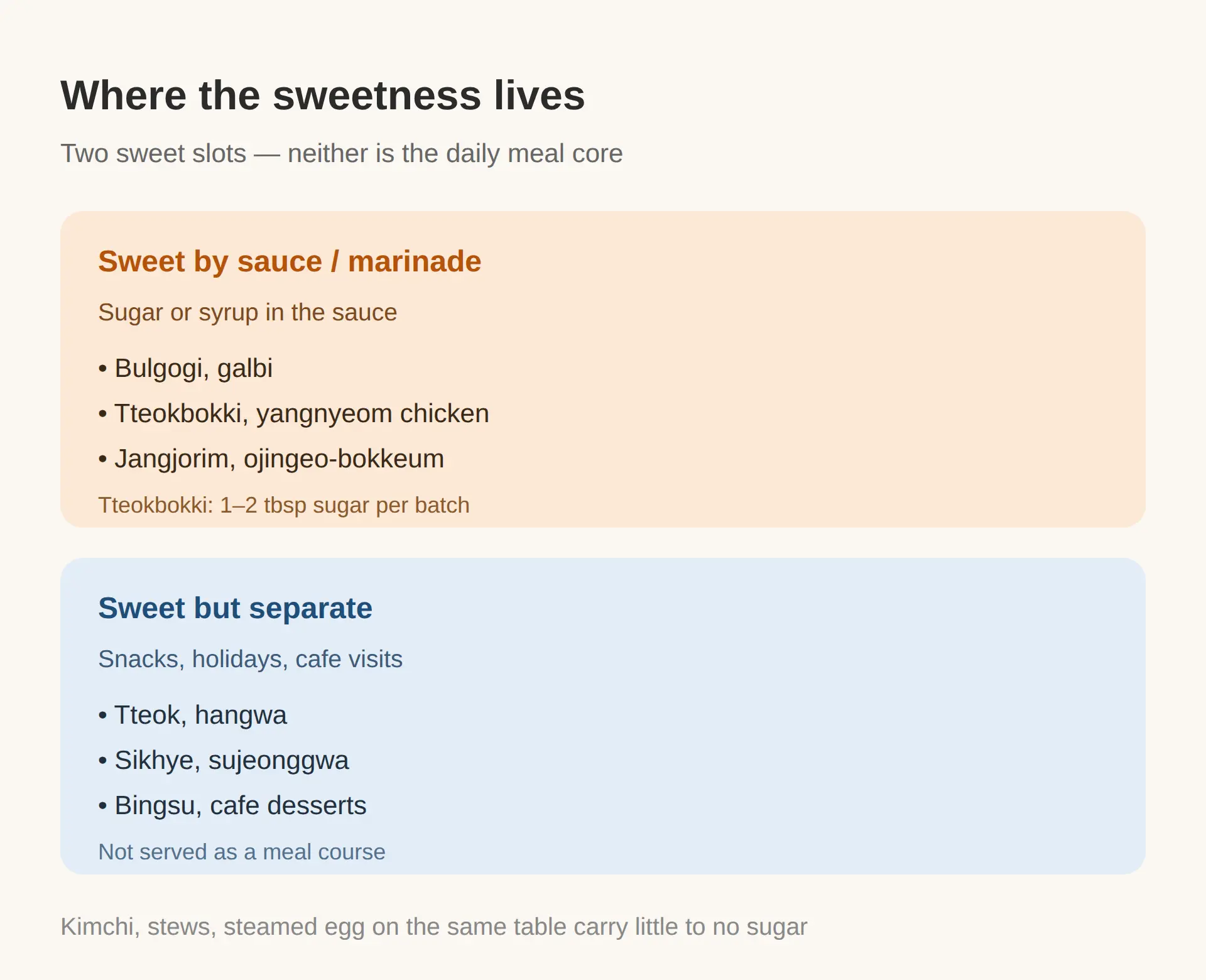
Korea has plenty of sweet food, but it sits outside the meal — as snacks, holiday food, drink closers and cafe visits.
Tteok (rice cakes) and hangwa (traditional confections) are sweet, but they are traditionally eaten as snacks or on holidays, not as a course of a meal.
Sikhye, a sweet rice punch, and sujeonggwa, a cinnamon-ginger punch, are explicitly sweet but served as refreshers.
A Korean BBQ or hanjeongsik meal ends with rice, stew or naengmyeon — sikhye and sujeonggwa are the traditional sweet closes, and hanjeongsik finishes with fruit rather than cake.
Sweet cafe culture — bingsu, cakes, sweet toast — is a separate, recent urban phenomenon rather than part of the traditional meal table.
If you want the sweet side of Korean food, plan it as its own stop: a tteok shop, a sikhye after BBQ, or a bingsu cafe — rather than expecting dessert to arrive at the end of dinner.
👉 pizza rice cake Korea: the pizza seolgi trend hitting 98 on Google Trends
Does Korea eat less sugar than other countries
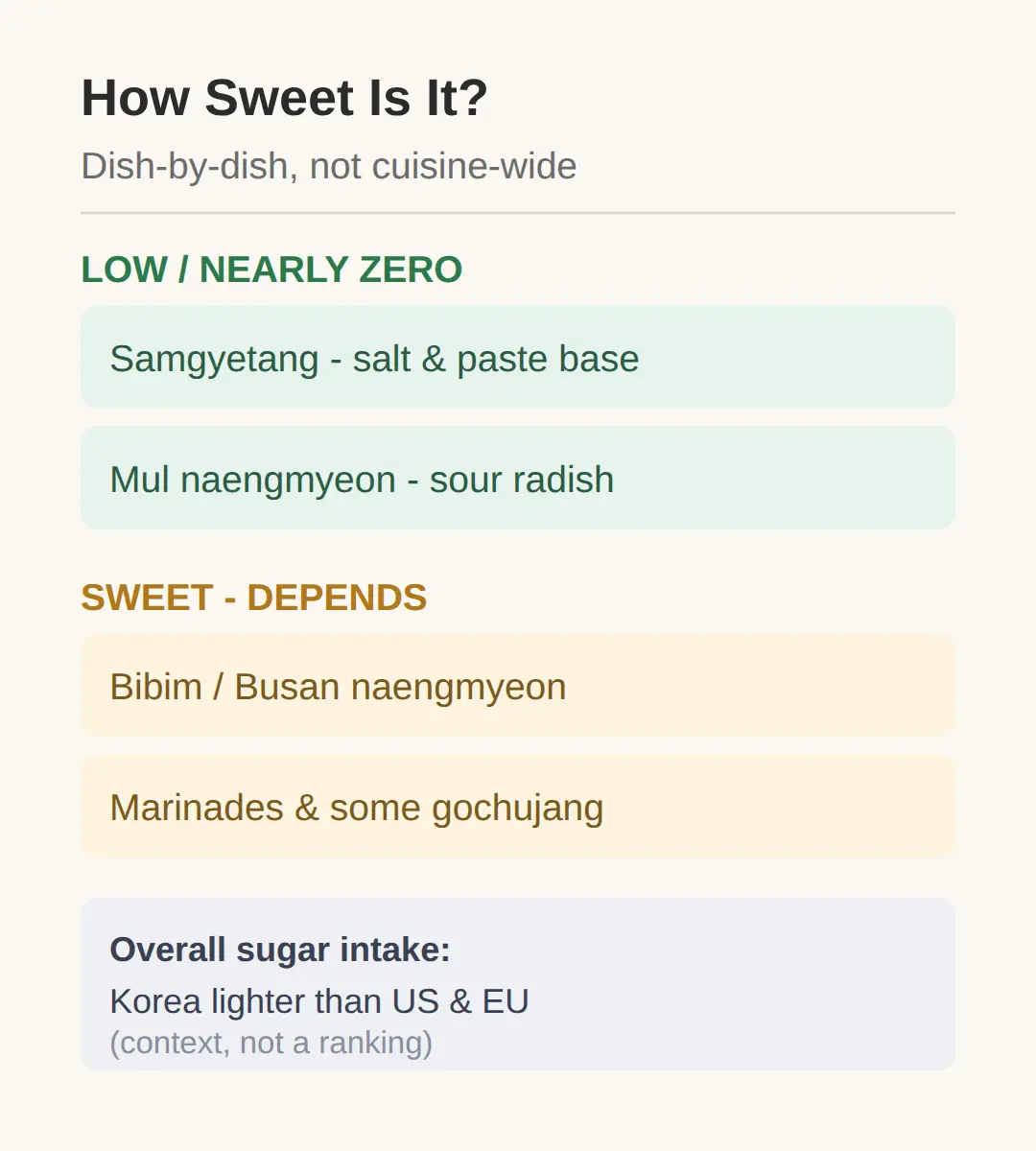
At the level of overall eating patterns, Korea sits on the lighter side of sugar consumption compared with the US and EU — but a precise current ranking was not confirmed against a primary source, so treat this as context rather than a headline number.
The dish-level evidence is more useful anyway.
Two flagship Korean dishes are nearly sugar-free: samgyetang is minimally seasoned, and mul naengmyeon broth is savory-sour from radish water.
Even naengmyeon splits regionally — Pyongyang-style mul naengmyeon stays savory-sour, while some Busan-style and bibim versions are noticeably sweeter — so variation runs within a single dish, not just between dishes.
One more check is worth knowing: gochujang sweetness varies by brand, and some products list sugar or corn syrup as the second ingredient while others market low-sugar versions.
Check the label on the specific brand rather than assuming all gochujang tastes the same.
If I’m introducing someone to Korean food who’s worried about sweetness, I start them on samgyetang or doenjang-jjigae, because the seasoning base there is salt and paste rather than sugar.
What I check first is whether the sweetness comes from a sauce or marinade — if it does, I know the dish runs sweet before taking a bite.
Related posts
📎 Korean Mexican Food: Chipotle Gangnam’s 3-Hour Wait, Cucharra’s 12,900 Won K-Mex Pop-Up and Where to Try It
📎 Chuncheon Korean fried chicken: Why This City 2 Hours From Seoul Is Worth a Day Trip
📎 📅 다가오는 일정 — 발매·개봉·발표 캘린더
Sources
- Korean meals are built around banchan — shared side dishes s (en.wikipedia.org)
- Commercial gochujang contains sweeteners (sugar or corn syru (en.wikipedia.org)
- Sweet marinade (sugar or Asian pear) is a defining trait of (en.wikipedia.org)
The short version
- Judge Korean food per dish, not per cuisine — marinades run sweet, stews and banchan do not.
- The everyday seasoning base of a Korean table is soybean paste, soy sauce and gochujang — salty and savory first, with sweet-spicy heat as one option rather than the base.
- Sweet things exist — tteok, hangwa, sikhye, cafe desserts — but they sit outside the meal, and hanjeongsik ends with fruit rather than cake.
- If sweetness worries you, start with samgyetang, doenjang-jjigae and mul naengmyeon, and save bulgogi and tteokbokki for later.
- Check the label if gochujang sweetness matters to you — it varies by brand and grade.
FAQ
Q. Is Korean food sweet?
Usually no. The everyday Korean meal — rice, soup and shared side dishes — is savory, sour or spicy, and sweetness shows up mostly in marinades (bulgogi, galbi), street snacks (tteokbokki), drinking food and separate desserts.
Q. What makes a Korean dish read as sweet?
Whether the sweetness comes from a sauce or marinade. Bulgogi’s soy-pear-sugar marinade and tteokbokki’s gochujang sauce carry the sugar; dishes seasoned only with soybean paste or soy sauce do not.
Q. Are Korean side dishes (banchan) sweet?
Mostly no. Kimchi is sour and spicy, and steamed egg, soybean-paste stew and miyeok-guk use no sugar in standard recipes. Danmuji (yellow pickled radish) is a common sweet exception.
Q. Why does Korean food taste sweet to visitors?
Because first visits center on sweet-marinated BBQ and sweet-spicy street snacks, while the everyday banchan on the same table carries little to no added sugar — the impression comes from what tourists order, not what Koreans eat daily.
Q. What dessert do Koreans eat after a meal?
Traditionally, none as a course — a Korean meal ends with rice, stew or naengmyeon, and hanjeongsik finishes with fruit. Sweet items like tteok, hangwa, sikhye and cafe desserts are eaten as snacks or on separate occasions.
Next order: pick one dish from each row of the table — a sweet marinade, a savory stew, and a rice cake or sikhye afterward — and you will have tasted all three sides of the answer.
#koreanfood #banchan #bulgogi #tteokbokki #koreandesserts #koreanfoodguide
📅Upcoming Dates — 이번 주 16 · D-day 'The Scandal' global Netflix release전체 보기 →