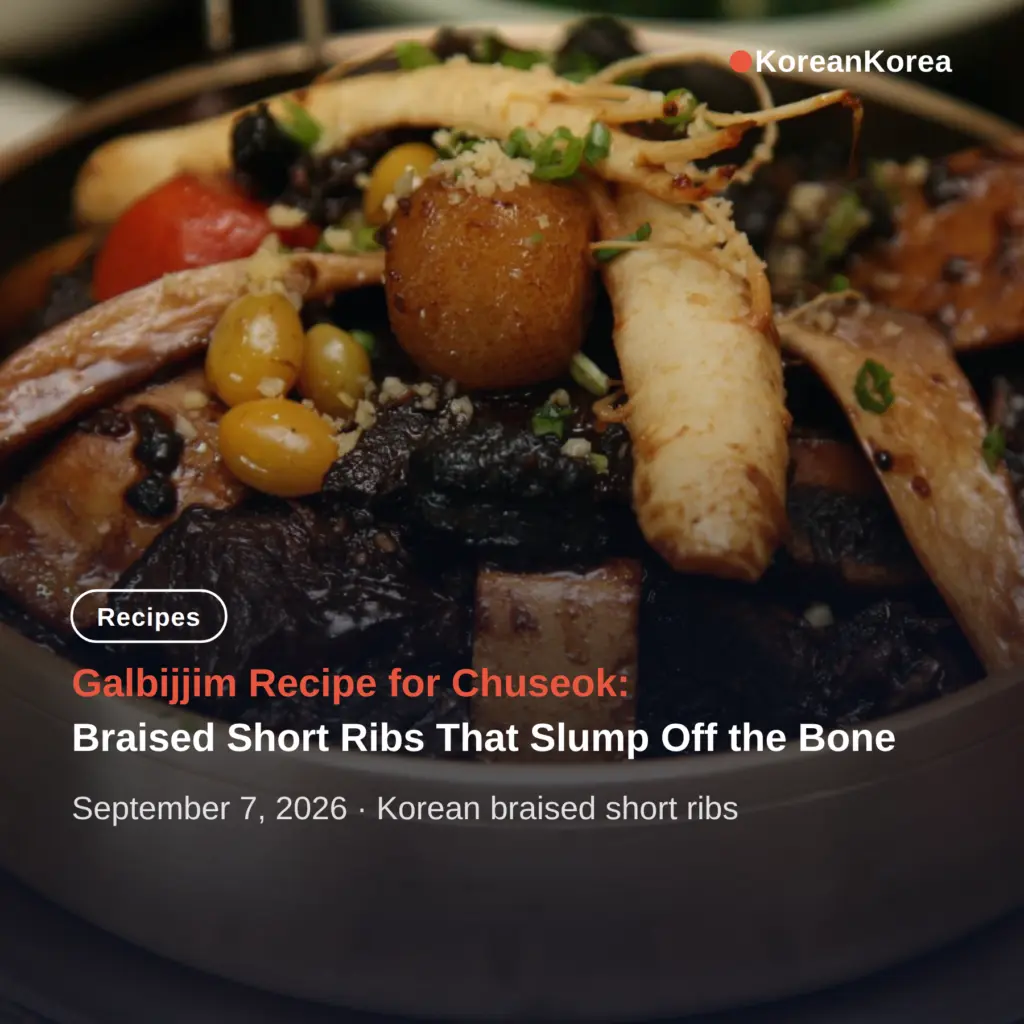
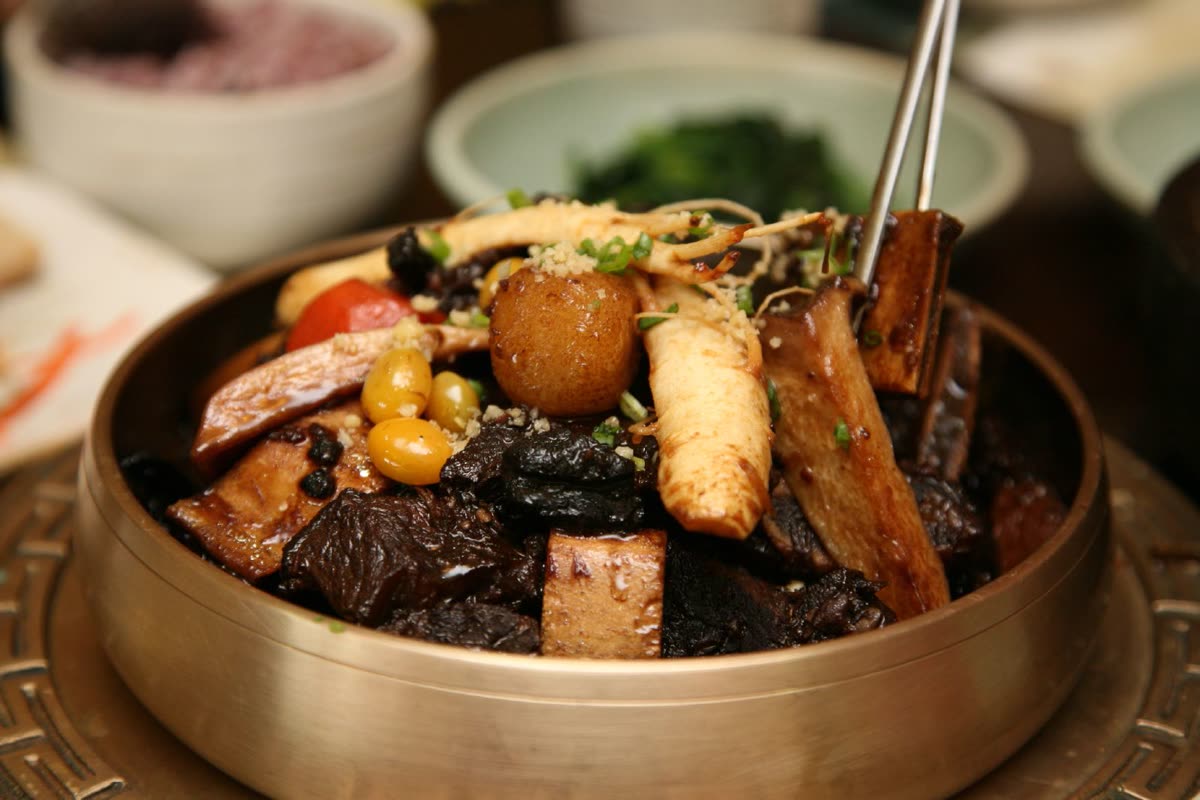
Galbijjim is Korean braised short ribs cooked in a soy sauce broth with pear, ginger, and rice wine.
Contents
- Galbijjim recipe: what it is and why it anchors the Chuseok table
- Short ribs and Asian pear — substitutions that work overseas
- Two cooking paths: stovetop or Instant Pot
- Make-ahead: fridge, freezer, and noodles kept separate
- Common first-timer mistakes
- Dates to check next
Galbijjim recipe: what it is and why it anchors the Chuseok table
Galbijjim is Korean braised short ribs, simmered in a soy sauce–based broth with pear, ginger, and rice wine.
On Korean tables it is a holiday dish.
It appears at Chuseok and Lunar New Year, and at birthday celebrations, served with rice and side dishes.
Historically beef was rare and costly in Korea, so a long-braised short rib dish became one of the most festive things you can put on a table.
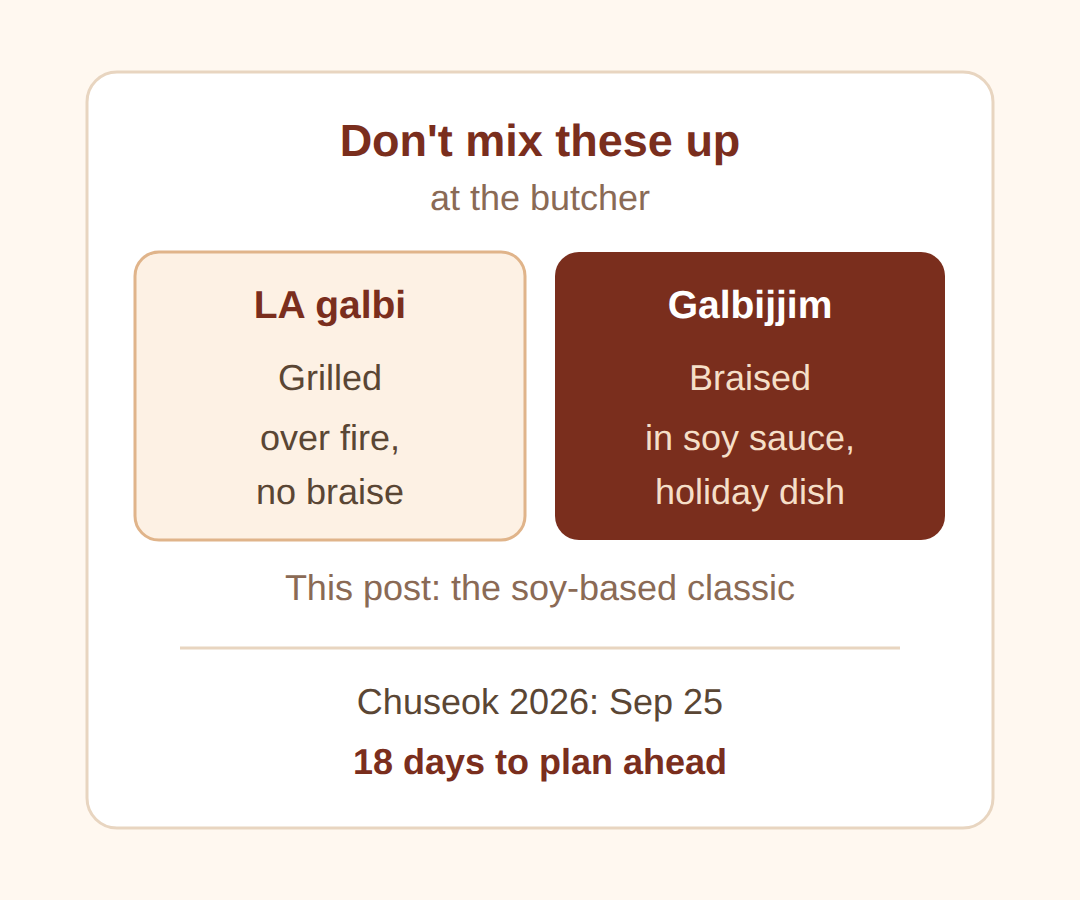
Chuseok 2026 falls on September 25, which is 18 days from this writing.
Recipe searches for holiday dishes spike in the 2–3 weeks before the holiday, so this is the window when most home cooks start planning.
One naming note saves confusion at the butcher.
LA galbi is grilled; galbijjim is braised in sauce, and they are different dishes.
There is also a spicy gochujang-based version called maeun galbijjim.
This post covers the soy-based classic, which is the one that belongs on the holiday table.
| 1 | Soak the ribs in cold water for 30 minutes to 1 hour to draw out the blood. |
|---|---|
| 2 | Blanch the ribs briefly in boiling water to remove impurities. |
| 3 | Braise in soy sauce, sugar, garlic, ginger, sesame oil, and rice wine until the sauce coats the meat. |
| 4 | Reduce the liquid at the end until it turns into a thick glaze. |
| 5 | Serve with rice and side dishes, topped with sesame seeds and sliced scallions. |
Short ribs and Asian pear — substitutions that work overseas
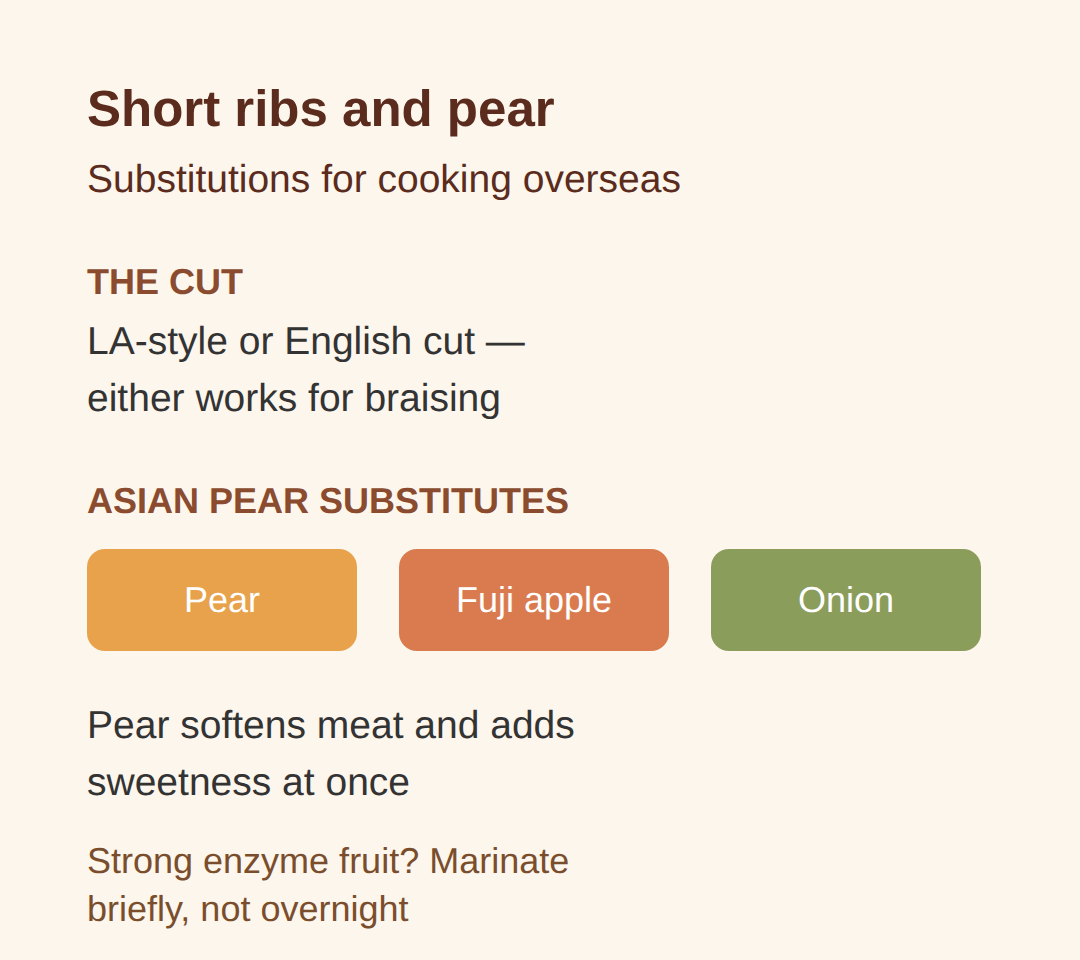
The cut is beef short ribs, sold as LA-style cut or English cut.
Either works for braising.
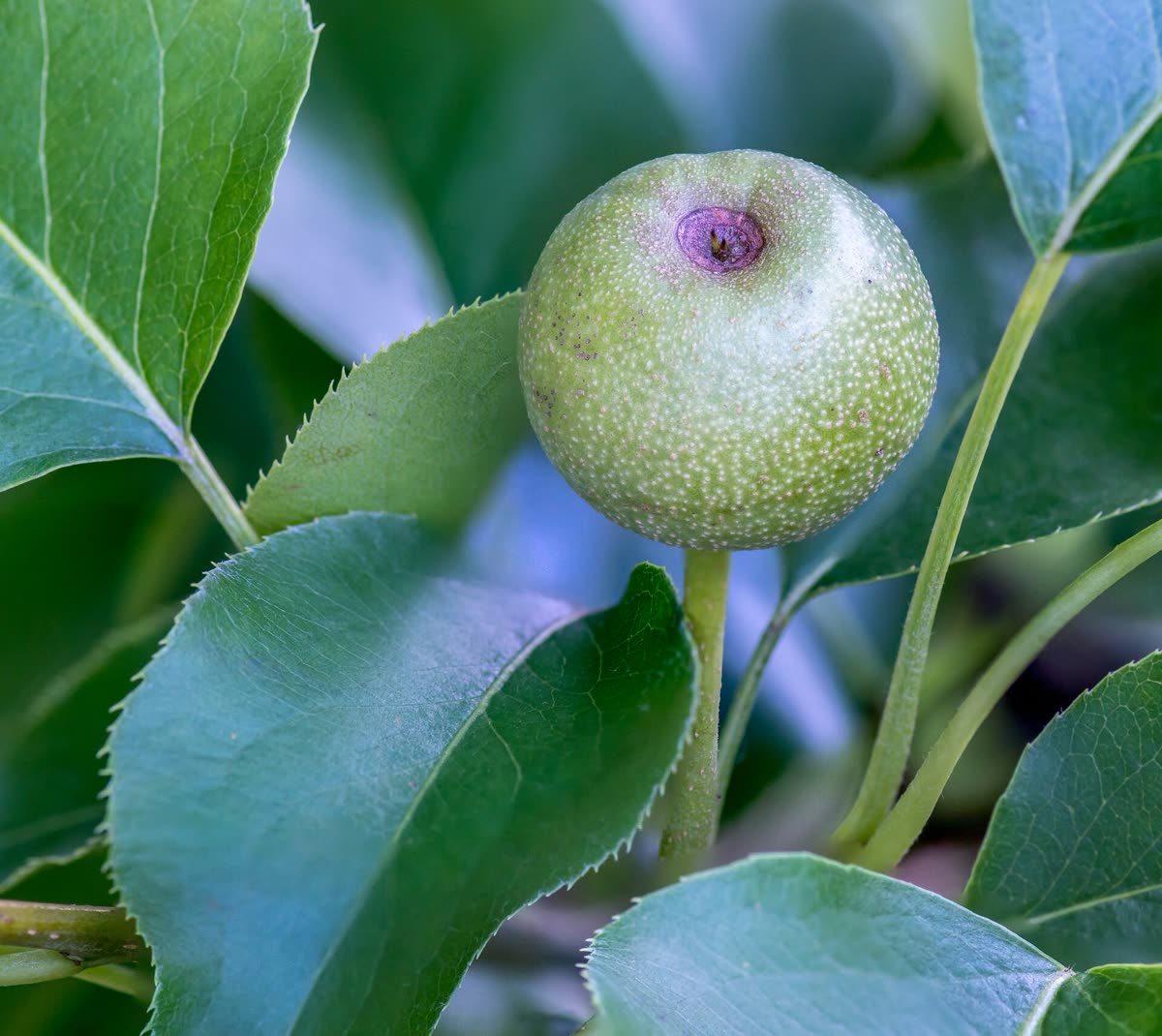
Where the classic recipe calls for Asian pear, a regular pear, a Fuji apple, or onion can stand in.
Asian pear does two jobs at once: its enzymes soften the meat and it adds sweetness.
That is why the substitute matters more than most ingredient swaps in Korean cooking.
If you go with a stronger enzyme fruit, marinate briefly rather than overnight.
Kiwi in particular can turn the surface mushy if it sits too long.
For sweetness and the glossy finish Korean recipes are known for, sugar with honey or rice syrup works.
Two cooking paths: stovetop or Instant Pot
A first-time cook has two confirmed routes, and the choice is mostly about time.
On the stovetop you soak the ribs in cold water for 30 minutes to 1 hour, changing the water, then blanch them, then braise until the sauce reduces.
The Instant Pot path takes about 45 minutes total, including pressurization.
Against a stovetop braise of 60 to 90 minutes, that saves 15 to 45 minutes, or roughly a quarter to half the cooking time.
Either way, doneness looks the same.
The meat pulls back from the bone and a chopstick slides in with little resistance.
Finish by reducing the braising liquid until it coats the ribs like a glaze.
Carrots and radish are the usual vegetables.
Chestnuts and jujubes are traditional additions, but optional rather than required.
Glass noodles (dangmyeon) go in only near the end, for reasons the storage section explains.
Make-ahead: fridge, freezer, and noodles kept separate
Cooked galbijjim keeps about 4 days in the refrigerator.
In the freezer it keeps up to 3 months, which is roughly 22 times longer than the fridge window.
With Chuseok 18 days away, a batch frozen today uses only about 20% of its freezer life by the holiday.
Freezing well ahead is safe.
One rule decides whether the frozen batch comes back good.
Leave the glass noodles out of the freezer portion.
They absorb liquid and swell, so frozen noodles turn mushy.
Freeze the ribs and sauce, then cook the noodles fresh on the day you serve.
Scale the meat by the table.
About 1 lb (450 g) of short ribs serves 2–3 as a main, so a six-person Chuseok table needs roughly 2–2.5 lb (900–1,150 g), and less if the spread has many other dishes.
Common first-timer mistakes
The most common miss is skipping the blood soak.
Cold water for 30 minutes to 1 hour, with a change of water, draws out blood and impurities before cooking.
The second mistake is putting glass noodles in too early or freezing them.
Noodles belong at the end of cooking or on the reheating day, never in the freezer bag.
The third is confusing the two dishes at the store.
Flanken-cut ribs sold for LA galbi are a grill cut; braising suits the bone-in English-cut style better.
Dates to check next
Chuseok falls on September 25, 2026.
If you plan to freeze a batch, cooking it in the next two weeks leaves the most freezer margin.
The storage numbers in this post run on a 3-month freezer clock, so a batch made after late June 2027 is past the window stated here.
Related posts
📎 Samgyetang Recipe: Fight Summer Heat With a Boiling Soup, Not Ice
Sources
- 2026-09-25, 18 days after writing (umamicart.com)
- Long-braised, festive, historically costly beef dish; spicy (en.wikipedia.org)
Frequently asked questions
- The recipe works without Asian pear — a bosc pear, a Fuji apple, or grated onion covers tenderizing and sweetness.
- In an Instant Pot, about 45 minutes total gets the ribs fork-tender, against 60–90 minutes on the stovetop.
- Freeze the ribs and sauce without glass noodles, and cook the noodles fresh on serving day.
- Reheat gently on the stovetop with a splash of water, or microwave covered, so the meat does not dry out.
- Cooked galbijjim keeps about 4 days refrigerated, and up to 3 months frozen.
FAQ
Q. Can I skip the Asian pear?
Yes. A bosc pear, a Fuji apple, or onion covers both the tenderizing and the sweetness. Asian pear is classic, not mandatory.
Q. How long does galbijjim keep?
About 4 days refrigerated, and up to 3 months frozen — without the glass noodles, which are added fresh on reheating.
Q. How do I know the ribs are done?
The meat pulls back from the bone and a chopstick slides in with little resistance. The sauce should be reduced to a thick glaze.
Chuseok 2026 lands on September 25. If a frozen batch is the plan, the freezer math above says an early start costs nothing.
피프 — 드디어 클로드로 영상까지 만듭니다
Cover photo: Korean braised beef short ribs-Galbijjim by by Junho Jung at Flickr from South Korea — CC BY-SA 3.0
#galbijjimrecipe #braisedshortribs #Koreanshortribs #Chuseokfood #InstantPotKoreanrecipe #Koreanpearsubstitute #galbijjimstorage #holidayKoreandish
📅Upcoming Dates — 이번 주 4 · D-day Changdeokgung Moonlight Tour start (Sept 10–Oct 17, 30,000 K전체 보기 →